Saudi Arabia
Tehran uses the Houthis to raise the cost for Riyadh
The Houthi attacks on Saudi Arabia are about more than Yemen.

A Hezbollah lawmaker said on Thursday that hundreds of kilograms of explosives seized last week by Lebanese security forces belonged to his group, as tensions persist over the government's push to disarm the Iran-backed movement.
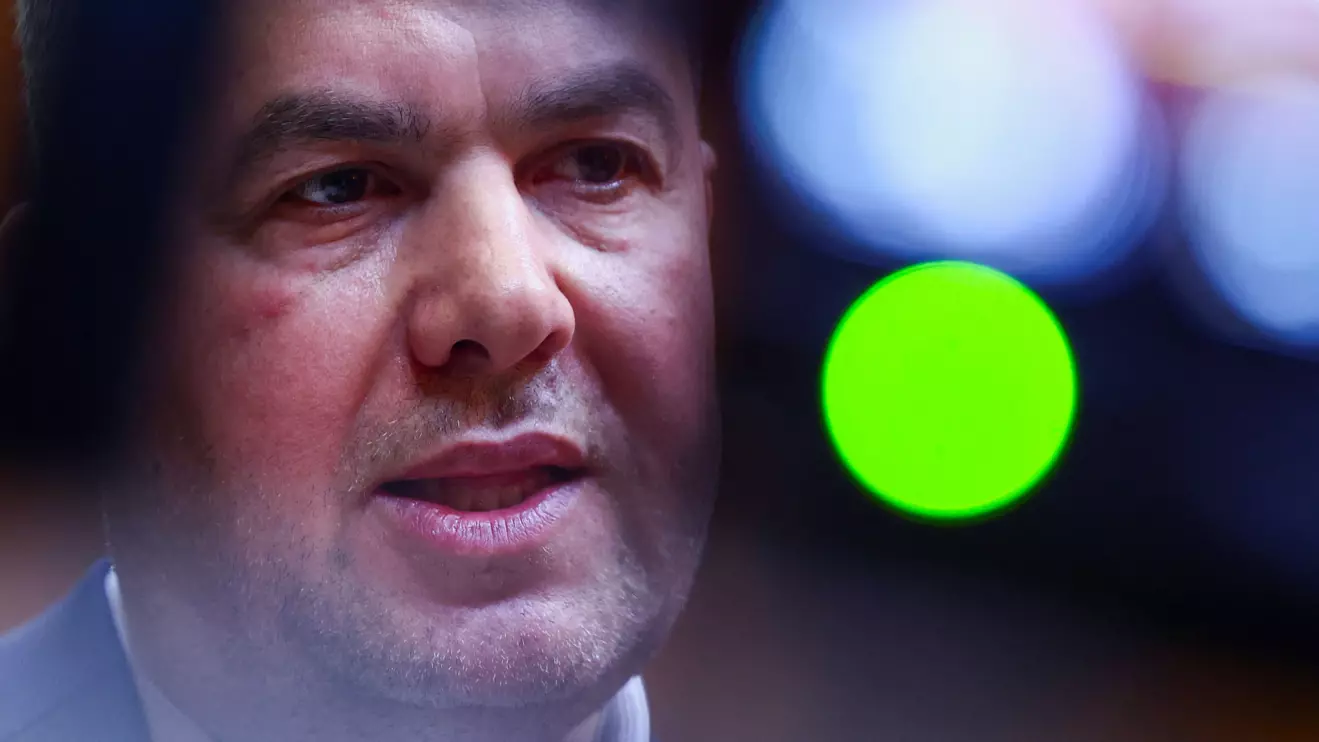
Hezbollah lawmaker Hassan Fadlallah. Reuters/Yara Nardi
A Hezbollah lawmaker said on Thursday that hundreds of kilograms of explosives seized last week by Lebanese security forces belonged to his group, as tensions persist over the government's push to disarm the Iran-backed movement.
Lebanese authorities stopped the explosives-laden vehicle at a checkpoint in the eastern Bekaa region last week and arrested two people in the car.
At the time, authorities did not say who the vehicle belonged to, prompting widespread worry in Lebanon that the explosives were intended for car bomb assassinations or other destabilizing attacks inside the country.
Speaking to reporters at the Lebanese parliament on Thursday, Hassan Fadlallah said Hezbollah had intended to use the explosives against Israel, whose troops are occupying swathes of Lebanese territory seized in this year's war.
A Hezbollah official and a Lebanese security source told Reuters that the explosives seized in the car last week were intended to be used in explosive drones targeting Israeli troops.
Fadlallah said Hezbollah had immediately contacted security agencies to clarify that it owned the vehicle and the cargo, and to demand the materials be returned and those detained be released.
Fadlallah's acknowledgment reflects Hezbollah's efforts to continue transporting weapons across Lebanon despite the government's vow to bring all arms in the country under state control.
On March 2, the government specifically banned Hezbollah's military activities hours after the movement launched rockets at Israel in solidarity with Tehran, pulling Lebanon into the regional war that erupted following US and Israeli strikes on Iran.
The government decisions were an attempt to reverse the relative freedom Hezbollah had enjoyed for years in transporting military equipment across Lebanon.
The group's main arms supply route through Syria was severed when its ally, then-president Bashar al-Assad, was ousted in late 2024. The new Syrian authorities have regularly announced seizures of weapons along their border with Lebanon that they say are intended for Hezbollah.
Throughout 2025, Lebanese troops seized and destroyed Hezbollah weapons depots in southern Lebanon in line with the government's plan to exert state control over all weapons, but that roadmap was put on pause when the new war erupted.
Under a deal reached through US-brokered talks between Lebanon and Israel this year, Beirut has vowed to disarm Hezbollah, which would in turn lead to Israeli troops gradually withdrawing from Lebanon.
But Hezbollah has refused to disarm as long as Israeli forces remain on Lebanese land and Israel has continued carrying out strikes across southern Lebanon.
Reporting by Laila Bassam, Jana Choukeir and Tala Ramadan
The Houthi attacks on Saudi Arabia are about more than Yemen.
UN peacekeeping chief Jean-Pierre Lacroix on Wednesday urged the UN Security Council to begin negotiations on the future of peacekeepers deployed in Lebanon, as Beirut campaigns for an extension to the mandate set to expire at the end of this year.
Yemen's Houthis vowed on Wednesday to press on with attacks on airports and oil facilities in Saudi Arabia, a day after a strike that sources said caused extensive damage to the headquarters of oil giant Saudi Aramco.

To make this website run properly and to improve your experience, we use cookies. For more detailed information, please check our Cookie Policy.
Necessary cookies enable core functionality. The website cannot function properly without these cookies, and can only be disabled by changing your browser preferences.