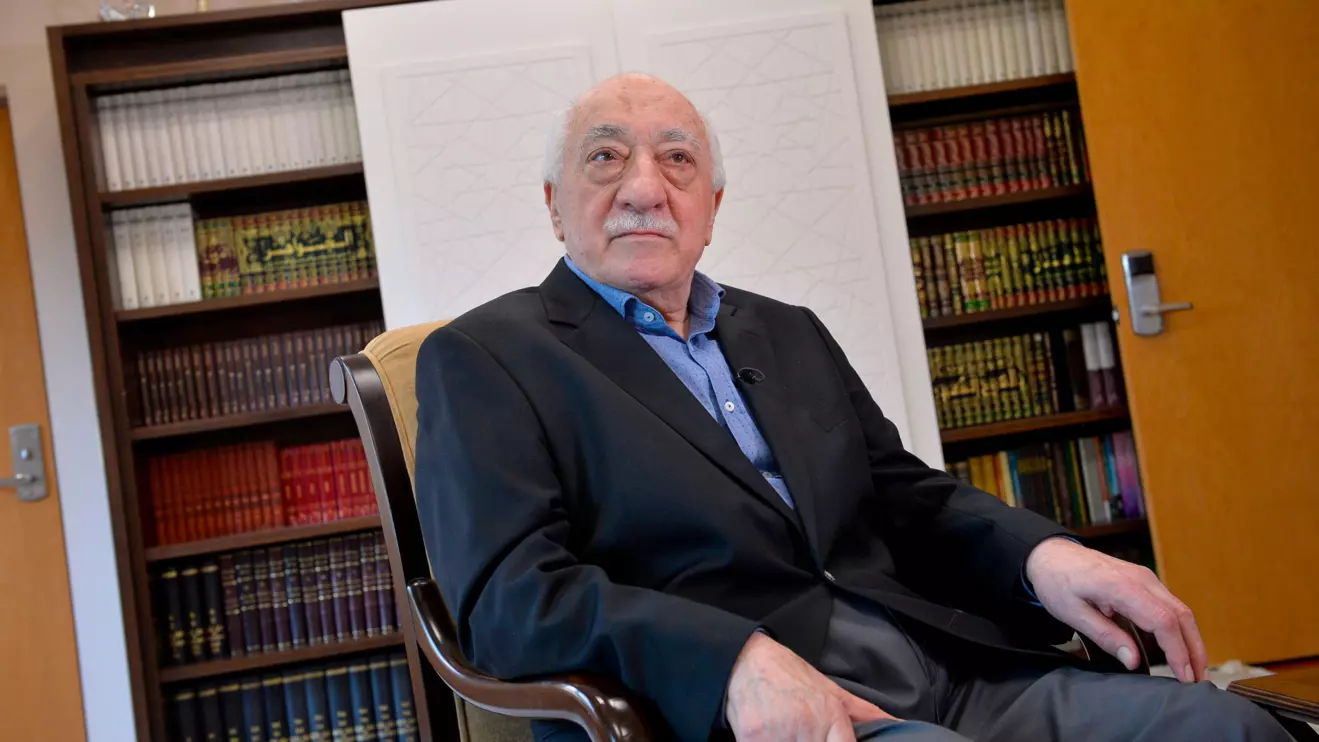
The U.S.-based cleric Fethullah Gulen, who built a powerful Islamic movement in Turkey and beyond but spent his later years mired in accusations of orchestrating an attempted coup against Turkish leader Tayyip Erdogan, has died. He was 83.
Herkul, a website which publishes Gulen's sermons, said on its X account that Gulen had died on Sunday evening in the U.S. hospital where he was being treated.
Gulen was a one-time ally of Erdogan but they fell out spectacularly, and Erdogan held him responsible for the 2016 attempted coup in which rogue soldiers commandeered warplanes, tanks and helicopters. Some 250 people were killed in the bid to seize power.
Gulen, who had lived in self-imposed exile in the United States since 1999, denied involvement in the putsch.
According to its followers, Gulen's movement - known as "Hizmet" which means "service" in Turkish - seeks to spread a moderate brand of Islam that promotes Western-style education, free markets and interfaith communication.
Since the failed coup, his movement has been systematically dismantled in Turkey and its influence has declined internationally.
Known to his supporters as Hodjaefendi, or respected teacher, Gulen was born in a village in the eastern Turkish province of Erzurum in 1941. The son of an imam, or Islamic preacher, he studied the Koran from infancy.
In 1959, Gulen was appointed as a mosque imam in the northwestern city of Edirne and began to come to prominence as a preacher in the 1960s in the western province of Izmir, where he set up student dormitories and would go to tea houses to preach.
These student houses marked the start of an informal network which would spread over the following decades through education, business, media and state institutions, giving his supporters extensive influence.
This influence also spread beyond Turkey's borders to the Turkic republics of Central Asia, the Balkans, Africa and the West through a network of schools.
FORMER ERDOGAN ALLY
Gulen had been a close ally of Erdogan and his AK Party, but growing tensions in their relationship exploded in December 2013 when corruption investigations targeting ministers and officials close to Erdogan came to light.
Prosecutors and police from Gulen's Hizmet movement were widely believed to be behind the investigations and an arrest warrant was issued for Gulen in 2014, with his movement designated as a terrorist group two years later.
Soon after the 2016 coup, Erdogan described Gulen's network as traitors and "like a cancer", vowing to root them out wherever they are. Hundreds of schools, companies, media outlets and associations linked to him were shut down and assets seized.
Gulen condemned the coup attempt "in the strongest terms".
"As someone who suffered under multiple military coups during the past five decades, it is especially insulting to be accused of having any link to such an attempt," he said in a statement.
In a crackdown after the failed putsch, which the government said targeted Gulen's followers, at least 77,000 people were arrested and 150,000 state workers including teachers, judges and soldiers suspended under emergency rule.
Companies and media outlets regarded as linked to Gulen were seized by the state or closed down. The Turkish government said its actions were justified by the gravity of the threat posed to the state by the coup.
Gulen also became an isolated figure within Turkey, reviled by Erdogan's supporters and shunned by the opposition which saw his network as having conspired over decades to undermine the secular foundations of the republic.
Ankara long sought to have him extradited from the United States.
Speaking in his gated compound in Pennsylvania's Pocono Mountains, Gulen said in a 2017 Reuters interview he had no plans to flee the United States to avoid extradition. Even then, he appeared frail, walking with a shuffle and keeping his longtime doctor close at hand.
Gulen had travelled to the United States for medical treatment but remained there as he faced a criminal investigation in Turkey.