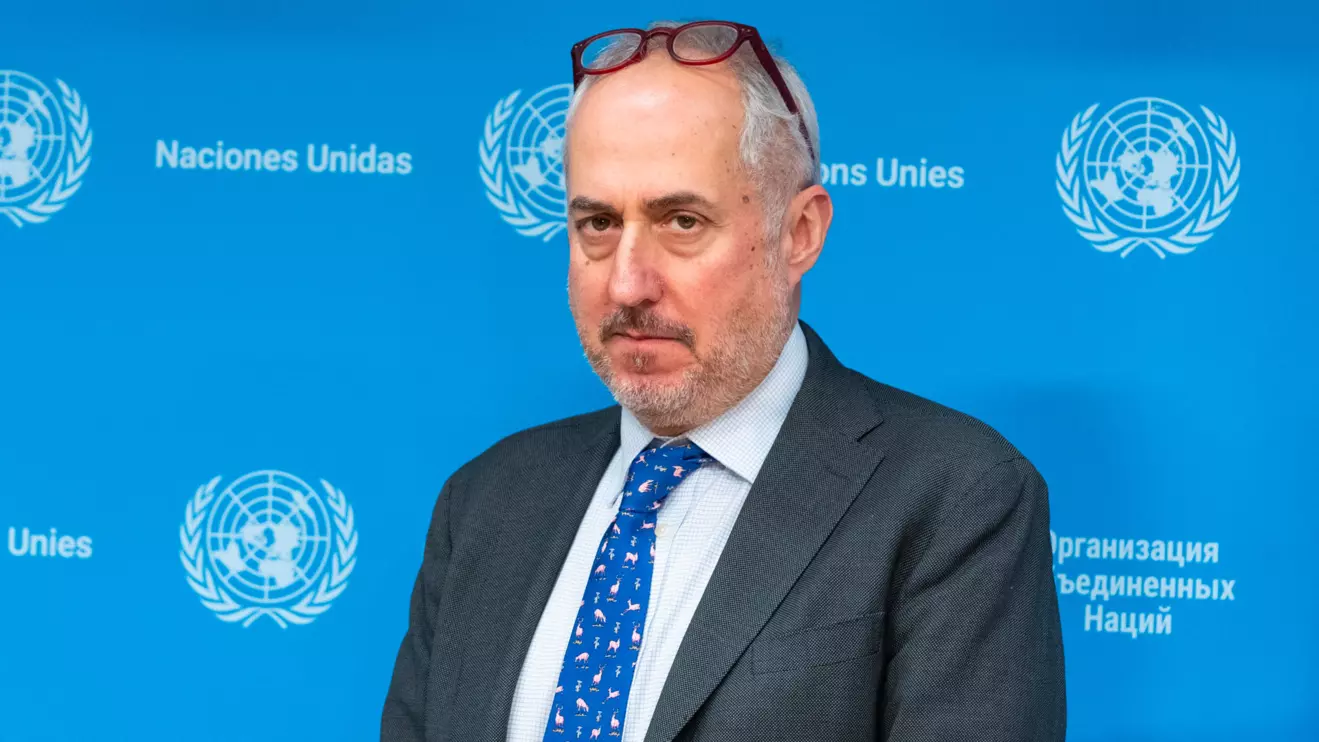
UN Secretary-General António Guterres said Tuesday he was "deeply concerned" by an "escalation of Israeli military operations" in and around Nabatieh, southern Lebanon.
His spokesperson, Stéphane Dujarric, condemned civilian casualties, demanded an Israeli withdrawal, and invoked Resolution 1701.
What the statement never mentions is why Israeli forces are there: Hezbollah's continued entrenchment in the south, in direct violation of the very resolution the UN cites, which explicitly bars any armed group but the Lebanese state and UNIFIL from the area.
Critics say this is no accident but a pattern: Guterres's statements on Israel-Lebanon consistently detail civilian suffering in granular terms while leaving the armed group operating from among that population unnamed, as if its presence were too obvious to state, even though it is the proximate cause of the fighting.
For an organization Guterres is about to leave, this has long been a point of contention among Israeli officials and Western critics, who argue the UN reserves its sharpest language for a functioning government while treating the militia embedded in a civilian population as background noise.
UN officials would counter that their mandate is to respond urgently to whoever is exercising overwhelming force at a given moment, citing UNIFIL figures of over 500 Israeli projectiles fired and 20,000 people displaced in days, and that documenting Hezbollah's violations is a separate, ongoing function, not an omission.
Israeli officials reject that framing entirely, arguing that any account of Nabatieh that omits Hezbollah isn't neutral, but incomplete.