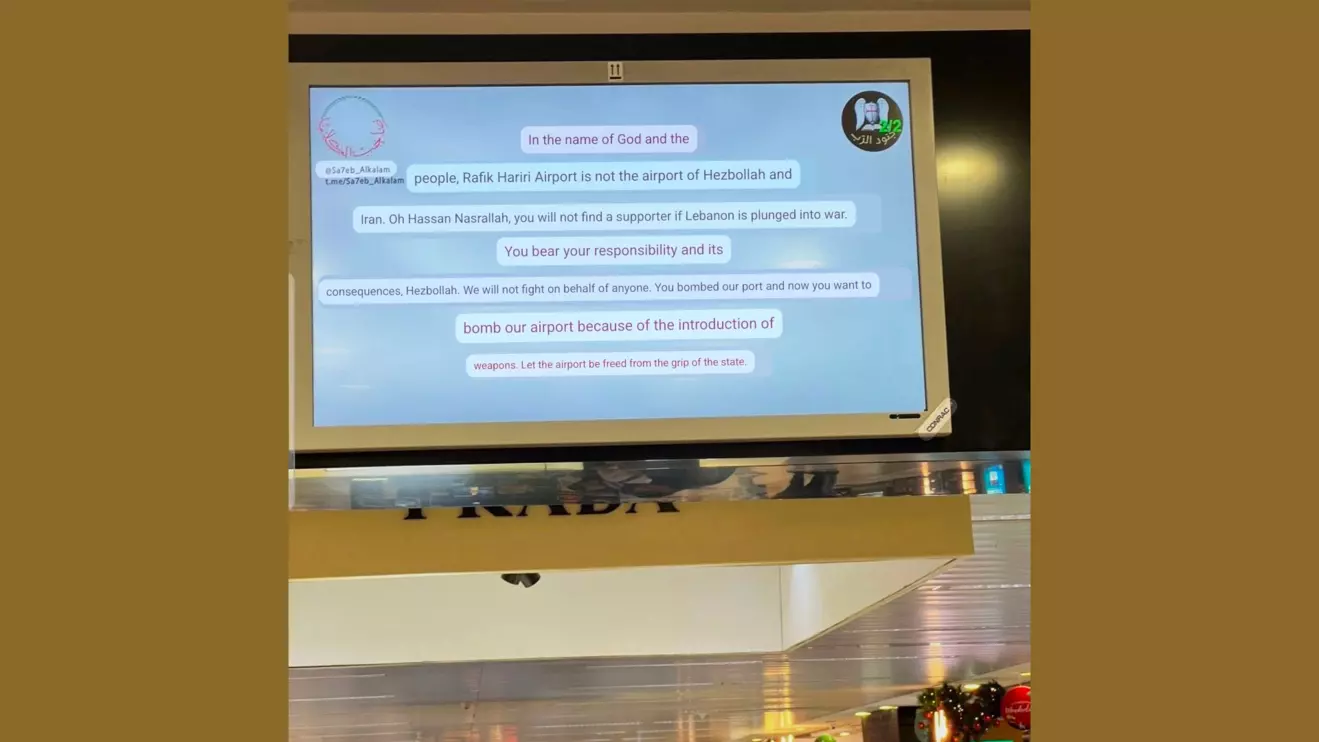
In a surprising development, a group identifying itself as the "Soldiers of God" made a bold statement on Sunday by infiltrating the monitors at Beirut's "Rafik al-Hariri" airport. Their message was a direct warning to Hezbollah and its leader, Hassan Nasrallah, indicating their refusal to allow the airport to be used for the transfer of weapons.
The message displayed prominently on the airport monitors left no room for ambiguity: "You will not find support - if Lebanon gets caught up in the war." This direct challenge was intended to send a clear message to Nasrallah and his organization.
The hackers didn't stop there; they replaced the usual flight information with their message for all travelers and airport visitors to see. "In the name of God and the people, the 'Rafik al-Hariri' airport is not the airport of Hezbollah and Iran," read the hackers' proclamation.
Continuing their bold stance, the message further stated, "Nasrallah, you will bear responsibility for it and its consequences. You are not fighting on behalf of anyone; you destroyed our port, and now they will attack our airport because of the introduction of weapons. Free the airport from the state's grip."
This incident raises concerns about the security of vital infrastructure in Lebanon and the potential risks associated with the transfer of weapons through civilian facilities.
While it remains unclear who the "Soldiers of God" are and what their exact motivations may be, their message underscores the growing tension and divisions within Lebanon, particularly concerning the role of Hezbollah in the country's affairs.
Lebanese authorities are expected to investigate this security breach, and it remains to be seen how this development will impact the political and security landscape in the region.