The Palestinian Islamist group Hamas said on Wednesday it would not take part in a new round of Gaza ceasefire talks slated for Thursday in Qatar, dimming hopes for a negotiated truce that Iranian sources say could hold back an Iranian attack on Israel.
The U.S. has said it expects indirect talks to go ahead as planned in Qatar's capital Doha on Thursday, and that a ceasefire agreement was still possible. However Axios reported that U.S. Secretary of State Antony Blinken has postponed a trip to the Middle East that had been expected to begin on Tuesday.
Three senior Iranian officials have said that only a ceasefire deal in Gaza would hold Iran back from direct retaliation against Israel for the assassination of Hamas leader Ismail Haniyeh on its soil last month.
The Israeli government said it would send a delegation to Thursday's talks, but Hamas, the Palestinian militant group that controls Gaza, requested a workable plan to implement a proposal it has already accepted rather than more talks.
"Hamas is committed to the proposal presented to it on July 2, which is based on the U.N. Security Council resolution and the Biden speech and the movement is prepared to immediately begin discussion over a mechanism to implement it," Senior Hamas official Sami Abu Zuhri told Reuters.
"Going to new negotiation allows the occupation to impose new conditions and employ the maze of negotiation to conduct more massacres," he added.
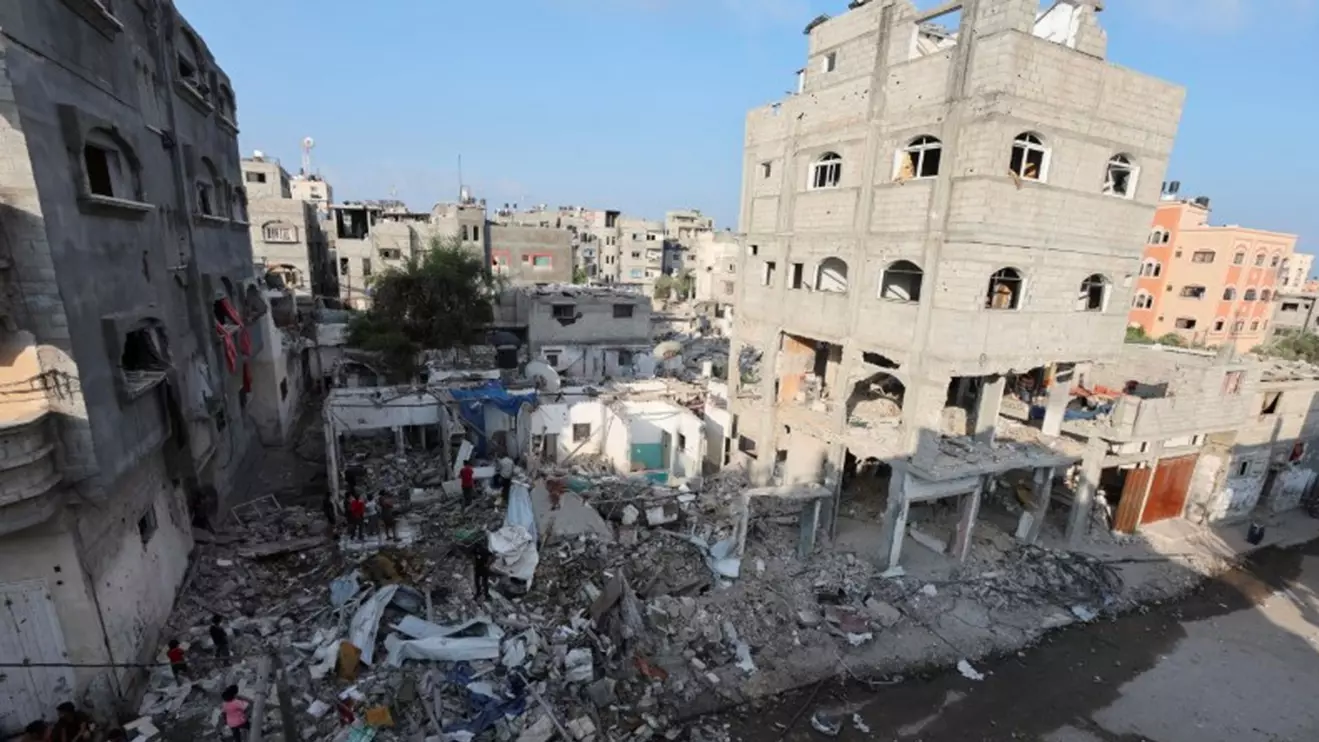
There has been no let-up in fighting in Gaza, where residents of the southern city of Khan Younis said Israeli forces blew up homes in the east and intensified tank shelling on eastern areas of the city centre.
Israel said it was responding to Hamas rocket fire towards Tel Aviv on Tuesday and had struck rocket launching pads and militants among 40 military targets over 24 hours, including in central Gaza, Khan Younis, and western Rafah in the south.
Armed groups of Hamas and the Islamic Jihad said they had attacked Israeli forces in several areas, while Palestinian health officials said Israeli strikes had killed at least 14 people so far on Wednesday, mostly in the centre and south.
Hamas also said its fighters were engaged in fierce clashes with Israeli forces in another Palestinian territory, the Israeli-occupied West Bank, where Israel said it had killed a number of militants.
'UNCERTAIN OPPORTUNITIES FOR DIPLOMACY'
A ceasefire deal would aim to end fighting in Gaza and ensure the release of Israeli hostages held in the enclave in return for many Palestinians jailed by Israel, but the two sides remain divided by sequencing and other issues.
Hamas wants an agreement to end the war and a withdrawal of Israeli forces from Gaza as a basic pre-condition for releasing hostages, while Israeli Prime Minister Benjamin Netanyahu says he will only agree to a pause in fighting to allow as many hostages to return as possible. He has repeatedly said the war can only end when Hamas is eradicated.
A Hamas-led attack on Israeli communities around the Gaza Strip on Oct. 7 killed some 1,200 people, with more than 250 taken into captivity in Gaza, according to Israeli tallies, in one of the most devastating blows against Israel in its history.
In response, Israeli forces have razed much of Gaza, displaced most of the population, and killed around 40,000 people, according to the Palestinian health ministry, causing horror around the world. Israel says it has lost more than 300 soldiers. Hamas rocket attacks on its territory have continued.
In an attempt to deter a separate escalation between Iran-backed Hezbollah and Israel, after the latter killed a senior Hezbollah commander in Beirut's southern suburbs last month, Amos Hochstein, a senior adviser to U.S. President Joe Biden, landed in Beirut on Wednesday.
Hochstein will meet with Lebanese caretaker Prime Minister Najib Mikati and parliament speaker Nabih Berri, who heads the armed Amal movement, which is allied to Hezbollah and has also fired rockets on Israel.
"We are facing uncertain opportunities for diplomacy, which is now moving to prevent war and stop Israeli aggression," Mikati said in a speech ahead of a cabinet meeting on Wednesday.
Mikati said talks with Arab and Western leaders had intensified due to the seriousness of the situation in Lebanon and the region.