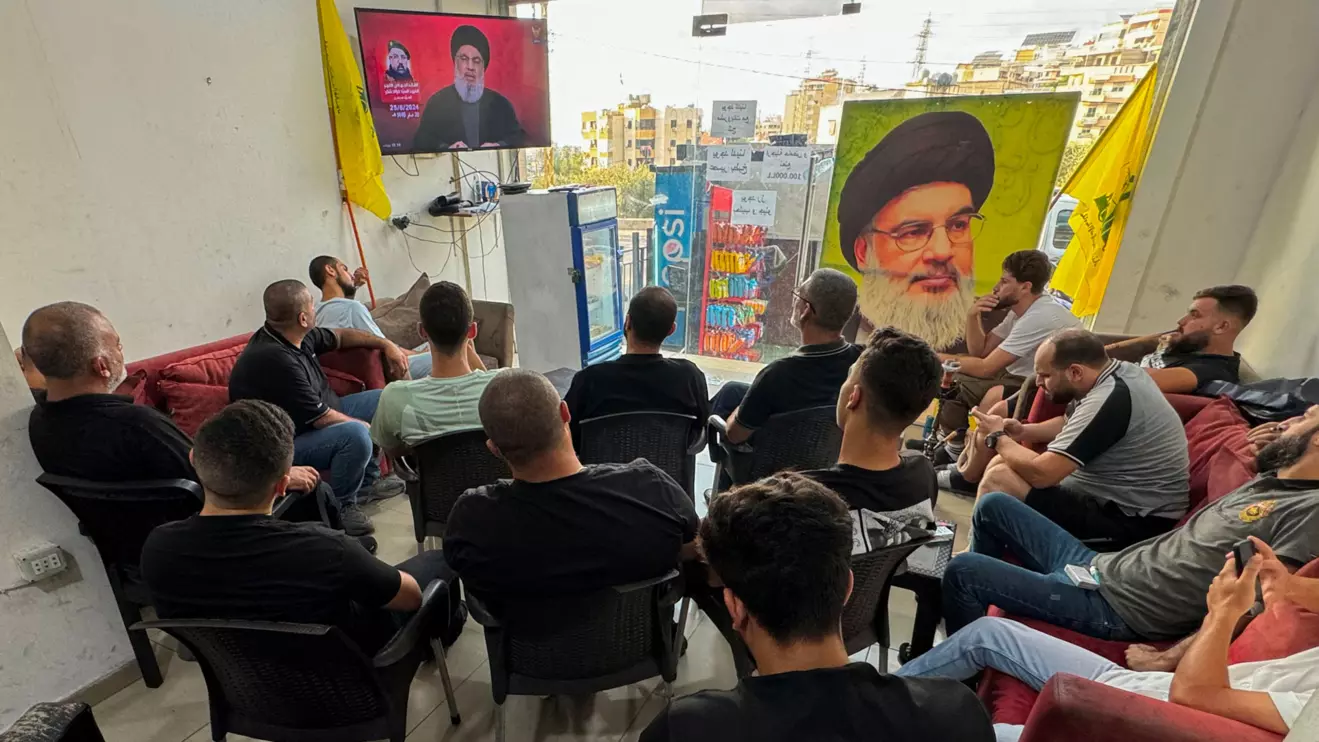
Hezbollah leader Sayyed Hassan Nasrallah said on Sunday that his group would assess the impact of its rocket and drone attack on Israeli military targets earlier in the day before determining whether it would carry out further attacks to avenge a slain commander.
The leader of the Lebanese armed group said in a televised address that it had been able to carry out its attack "as planned," denying statements by the Israeli military that its pre-emptive strikes had stopped a wider attack by the group.
Nasrallah, speaking about 12 hours after the most intense exchange of fire between Iran-backed Hezbollah and Israel since hostilities broke out in parallel with the war in Gaza, said the group had intentionally refrained from targeting civilians or public infrastructure, including Ben Gurion Airport in Tel Aviv.
He said the group's main target was a military intelligence base about 110 km (70 miles) inside Israeli territory - the deepest attack yet and just 1.5 km (1 mile) north of Tel Aviv.
Nasrallah said the group would assess the results of the operation, a retaliation for Israel's killing of top Hezbollah commander Fuad Shukr on the edges of Beirut last month.
"If the result is not enough, then we retain the right to respond another time," Nasrallah said.
Hezbollah fighters had successfully launched a volley of more than 300 Katyusha rockets to distract Israel's Iron Dome defences before sending attack drones, he said.
They included drones fired from the eastern Bekaa Valley, a first for the group, he said. None of the drone or rocket launchers were damaged in Israel's pre-emptive strikes, he said.
Nasrallah said Hezbollah had not planned a larger attack, specifically denying Israeli military statements that the group had intended to fire thousands of projectiles.
But he acknowledged that the operation had been delayed for several reasons, including what he called a "mobilization" of Israeli and American military assets in the region.
Reporting by Maya Gebeily