
Iran
Trump warns Tehran: Pickaxe Mountain could be next
President Donald Trump said the US may have to target Pickaxe Mountain, a site linked to Iran's nuclear program, as he aims to ensure Tehran does not get a nuclear weapon.

Hezbollah lawmaker Hassan Fadlallah told parliament Thursday that the "ill-fated" framework agreement signed on June 26 between Lebanon and Israel was "doomed to fail," insisting "the Zionists will not be able to impose its implementation" and that "our people will thwart its effects on the ground."
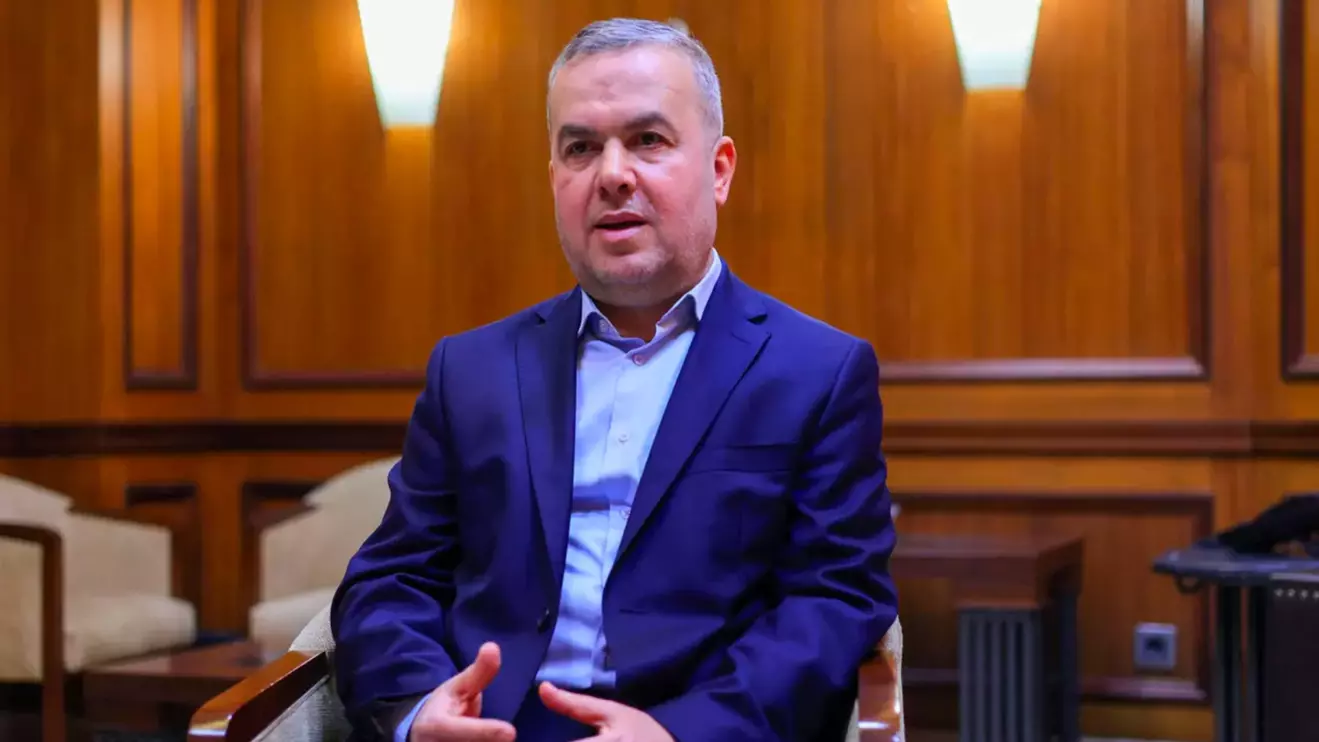
Hezbollah lawmaker Hassan Fadlallah, Reuters/Yara Nardi
Hezbollah lawmaker Hassan Fadlallah told parliament Thursday that the "ill-fated" framework agreement signed on June 26 between Lebanon and Israel was "doomed to fail," insisting "the Zionists will not be able to impose its implementation" and that "our people will thwart its effects on the ground."
Reaffirming his opposition to the deal, the member of the Loyalty to the Resistance bloc argued that "all attempts to dress up this text will remain futile," calling it an agreement that "ends Lebanon's existence as an independent state, legalizes the occupation... replaces withdrawal [from South Lebanon] with pilot zones, subjects the Lebanese army to tests conducted by the enemy army... and makes Lebanese authorities partners of the enemy in every drop of blood our people shed."
His remarks came a day after the sixth round of direct negotiations between Beirut and Jerusalem concluded in Rome with an agreement on implementing the "pilot zones" in the south.
According to sources, the zones where the Lebanese army is to deploy will include both occupied areas, from which Israeli forces would withdraw, and non-occupied ones. The framework agreement, and the very principle of direct talks with Israel, is rejected outright by the Shiite Amal-Hezbollah alliance.
In a scathing attack on President Joseph Aoun, Fadlallah accused him of abandoning his role as "president, symbol of national unity" to become "a political party" that has deepened divisions among the Lebanese, turning Baabda Palace into "a partisan platform."
He accused Aoun of derailing dialogue attempts with Hezbollah, endorsing decisions hostile to the party, and, alongside Prime Minister Nawaf Salam, "criminalizing the resistance" on March 2, when the war in Lebanon resumed.
That day, the Lebanese government had banned Hezbollah's military activities after the group fired rockets at Israel in retaliation for the killing of Ali Khamenei on the first day of the US-Israeli offensive against Iran.
Israel has said it is ready to move forward with withdrawing troops from "two pilot zones" in South Lebanon in favor of the Lebanese army.
While Beirut insists on a full Israeli withdrawal from the south, Jerusalem is demanding Hezbollah's disarmament as a precondition, under the terms of the framework agreement.
President Donald Trump said the US may have to target Pickaxe Mountain, a site linked to Iran's nuclear program, as he aims to ensure Tehran does not get a nuclear weapon.
Avigdor Liberman does not do ambiguity, and with twelve days to go before Israel's October 27 election he has made his position plainer still.
Chinese Foreign Minister Wang Yi has told Israeli President Isaac Herzog that Israel should stop and reverse its "forced establishment" of West Bank settlements.

To make this website run properly and to improve your experience, we use cookies. For more detailed information, please check our Cookie Policy.
Necessary cookies enable core functionality. The website cannot function properly without these cookies, and can only be disabled by changing your browser preferences.