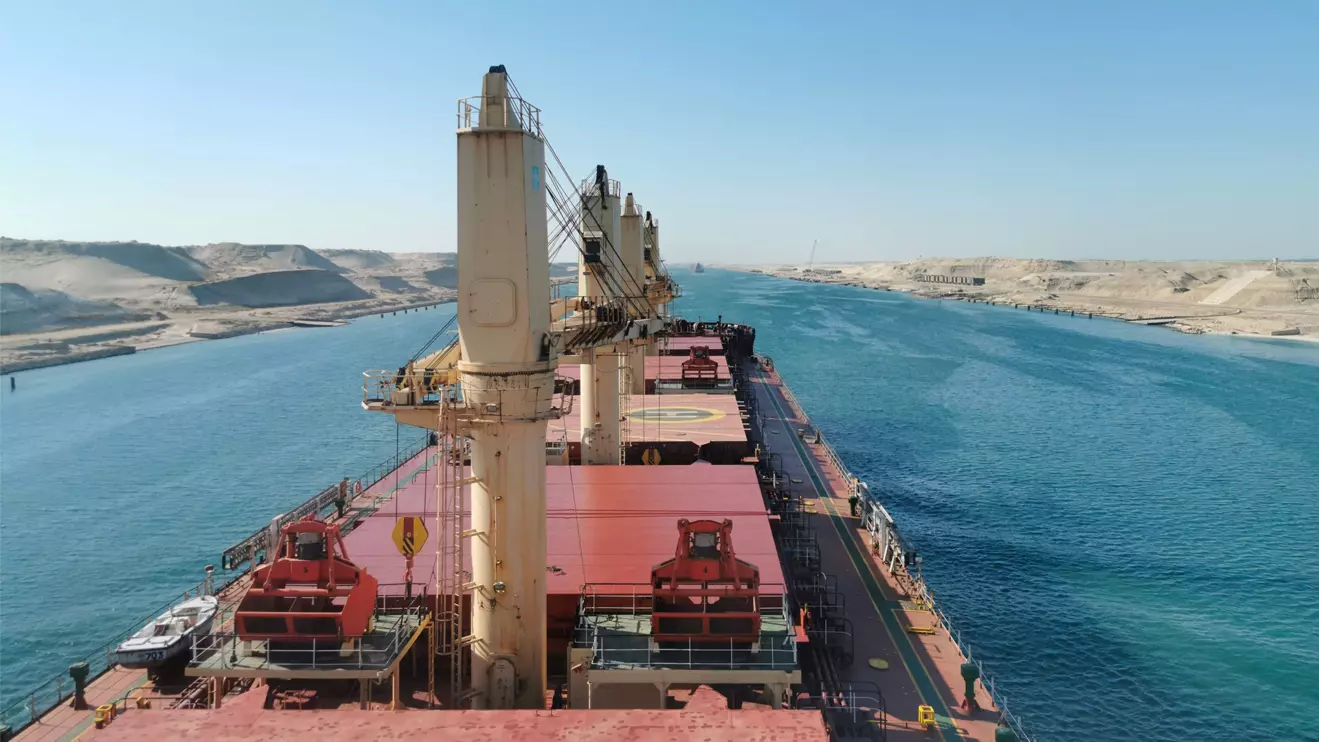
Egyptian President Abdel Fattah al-Sisi said that revenues from the Suez Canal had "decreased by 40 to 50 percent" so far this year due to attacks on shipping by Yemen's Houthis.
The canal is one of the main sources of foreign currency for Egypt which is gripped by a severe financial crisis.
Since November, the Iran-backed Houthis have launched numerous attacks on vessels in the Gulf of Aden and Red Sea, which the group says are aimed at ships with links to Israel in solidarity with the Palestinians in the war-torn Gaza Strip.
The attacks have caused several major shipping firms to suspend passage through the Red Sea, which usually carries around 12 percent of global trade, and divert vessels thousands of miles around Africa.
"See what is happening at our borders... with Gaza, you see the Suez Canal, which used to bring Egypt nearly $10 billion per year, (these revenues) have decreased by 40 to 50 percent and Egypt must continue to pay companies and partners," Sisi said during a conference with oil companies.
The United Nations said in late January that the overall number of ships passing through the Suez Canal, which links the Red Sea to the Mediterranean, had fallen 42 percent in the previous two months.
The number of weekly container ship transits through the Suez fell by 67 percent year-on-year, according to the UN Conference on Trade and Development (UNCTAD), while tanker traffic dropped 18 percent, the transit of bulk cargo ships carrying grain and coal was down six percent and gas transport at a standstill.
The engineering landmark, which opened in 1869, raised around $8.6 billion for Egypt in the 2022-23 fiscal year, a vital source of foreign currency, alongside tourism and remittances, in a country where importers and money changers struggle to source dollars.