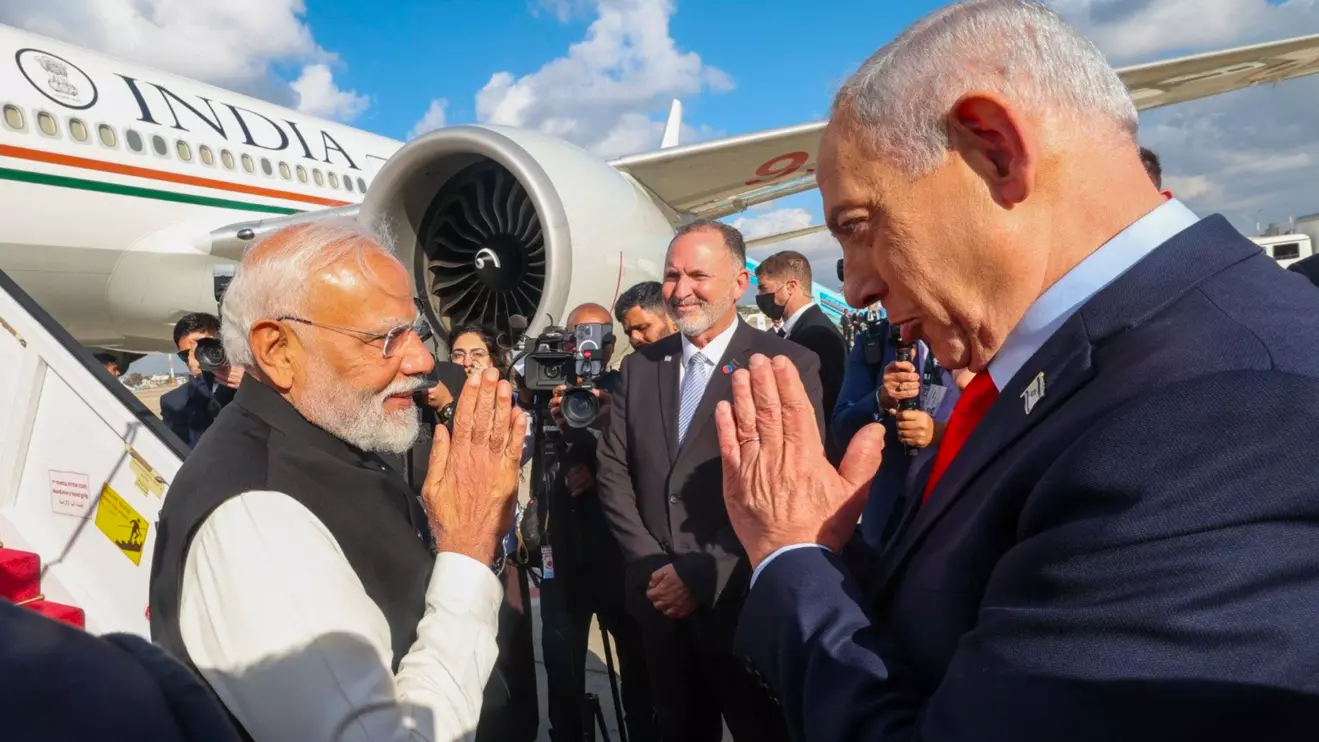
Indian Prime Minister Narendra Modi wrapped up a two-day visit to Jerusalem Thursday, cementing what both leaders described as a deepening and forward-looking partnership between the two nations.
Standing alongside Prime Minister Benjamin Netanyahu, Modi delivered a clear and unambiguous message: "India and Israel affirm that there is no place for terrorism in the world, in any form.
We will oppose it side by side, always." He had set the tone a day earlier, telling the Israeli parliament that India stands "firmly" with Israel, while paying tribute to the victims of the October 7, 2023 Hamas attack.
Netanyahu called the visit "extraordinarily productive", adding: "The future belongs to those who innovate — and Israel and India are firmly focused on innovation."
The two countries signed 16 memoranda of understanding spanning artificial intelligence, agriculture, education, cybersecurity, geophysical exploration, and civilian nuclear energy cooperation. Among the highlights: a joint agricultural research and innovation center, a cybersecurity center of excellence, and expanded AI development initiatives.
50,000 Indian workers bound for Israel
On the economic front, up to 50,000 Indian workers are set to relocate to Israel, according to senior Indian official Vikram Misri. Israel needs to fill labor shortages in construction and agriculture, sectors heavily dependent on Palestinian workers now affected by war-related movement restrictions.
The visit signals a new chapter in bilateral relations built on defense, technology, and trade. Yet India walks a careful diplomatic line, maintaining strong ties with Gulf states and Iran, Israel's sworn adversary, even as it deepens its Jerusalem partnership.
For both nations, the message is clear: innovate together, grow together, stand together.