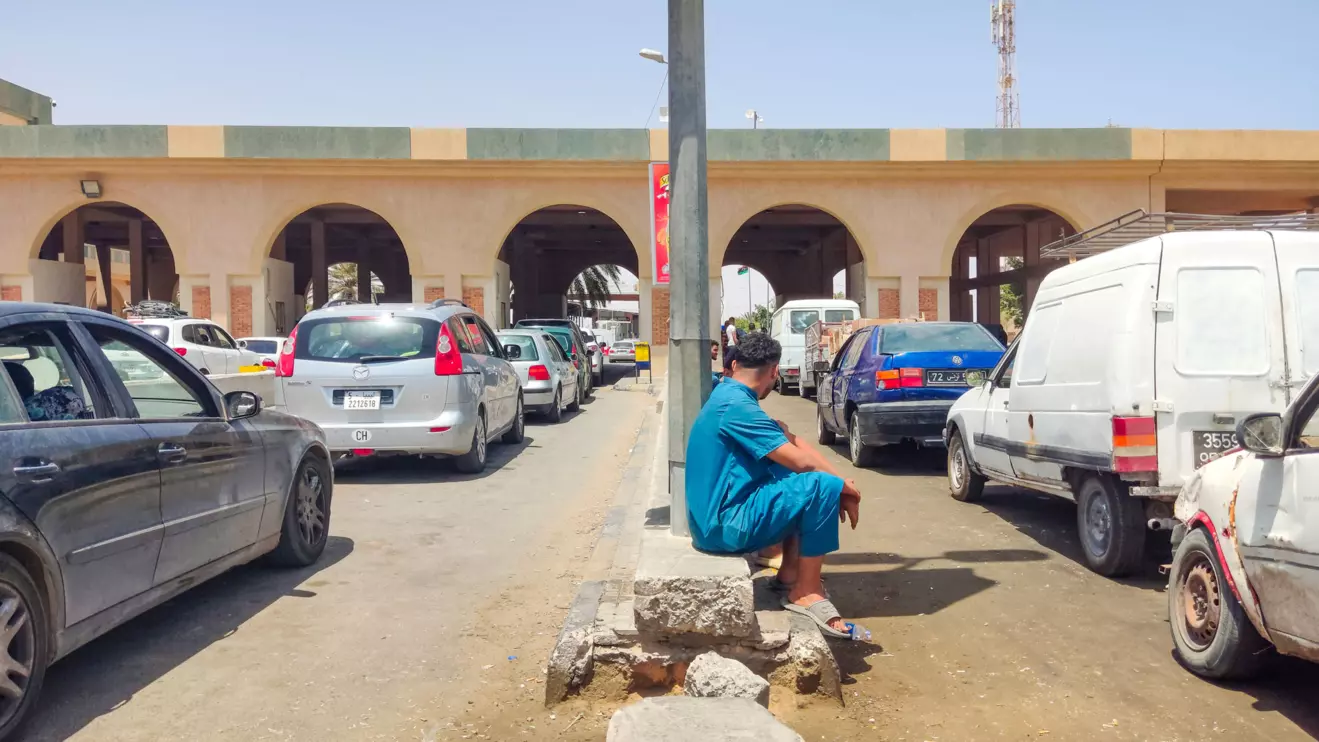
Interior ministers from Libya and Tunisia said on Wednesday they had agreed to partially reopen the border crossing at Ras Jdir on Thursday morning, and to fully reopen it on June 20 after more than three months of closure.
Libyan interior minister in Government of National Unity (GNU) in Tripoli, Emad Trabulsi, said in a video statement with his Tunisian counterpart, Khaled Nouri, that the border crossing would be reopened "for the interest of the [two] countries without harming any party".
In mid-March, the Libyan interior ministry said it closed the border crossing due to armed clashes after the border was attacked by "outlaws".
Ras Ijdir is the major border crossing between the two countries in Libya's western region, where Libyans often go to Tunisia for medical treatment and trucks with goods coming in the opposite direction.
Libya has had little peace since a 2011 uprising and is split between eastern and western factions, with rival administrations governing each area.
The GNU, which controls Tripoli and northwestern parts of Libya, is recognised internationally but not by the country's eastern-based parliament.
"The reopening will be tomorrow for humanitarian cases, special cases that have permits from the Tunisian and Algerian interior ministry, and medical cases," said Trabulsi.
Trabulsi added that he would meet Nouri on June 20 at the border crossing "to hold a meeting and fully reopen it to all travellers".
For his part, Nouri said they had supported the crossing with everything necessary "in order to facilitate movement and not disrupt travellers from both sides".
Reporting and writing by Ahmed Elumami