Since the Islamic Revolution of 1979, Iran's population has been subjected to one of the most sustained and suffocating propaganda systems in modern history. A regime built on lies requires a media built on lies, and the Islamic Republic has constructed exactly that.
For over four decades, ordinary Iranians have been systematically fed primary propaganda by state-controlled outlets that serve the regime rather than inform the public. Internet access - when it exists at all - is episodic, heavily surveilled and frequently shut down during moments of political inconvenience, such as protests, elections or, most recently, the outbreak of war.
The rare foreign correspondents permitted to operate from Tehran do so under conditions that make genuine journalism virtually impossible.
At best, they work under constant censorship pressure. At worst - and this is not hyperbole - some operate as de facto collaborators of the Revolutionary Guards, their dispatches shaped by the threat of arrest, expulsion or worse.
The result is a media landscape as closed, controlled and dishonest as the regime that created it.
The Tehran Times: Iran's International Embarrassment
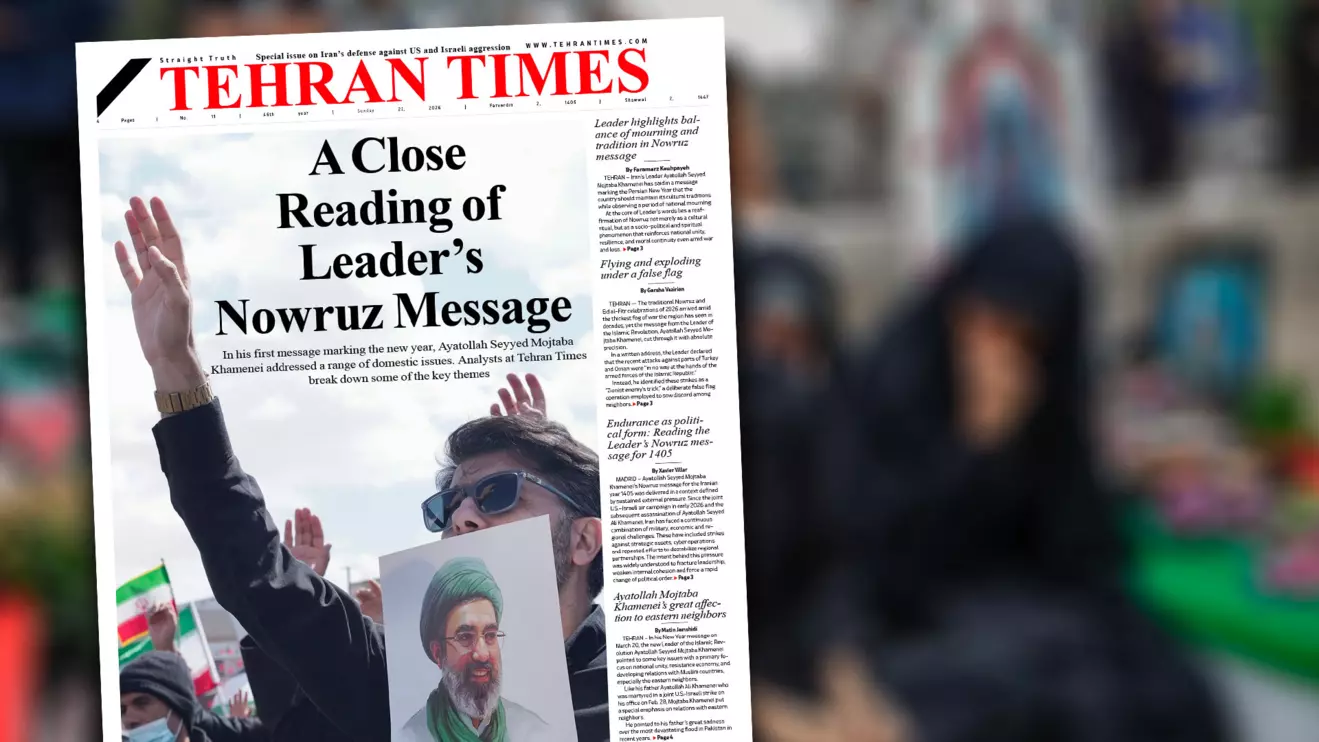
Perhaps no single publication better illustrates the bankruptcy of Iranian state media than the Tehran Times, the regime's English-language daily, ostensibly designed to present Iran's face to the international community.
The reality is rather less flattering.
The Tehran Times is not a newspaper. It is a propaganda sheet in broadsheet format, a daily exercise in disinformation, distortion and ideological incitement dressed up in the visual language of journalism. Its pages offer a reliable diet of false information, inaccurate claims and undisguised hatred, toward Israel, toward the United States, toward the West and toward any Iranian voice that dares to dissent.
Its coverage of the current war has been a masterclass in fabrication: victories that never happened, enemies defeated that are still fighting, a supreme leader who rules from a hospital bed while state media pretends all is well.
The Collaborators
What makes Iranian state media particularly troubling is not just what it publishes, but who helps it publish. Western journalists who repeat regime talking points without scrutiny, academics who provide intellectual cover for theocratic narratives, and international wire services that quote Iranian state media as though it were a credible source all share some responsibility for laundering propaganda into the global information ecosystem.
The Tehran Times does not deserve to be cited. It deserves to be called what it is: the house organ of a murderous theocracy.
The cruelest irony of Iran's propaganda apparatus is that it fools almost no one inside Iran itself. A majority of Iranians, as demonstrated repeatedly in the streets, in underground conversations and in the desperate attempts to access foreign news through VPNs, want nothing more than to see this regime disappear.
They know the Tehran Times is lying. They know the state television is lying. They know the victory announcements are fiction. They have lived inside this system long enough to read its language fluently, and to recognize every deception.
The Islamic Republic has the media it deserves. What it does not have - and has never had - is the consent of the people it claims to represent.
Iran's media system is not a failure of journalism. It is journalism's deliberate negation, a machine built to suppress truth, manufacture consent and keep a population ignorant of its own government's crimes.
The Tehran Times is its most visible international face.
A bloody theocracy. A captured press. A people who know the difference, and are waiting for the day they can say so freely.