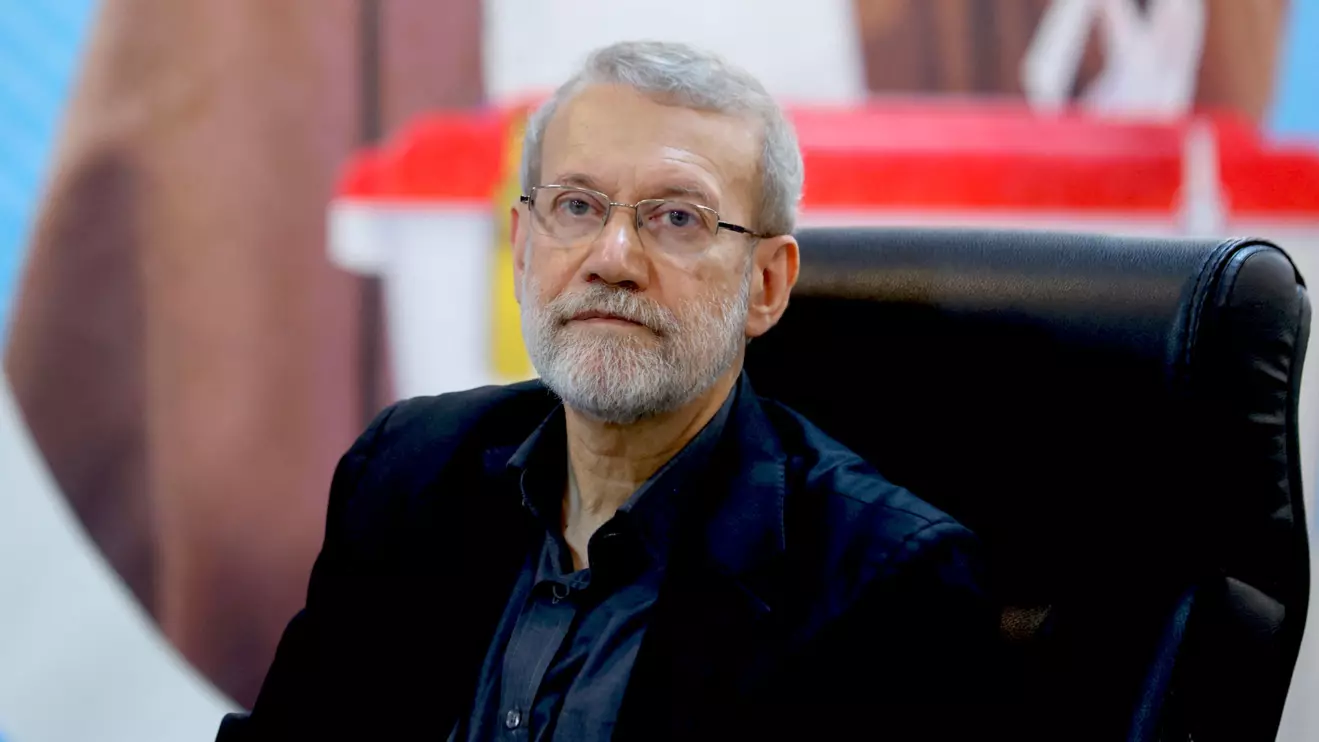
Israeli Defense Minister Israel Katz announced Tuesday that Ali Larijani, Iran's security chief, had been killed in an Israeli strike. Tehran has not confirmed or denied the claim.
Ali Larijani was one of the most powerful and influential figures in the Islamic Republic — a career that spanned four decades at the heart of Iran's political, security and diplomatic establishment.
Born in 1960, Larijani held a series of critical positions throughout his career. He served as Secretary of the Supreme National Security Council (2005-2007), Iran's top national security body, where he led nuclear negotiations with the West.
He was Speaker of the Iranian Parliament (Majlis) for an unprecedented 12 years (2008-2020), making him one of the most powerful figures in the legislative branch. He served as Head of Islamic Republic of Iran Broadcasting (IRIB) and was a senior adviser to Supreme Leader Ali Khamenei — a role that gave him direct access to the highest levels of power.
Larijani was widely considered a pragmatic conservative — a rare figure in Iranian politics capable of navigating between hardliners and moderates. His long tenure as parliament speaker and his role as nuclear negotiator made him a central figure in Iran's dealings with the West.
He ran for president multiple times, most recently in 2021, before being disqualified by the Guardian Council — a decision widely seen as politically motivated.
Strategic Significance
If confirmed, Larijani's death would represent one of the most significant eliminations of the conflict — a figure whose institutional knowledge, political connections and security expertise made him irreplaceable within the Islamic Republic's power structure.
His death would follow those of Supreme Leader Ali Khamenei (February 28), multiple IRGC commanders and senior military officials, further decapitating Iran's leadership at a critical moment in the war.
Tehran's silence speaks volumes. When Iran confirms, the world will understand the full scale of what Israel has achieved.