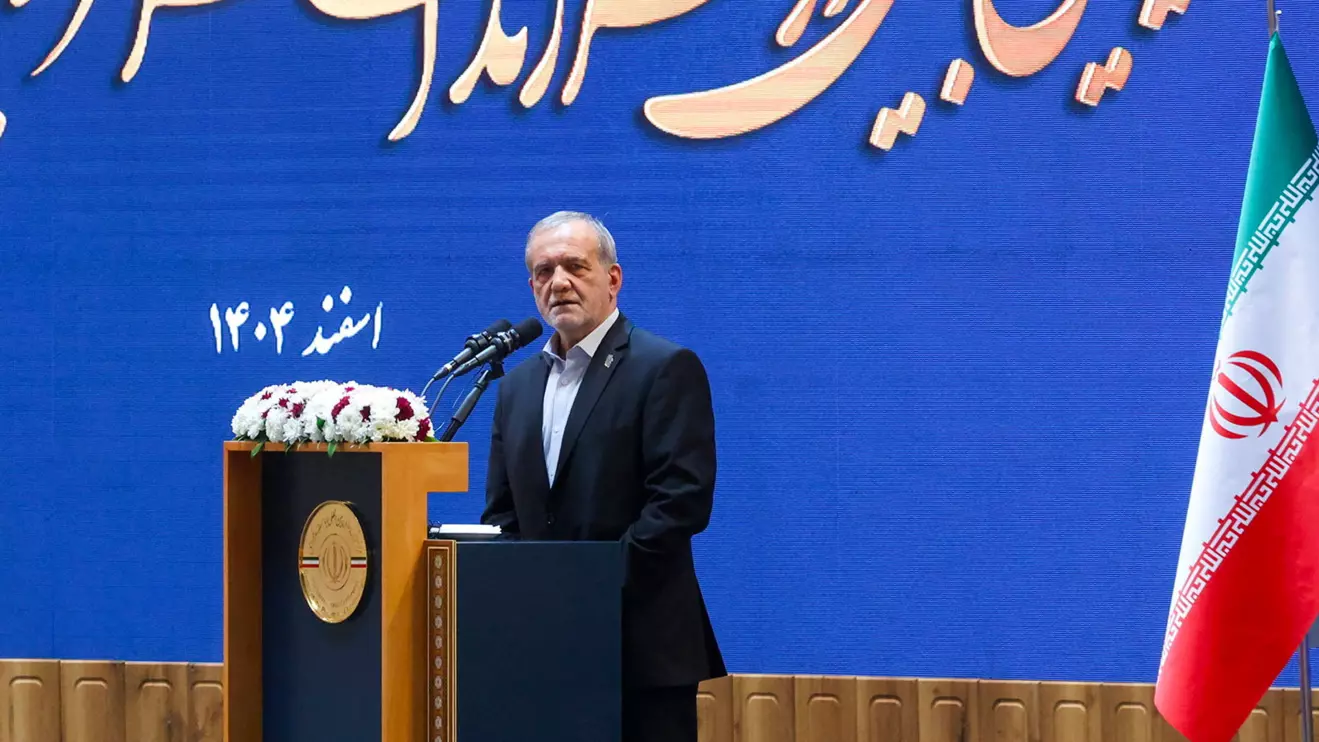
Iran's President Masoud Pezeshkian called Saturday for an "immediate cessation" of what he described as US-Israeli aggression, in a phone call with Indian Prime Minister Narendra Modi, appealing to the BRICS bloc to play an independent role in halting the conflict and proposing a regional security framework for West Asia without foreign interference.
It was a busy diplomatic performance from a man who, under Iran's constitution, has almost no actual power over war and peace.
In the Islamic Republic, foreign policy, military decisions and matters of war belong exclusively to the Supreme Leader. The president executes. The Supreme Leader decides.
Which raises an uncomfortable question that hangs over every Iranian diplomatic statement right now: who is actually making the decisions in Tehran?
Supreme Leader Mojtaba Khamenei, appointed on March 8 following his father's assassination, has not been seen in public since his appointment. No video. No audio. No live appearance. His first message was read by a television presenter in front of a still photograph. His second was a written Nowruz declaration whose authorship cannot be independently verified.
The options are not reassuring. Either Mojtaba Khamenei is alive but incapacitated, making decisions from a hospital bed through intermediaries. Or a collective of IRGC commanders and regime hardliners has effectively taken control of the Islamic Republic's most consequential decisions. Or something else entirely is happening behind closed doors in Tehran, something the regime is working very hard to conceal.
Pezeshkian's Diplomatic Theater
Against this backdrop, Pezeshkian's call for BRICS mediation and a regional security framework reads less like genuine diplomacy and more like a holding operation, a way to project normalcy and institutional continuity while the regime's actual power structure remains opaque.