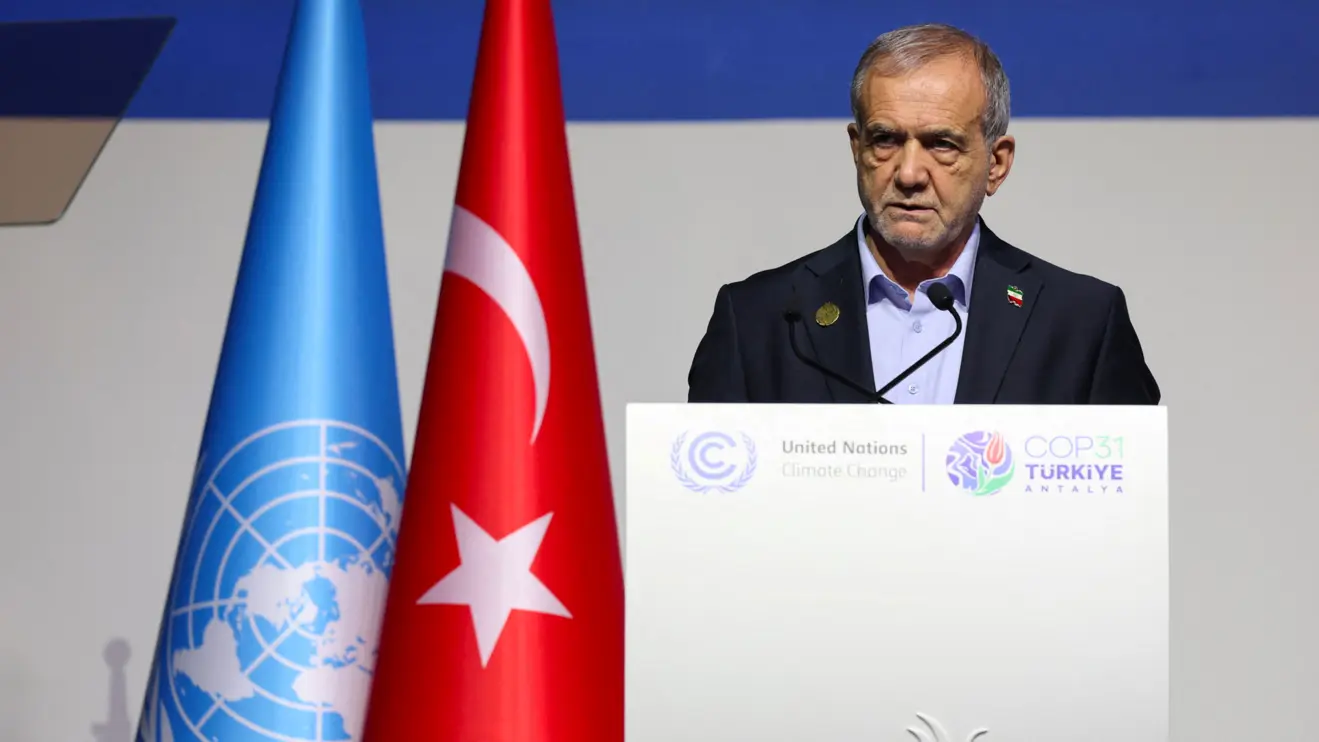
At a climate summit short on good news, Iran’s president delivered a rare moment of comedy: Tehran wants to be paid for environmental damage caused by the war.
Masoud Pezeshkian told COP31 delegates in Antalya on Wednesday that Iran deserves compensation for the environmental harm caused by US and Israeli strikes since late February. Damage to energy infrastructure, he argued, is a matter for global climate efforts.
A bold request, from a country whose own forces have spent months attacking oil tankers in the Strait of Hormuz. Those strikes caused “substantial oil leaks.” Marine life in the Gulf will no doubt be pleased to learn that the polluter is now asking for damages.
The proxy portfolio
Then there is the wider account. For years, Tehran has armed, funded and trained Hamas, Hezbollah and the Houthis, whose wars have left homes, farmland and infrastructure in ruins from Gaza to southern Lebanon and Yemen. Burned orchards, poisoned soil, and shipping lanes turned into firing ranges somehow did not make it into the Iranian president’s speech.
One might ask how much Iran plans to pay into that fund. Tehran has so far shown no sign of answering.
There is a final twist. According to a report published on Tuesday by an international consortium of scientists, global fossil fuel emissions are on track to fall slightly this year, partly because the war sent fuel prices soaring and pushed countries toward renewables.
By that logic, the Islamic Republic may yet claim credit for its contribution to the fight against climate change. Perhaps next year’s COP will award it a prize.