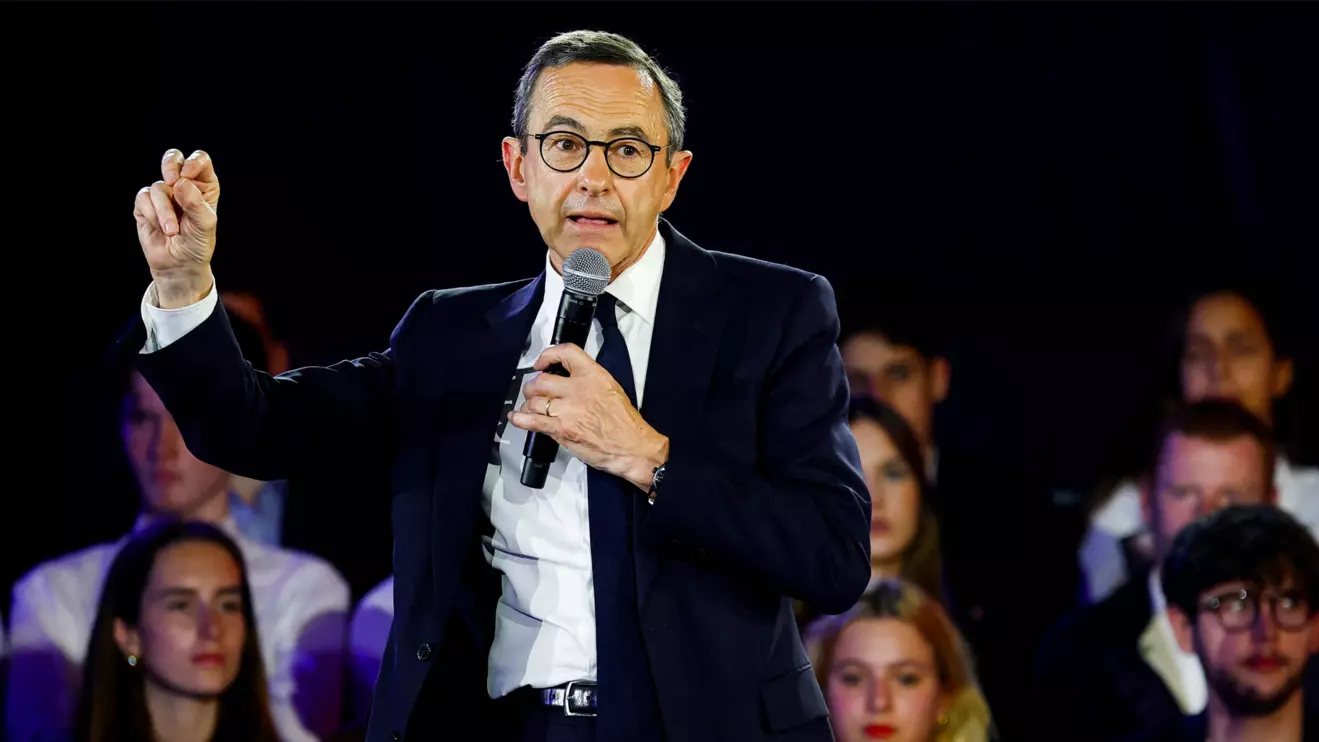
France has evidence that Iran has used intermediaries in the past to hire drug traffickers to carry out activities in France on its behalf and could do so again, Interior Minister Bruno Retailleau said on Sunday.
France is on heightened alert following U.S. strikes on Iranian nuclear facilities overnight.
"Iran uses proxies that are often linked to drug traffickers. They get a contract and don't even know that the contract is linked to the Iranian regime," Retailleau told LCI television. "But that's the modality used by Iran on (our)national territory."
Retailleau did not say what activities had been carried out in France and gave no specific evidence.
Iran's embassy was not immediately available for comment.
"It's very simple. These are contracts through intermediaries that don't link back to the regime," Retailleau said.
Highlighting the heightened security threat, Retailleau also referred to a foiled plot in July 2018 to blow up an opposition rally near Paris where several Iranians were arrested after a joint Franco-German-Belgian operation.
The plot was led by Vienna-based Iranian diplomat Assadolah Assadi and three others, according to court documents.
Assadi, who French officials said was running an Iranian state intelligence network and was acting on orders from Tehran, was sentenced in Belgium to a 20-year prison term in 2021. He was exchanged in May 2023 for four Europeans held in Iran.
Iran has repeatedly denied carrying out destabilising activities in Europe.