Iran
Trump downplays duration of renewed Iran strikes
President Donald Trump said on Wednesday that the renewed U.S. campaign against Iran would not continue for "too long" after the biggest exchange of fire between Tehran and Washington since July.

Iran is weighing the terms for resuming talks with the United States soon, a foreign ministry official said on Monday, after both sides signalled readiness to revive diplomacy over a long-running nuclear dispute and dispel fears of a new regional war.
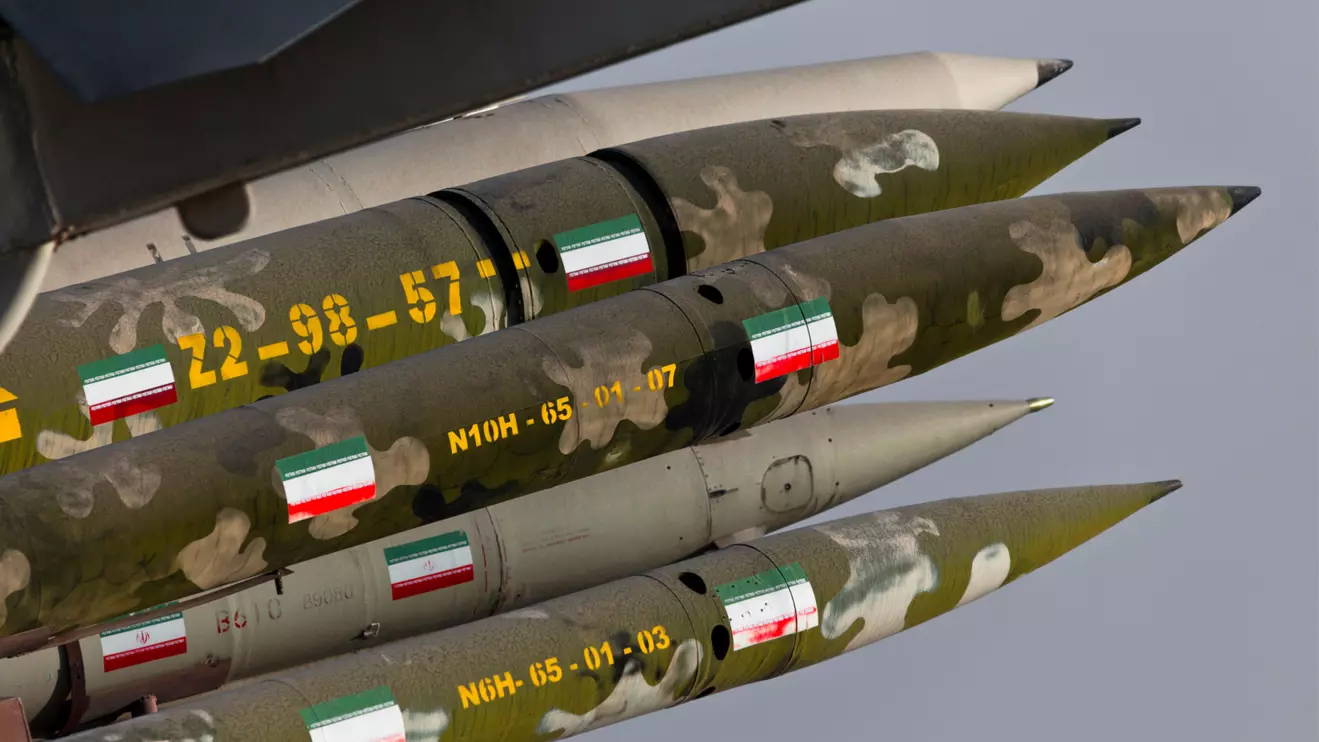
Tensions are running high amid a military buildup by the U.S. Navy near Iran © Mena Today
Iran is weighing the terms for resuming talks with the United States soon, a foreign ministry official said on Monday, after both sides signalled readiness to revive diplomacy over a long-running nuclear dispute and dispel fears of a new regional war.
Tensions are running high amid a military buildup by the U.S. Navy near Iran, following a violent crackdown against anti-government demonstrations last month, the deadliest domestic unrest in Iran since its 1979 revolution.
U.S. President Donald Trump, who stopped short of carrying out threats to intervene during the crackdown, has since demanded Iran make nuclear concessions and sent a flotilla to its coast. He said last week Iran was "seriously talking", while Tehran's top security official Ali Larijani said on X that arrangements for negotiations were underway.
Iranian sources told Reuters last week that Trump had demanded three preconditions for resumption of talks: Zero enrichment of uranium in Iran, limits on Tehran's ballistic missile program and ending its support for regional proxies.
Iran has long rejected all three demands as unacceptable infringements of its sovereignty, but two Iranian officials told Reuters its clerical rulers see the ballistic missile programme, rather than uranium enrichment, as the bigger obstacle.
Foreign Ministry spokesperson Esmaeil Baghaei said Tehran was considering "the various dimensions and aspects of the talks", adding that "time is of the essence for Iran as it wants lifting of unjust sanctions sooner."
A senior Iranian official and a Western diplomat told Reuters that U.S. Special Envoy Steve Witkoff and Iranian Foreign Minister Abbas Araghchi could meet in Turkey in the coming day.
A Turkish ruling party official told Reuters that Tehran and Washington had agreed that this week's talks would be focused on diplomacy, a potential reprieve for possible U.S. strikes.
The Iranian official said "diplomacy is ongoing. For talks to resume, Iran says there should not be preconditions and that it is ready to show flexibility on uranium enrichment, including handing over 400 kg of highly enriched uranium (HEU), accepting zero enrichment under a consortium arrangement as a solution".
However, he added, for the start of talks, Tehran wants U.S. military assets moved away from Iran.
"Now the ball is in Trump's court," he said.
Tehran's regional sway has been weakened by Israel's attacks on its proxies - from Hamas in Gaza to Hezbollah in Lebanon, the Houthis in Yemen and militias in Iraq - as well as by the ousting of Iran's close ally, Syrian dictator Bashar al-Assad.
Last year the United States struck Iranian nuclear targets, joining in at the close of a 12-day Israeli bombing campaign.
TEHRAN DEMANDS LIFTING OF SANCTIONS
After five rounds of talks that have stalled since May 2023, several hard-to-bridge issues remained between Tehran and Washington, including Iran's insistence on maintaining uranium enrichment on its soil and refusal to ship abroad its entire existing stockpile of highly enriched uranium.
Since the U.S. strikes on Iran's three nuclear sites in June, Tehran says its uranium enrichment work has stopped. The U.N. nuclear watchdog has called on Iran repeatedly to say what happened to the HEU stock since the June attacks.
Western countries fear Iran's uranium enrichment could yield material for a warhead. Iran says its nuclear programme is only for electricity generation and other civilian uses.
The Iranian sources said Tehran could ship its highly enriched uranium abroad and pause enrichment in a deal that should also include lifting economic sanctions.
By Parisa Hafezi
President Donald Trump said on Wednesday that the renewed U.S. campaign against Iran would not continue for "too long" after the biggest exchange of fire between Tehran and Washington since July.
Top aides to President Donald Trump are pushing to keep the Iran war from escalating before November's midterm elections to staunch Republican electoral losses, four people familiar with the discussions said, a strategy already under strain as the U.S. and Iran exchanged back-and-forth attacks overnight.
Russia has secretly helped Iran develop advanced supersonic cruise missiles, in what the Financial Times describes as one of the most significant known transfers of strategic military technology from Moscow to Tehran, according to an investigation published Wednesday.
To make this website run properly and to improve your experience, we use cookies. For more detailed information, please check our Cookie Policy.
Necessary cookies enable core functionality. The website cannot function properly without these cookies, and can only be disabled by changing your browser preferences.