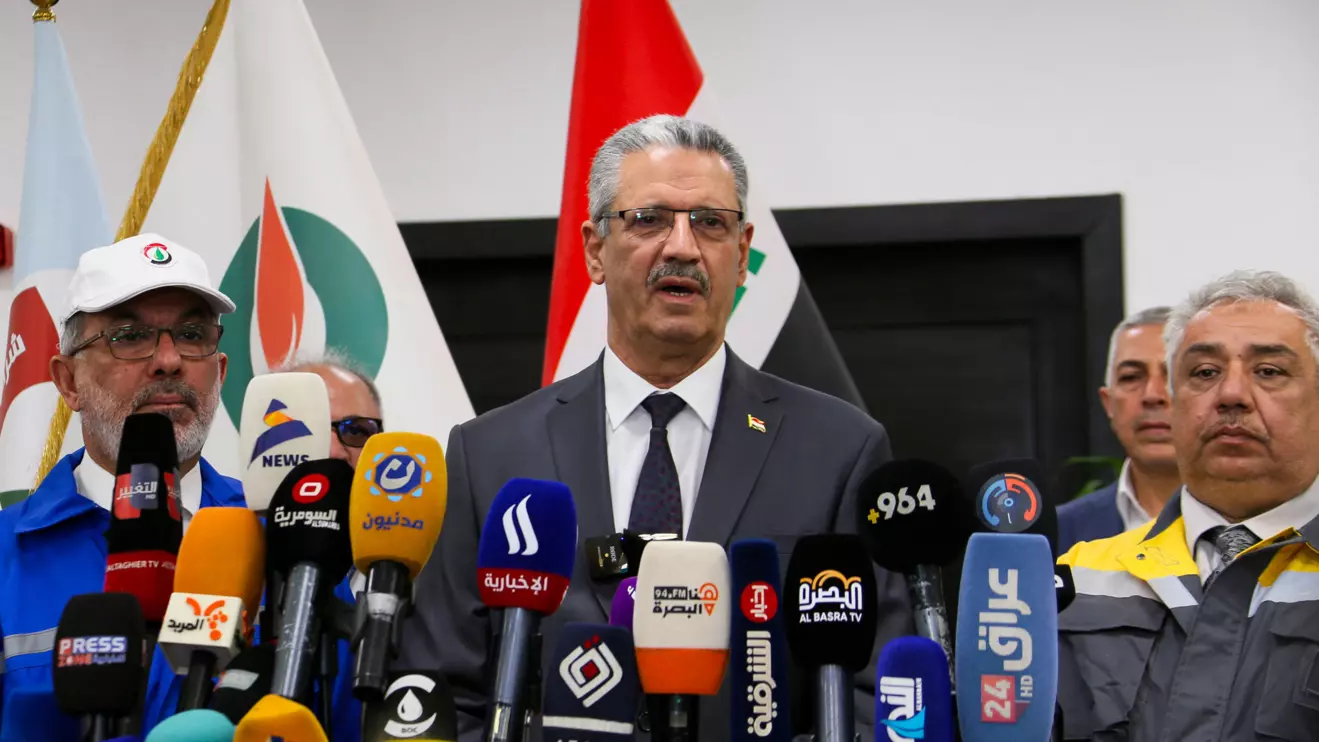
Iraq's oil minister said Baghdad is talking to Iran about allowing some of the country's oil tankers to pass through the Strait of Hormuz, the state news agency reported on Tuesday, as Iraq seeks to ease disruptions to crude exports following recent attacks on tankers in its own waters.
Iraq is also working to restore a disused pipeline that would allow oil to be pumped directly to Turkey's Ceyhan port without passing through the Kurdistan region, Oil Minister Hayan Abdel-Ghani said in a video statement released on Monday.
Iraq will complete an inspection of a 100-km (62-mile) section of the pipeline within a week to enable direct exports from Kirkuk, he added.
The reopening of the Kirkuk-Ceyhan pipeline, which has been shut for more than a decade, would offer an alternative export route at a time when shipping through the strategic Strait of Hormuz is severely disrupted by the conflict in the Middle East.
Exports via the 960-km pipeline, which once handled about 0.5% of global supply, were halted in 2014 after repeated attacks by Islamic State militants.
The oil ministry has said exports via the route could initially reach around 250,000 barrels per day, rising to about 450,000 bpd if crude from fields in the Kurdistan region is included.
Baghdad has sought to use the Kurdistan pipeline as a temporary route for crude flows but said the Kurdistan Regional Government had set arbitrary conditions for its use, warning it may take legal action if exports are blocked.
Kurdish authorities have rejected the accusations, saying they are not obstructing exports and that Baghdad has failed to address security and economic challenges facing the region’s oil sector.
Reporting by Jana Choukeir