Iraq could restore crude oil exports to around 3.4 million barrels per day within a week provided the Iran war ends and the Strait of Hormuz reopens, the head of the country’s state-run Basra Oil Company said.
Among Gulf oil producers, Iraq has suffered the biggest drop in oil revenue as a result of the effective closure of the Strait, a Reuters analysis has found, because it lacks alternative shipment routes.
But the country, the second biggest producer in the Organization of the Petroleum Exporting Countries, can quickly restore output to levels before U.S.-Israeli attacks on Iran at the end of February led to the effective closure of the waterway. The Strait typically is the route for about a fifth of global oil and LNG flows.
SO FAR IRAN HAS MADE ONLY VERBAL PROMISES
Bassem Abdul Karim said Iran has so far provided only verbal guarantees that would allow Iraqi tankers permission to transit the Strait.
“We have not received any formal documents regarding permission for Iraqi tankers to pass,” he said in an interview with Reuters.
He said production from Iraq's southern oilfields was around 900,000 barrels per day, but if the war ends and safe passage through the Strait is guaranteed exports could reach 3.4 million bpd within a week.
U.S. President Donald Trump has threatened to rain "hell" on Tehran unless it makes a deal by the end of Tuesday that would allow traffic to move through the Strait of Hormuz.
STEEP DROP IN IRAQI OIL OUTPUT
Last month, Iraq’s oil production dropped by about 80% to around 800,000 barrels per day, Iraqi energy officials told Reuters last month as the war meant Iraq could not export and storage tanks filled.
With limited outlets for Iraqi oil, production from the Rumaila field fell to around 400,000 bpd, down from about 1.35 million bpd before the conflict, and at the Zubair field the level was about 300,000 bpd, down 340,000 bpd before the war, Abdul Karim said.
Several smaller fields are being operated at limited levels to ensure continued production of associated gas, used in domestic power generation, while shutdowns at other sites have been used as an opportunity to carry out maintenance work, he added.
Production from Iraq's fields was around 4.3 million bpd before the war, which should leave enough leeway to export 3.4 million bpd even allowing for war-related damage.
Gas output from fields in Basra has dropped to around 700 million standard cubic feet per day, compared with about 1.1 billion standard cubic feet mscf per day before the war, largely because of the reduced oil production, Abdul Karim said.
MEETING REFINERY DEMAND
To supply domestic demand, BOC is sending around 400,000 bpd of crude to northern Iraq. That includes about 150,000 bpd by truck and roughly 250,000 bpd via a domestic pipeline, to supply refineries that have demand of around 500,000 bpd.
Production from the northern Kirkuk fields is roughly 380,000 barrels per day, Abdul Karim said.
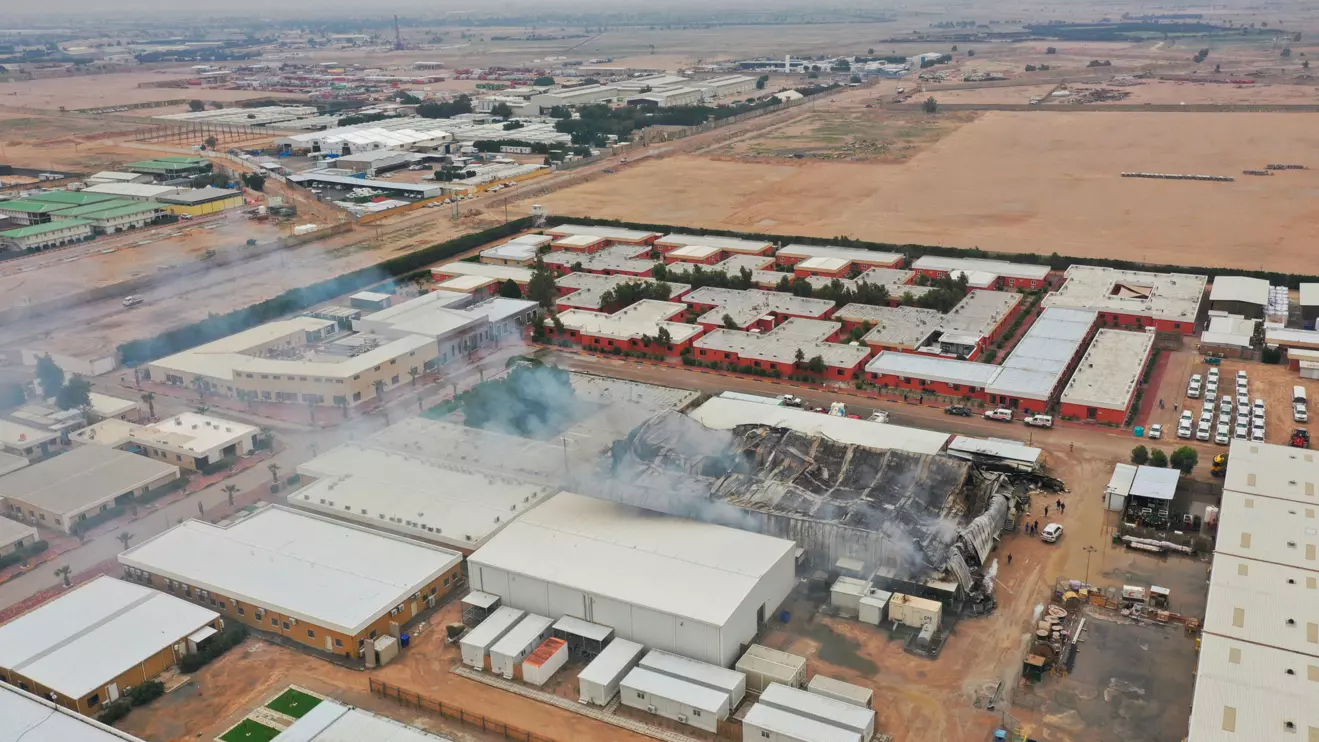
Asked about the impact of drone attacks, Abdul Karim said strikes on oil facilities had caused “major losses to the continuity of production and oil operations,” adding that both foreign and Iraqi service companies had been targeted.
A two‑drone attack that targeted the Rumaila oilfield on Saturday wounded three Iraqi workers, security and energy sources told Reuters.
Abdul Karim said the attack on the northern part of the Rumaila field hit sites used by U.S. oilfield services companies Schlumberger and Baker Hughes, causing a fire that was later brought under control.
Neither Schlumberger nor Baker Hughes immediately responded to requests for comment.