Iraq
Iraq devalues dinar
Iraq's central bank devalued the dinar against the dollar on Wednesday, the first time in more than three years, as the economic fallout from the Middle East war deepens.

Iraq has a new government, and its first major commitment cuts straight to the heart of the country's most dangerous problem.
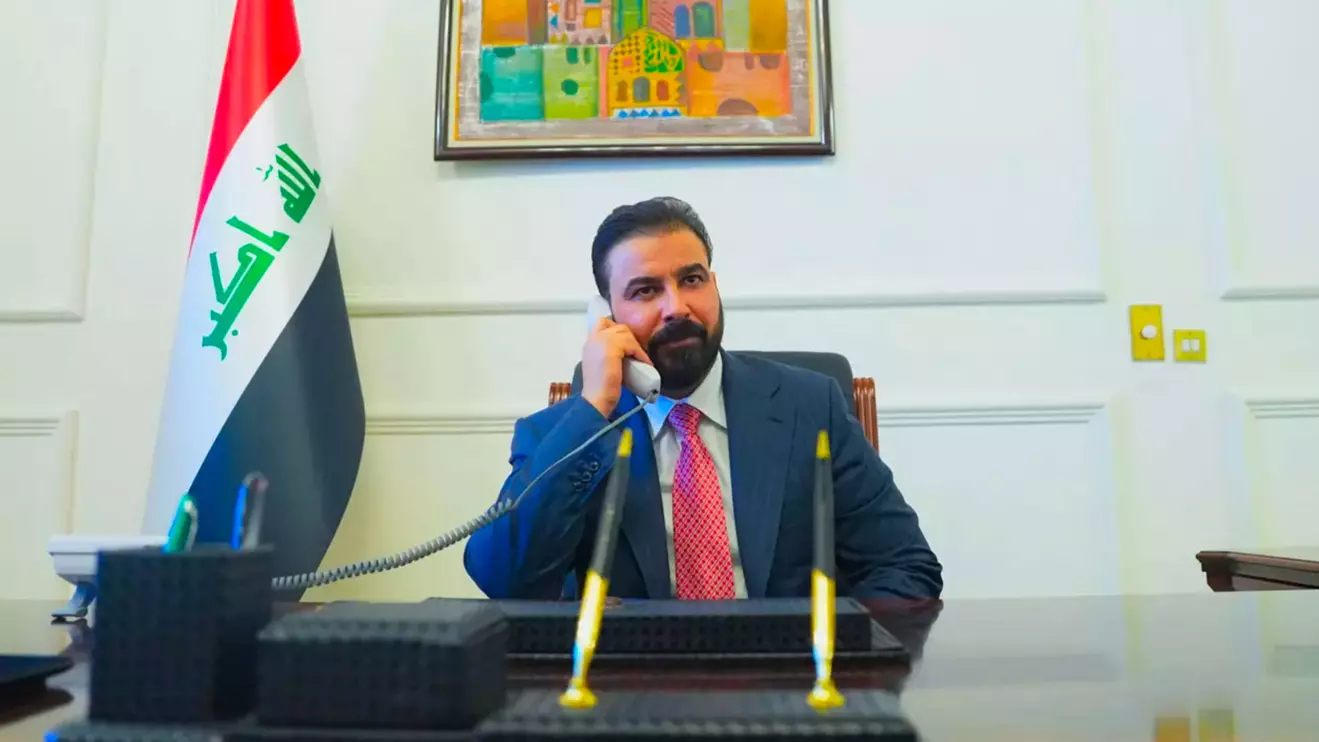
New Iraqi Prime Minister designate Ali al-Zaidi, uses a phone at his office in Baghdad, Iraq, April 28, 2026. Iraqi Prime Minister’s Media Office
Iraq has a new government, and its first major commitment cuts straight to the heart of the country's most dangerous problem.
Ali al-Zaidi, a 40-year-old banker and media owner with no prior government experience, received parliamentary confidence Thursday after months of political deadlock and sustained American pressure. His programme includes a commitment that Baghdad has long promised and never delivered: limiting control of weapons exclusively to the state.
The pledge is a direct response to Washington's longstanding demand for the disarmament of Iran-backed militias, groups designated as terrorist organisations by the United States and responsible for hundreds of strikes against American interests in Iraq since the outbreak of the US-Israeli war against Iran on 28 February. The American military has struck back, killing dozens of militia fighters in retaliatory operations.
Al-Zaidi's rise is inseparable from Washington's intervention. His predecessor Nouri al-Maliki, perceived as too close to Tehran, withdrew under American pressure after President Trump threatened in January to withdraw all US support from Baghdad if Maliki returned to power.
Al-Zaidi, backed by the Coordination Framework, the dominant Shia alliance with varying degrees of Iranian ties — is seen as a figure both sides can live with. For now.
His government remains incomplete. Of 23 planned ministerial portfolios, only 14 have been confirmed by absolute majority vote, with several posts still subject to inter-party negotiations six months after November's legislative elections.
Iraq has long been the ultimate proxy battleground between Washington and Tehran, successive governments performing a delicate balancing act between two powers that are each other's sworn enemies. Al-Zaidi inherits that impossible geometry, now made even more combustible by the active US-Iran war raging across the region.
Promising a state monopoly on arms is the easy part. Delivering it, against militias that are armed, funded and politically entrenched, is another matter entirely.
By Ahmad Hissuhen
Iraq's central bank devalued the dinar against the dollar on Wednesday, the first time in more than three years, as the economic fallout from the Middle East war deepens.
Israelis will on Wednesday mark three years since Hamas attacked Israel on October 7, 2023, triggering a military assault that destroyed much of Gaza, where conditions remain dire despite a year-old ceasefire that is meant to halt the war for good.
Canadian Prime Minister Mark Carney will travel to Ankara and Istanbul from October 21 to 23, his office said on Tuesday, in what will be the first dedicated bilateral visit to NATO ally Turkey by a Canadian leader.

To make this website run properly and to improve your experience, we use cookies. For more detailed information, please check our Cookie Policy.
Necessary cookies enable core functionality. The website cannot function properly without these cookies, and can only be disabled by changing your browser preferences.