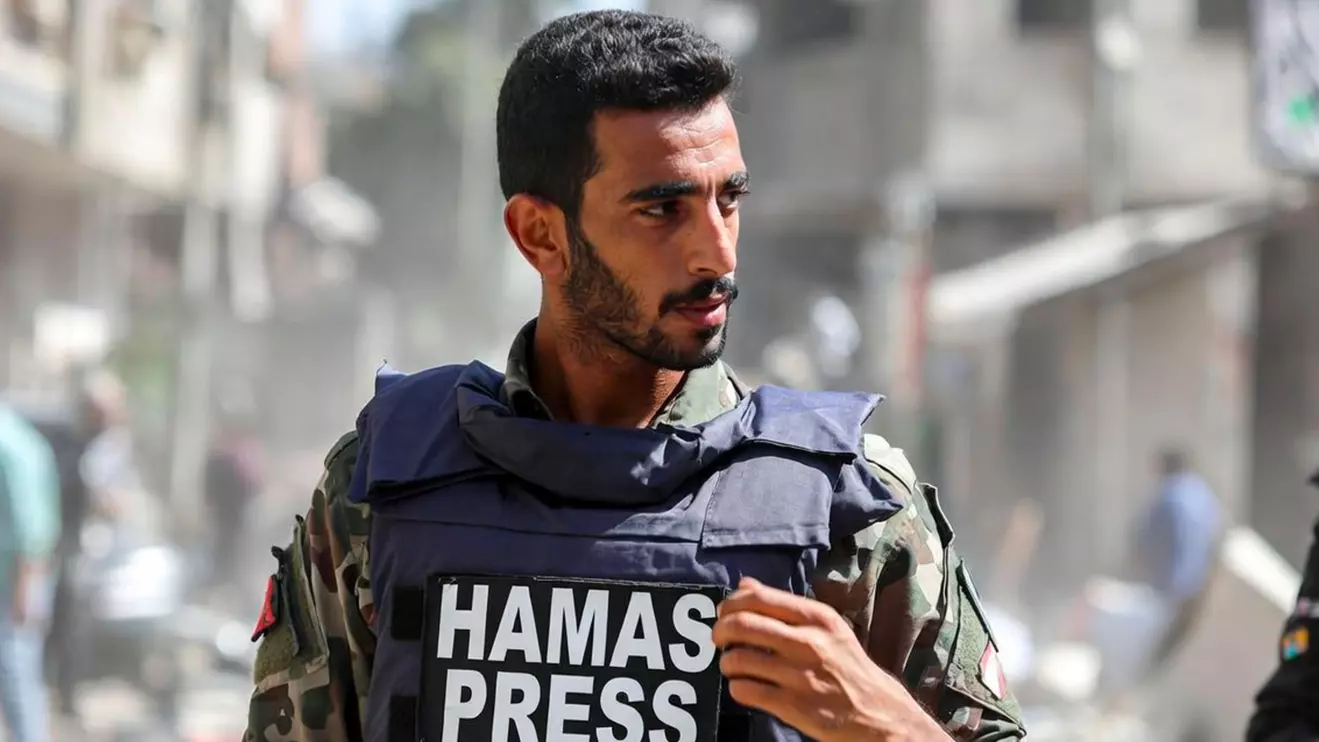
The Israel Defense Forces has published a database of 170 people killed in Gaza who were publicly described as journalists or media workers, but whom the military says were members of the armed wings of Hamas, Palestinian Islamic Jihad, and other terrorist groups.
The disclosure, reported Friday by The New York Sun and first announced by the IDF on Thursday, is meant to answer years of accusations that Israel deliberately targets journalists. The military’s accompanying site, referred to in reporting as “The Press Files,” states that repeated claims of intentional targeting of reporters “do not tell the full story.”
According to the IDF, the findings come from an extended review of intelligence, open-source material, organizational records, and documents recovered by troops inside Gaza, including material produced by the groups themselves.
Entries list names, photographs, media affiliations where applicable, armed organization, and military role, often with identification numbers and, in some cases, “martyrdom” posters or images of the person in uniform.
Of the 170, the IDF says 118 belonged to Hamas’s military wing and 49 to Palestinian Islamic Jihad. Two were affiliated with the Popular Resistance Committees and one with a group identified as Lords of the Desert (also rendered Adonei HaShmama or Guardians of the Desert).
Seventeen are said to have crossed into Israel during the October 7, 2023 attack. Roles listed go beyond media work and include snipers, intelligence personnel, engineers, trainers, operations officers, squad commanders, and members of military propaganda and combat-information units. An early review of the files found dozens in command positions.
The military says some of those named had worked with or for international outlets, including Reuters, CNN, the Associated Press, Agence France-Presse, the BBC, Le Monde, and Australia’s ABC, as well as local agencies such as Al-Aqsa Media Network, Shams News Agency, and Palestine Today.
Israel has long argued that Hamas and Islamic Jihad embed operatives in civilian roles, including media
More than 40 of the deaths, the IDF says, prompted condemnations of Israel from the United Nations. A number also appear in the Committee to Protect Journalists’ tally of media workers killed in Gaza since 2023.
Cases highlighted by the military include Amro Nahid Abdel Rahman Abu Odeh, described as having worked for Reuters and Turkey’s Anadolu Agency while serving as a team commander in the photography unit of Hamas’s military wing.
The IDF published images of him with a camera and, separately, holding a rifle. Another is Hassan Abdel Fattah Mohammed Aslih, known in Western coverage as Hassan Eslaiah, whom the army says worked for the Associated Press and CNN, served as a Hamas operative, and entered Israel on October 7. Both outlets cut ties with him in November 2023 after photographs from inside Israel that day, and an image of him with Yahya Sinwar, were publicized.
Other named examples include Mohammed Mahmoud Abdel Aziz Abu Sharia, linked to Shams News Agency and described as a Palestinian Islamic Jihad sniper; Bahaa Rouhi Mahmoud Okasha of Al-Aqsa Media Network, described as a Hamas squad commander in a sniper platoon; and Hassan Majdi Ibrahim Abu Warda, a Barq Gaza reporter described as a PIJ sniper in the Northern Gaza Brigade.
IDF Spokesperson Brig. Gen. Effie Defrin said the 170 “were presented as innocent journalists” but “were in fact terrorists,” and that the military would continue to publish what it says are the underlying facts. The release expands an earlier disclosure the same day of ten such cases.
Under the laws of armed conflict, journalists are protected as civilians. That protection does not extend to people who take a direct part in hostilities or who are members of an organized armed group.
Israel has long argued that Hamas and Islamic Jihad embed operatives in civilian roles, including media, and that some Gaza outlets function as arms of those groups.
Press-freedom organizations and UN officials have continued to treat many of the same deaths as killings of journalists and to accuse Israel of a pattern of targeting. The new database is the IDF’s most extensive public attempt to contest that accounting name by name.