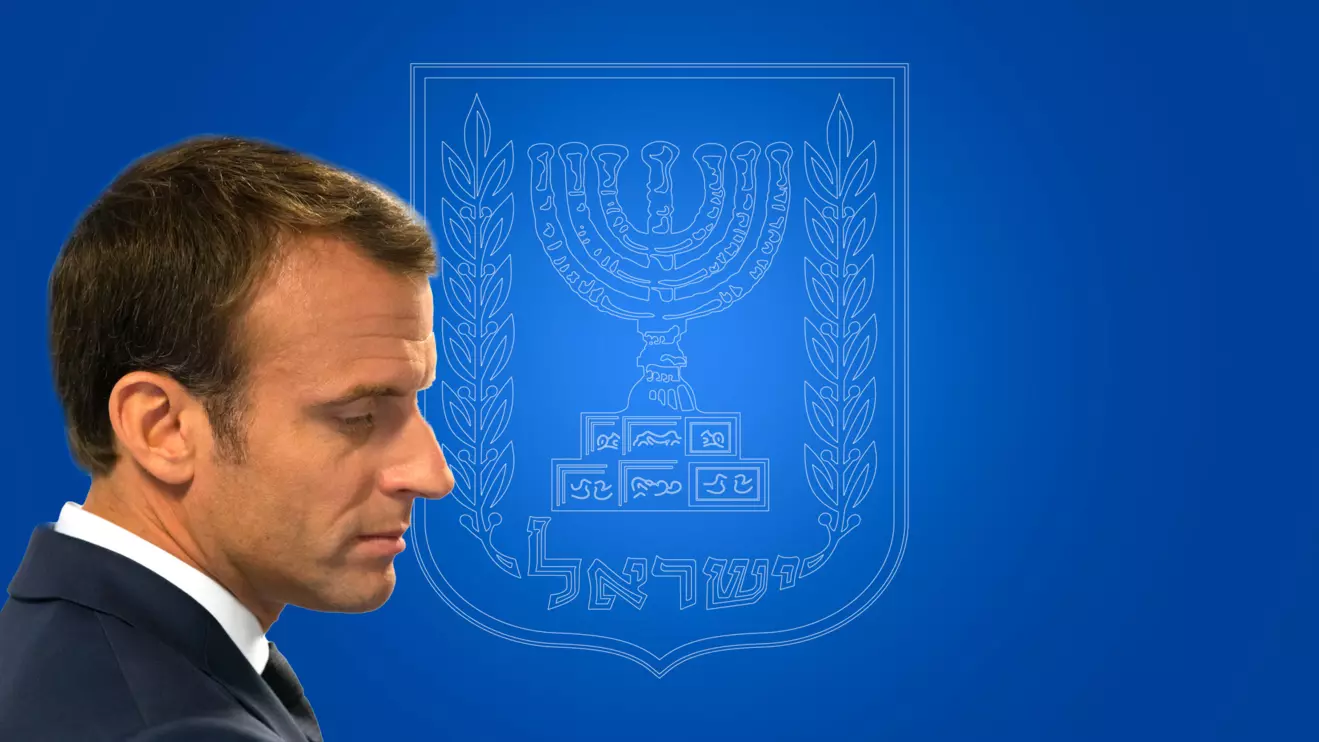
Israel reacted sharply to remarks by French President Emmanuel Macron at the United Nations, after Macron criticized Israeli actions in the West Bank and claimed Hamas was not active in the territory, where the Palestinian Authority governs.
"The grotesque absurdity of Emmanuel Macron's remarks is stunning," said the office of Prime Minister Benjamin Netanyahu, who is set to address the UN General Assembly on Thursday. "Hamas terrorists carry out attacks against Jews almost every day. They have murdered countless Israeli civilians in Judea and Samaria," the statement said, using the biblical name for the West Bank.
US Ambassador to Israel Mike Huckabee echoed the criticism, saying it was "hard to imagine a speech more disconnected from reality than Macron's at the UN."
Netanyahu's office also cited the fatal shooting on Sunday, the eve of Yom Kippur, Judaism's holiest day, of an Israeli settler in the West Bank, a father of six who also held French nationality.
The Israeli military said it arrested the Palestinian gunman at a hospital and that soldiers subsequently raided his village. One minister in Netanyahu's government has called for his execution under a newly passed law.
In his speech to the UN General Assembly, Macron lamented the humanitarian situation in Gaza, from where Hamas launched the October 7, 2023 massacres. "What is our credibility if we continue to remain passive in the face of Gaza?" the French president said, describing what he called a "spectacle that shames us all" and reaffirming that a two-state solution was the condition for "security today and tomorrow for Israel and its people."
Netanyahu has had strained relations with Macron, who last year led a Western push at the UN General Assembly to recognize a Palestinian state.
A speech dismissed by critics as symbolic rather than substantive
Beyond Israel's official reaction, some observers have gone further, questioning whether Macron's intervention carries any real diplomatic weight at all.
Macron is due to leave office within months, having reached historic lows in popularity amid France's mounting economic troubles, including a soaring public debt and a fractured parliament.
Critics argue that, with his political capital largely spent both domestically and within the EU, his UN remarks amount more to a rhetorical gesture, a pattern they say has defined his approach to international diplomacy throughout his presidency, than a substantive shift with any real leverage behind it.