Lebanon
Netanyahu authorizes strikes in Beirut's southern suburbs
Israeli Prime Minister Benjamin Netanyahu on Monday ordered the military to attack targets in the Lebanese capital Beirut's southern suburbs, a Hezbollah stronghold known as Dahiyeh.
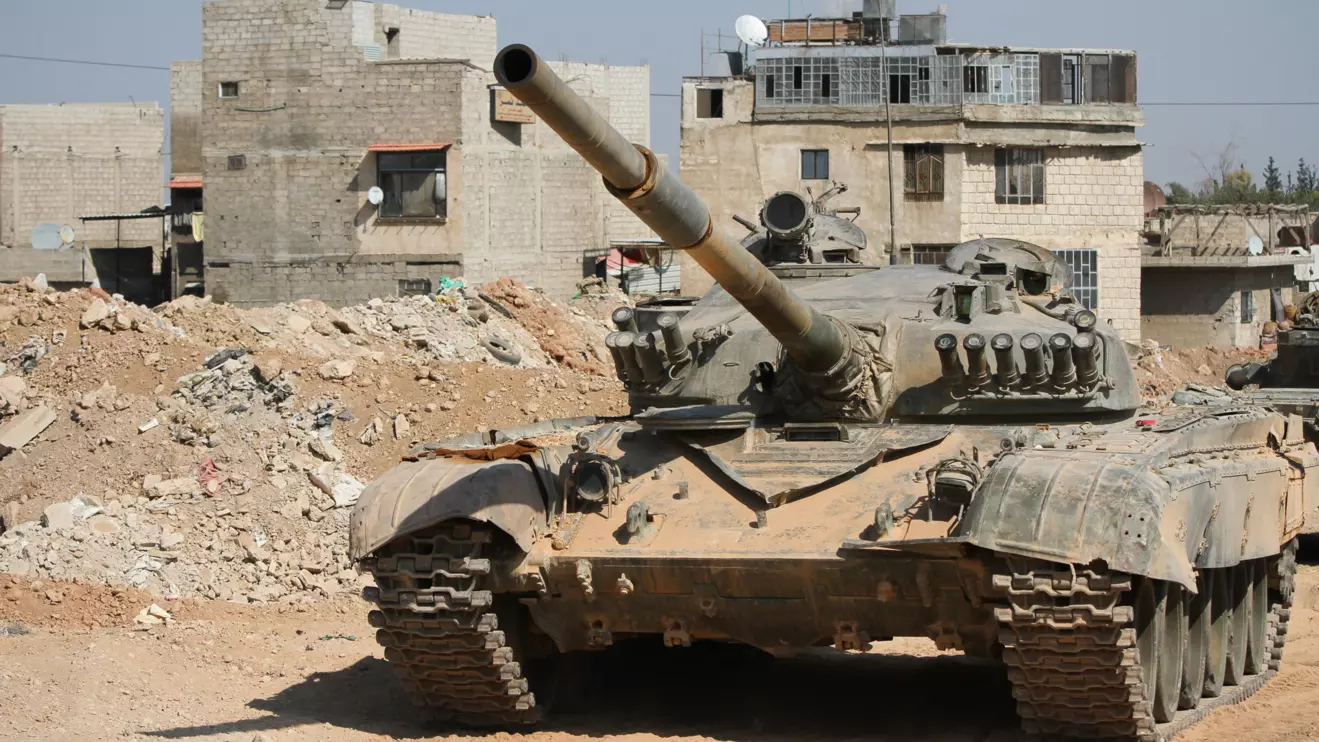
The Israeli army announced Monday that it had carried out strikes on several tanks near the southern Syrian city of Sweida, amid ongoing clashes between Sunni Bedouin tribes and Druze fighters that have reportedly left dozens dead.
A Syrian tank near the Druze city of Sweida © Mena Today
The Israeli army announced Monday that it had carried out strikes on several tanks near the southern Syrian city of Sweida, amid ongoing clashes between Sunni Bedouin tribes and Druze fighters that have reportedly left dozens dead.
In a statement, the Israel Defense Forces (IDF) said the presence of military hardware in the region posed a potential threat to Israel’s security.
“The presence of these tanks in southern Syria could constitute a threat to the State of Israel,” the army said. “The IDF will not allow the establishment of a military threat in southern Syria and will act accordingly.”
The statement comes amid growing instability in southern Syria, where ethnic and sectarian tensions have flared, raising concerns in neighboring countries, including Israel, about the potential for escalation near sensitive border areas.
Israel has long maintained that it will not tolerate Iranian-backed forces or heavy weaponry close to its northern border and has conducted numerous airstrikes in Syria over the past decade targeting what it describes as hostile elements.
There has been no immediate comment from the Syrian government or confirmation of the strikes from Syrian state media.
Israeli Prime Minister Benjamin Netanyahu on Monday ordered the military to attack targets in the Lebanese capital Beirut's southern suburbs, a Hezbollah stronghold known as Dahiyeh.
Syrian President Ahmed al-Sharaa held a phone call with U.S. President Donald Trump in which they discussed supporting the Syrian economy and the latest regional developments, the Syrian presidency said on Sunday.
Syria's Central Bank has extended its currency exchange programme by an additional 30 days beyond its original end-of-June deadline, allowing citizens more time to swap old Syrian pound notes for new ones.
To make this website run properly and to improve your experience, we use cookies. For more detailed information, please check our Cookie Policy.
Necessary cookies enable core functionality. The website cannot function properly without these cookies, and can only be disabled by changing your browser preferences.