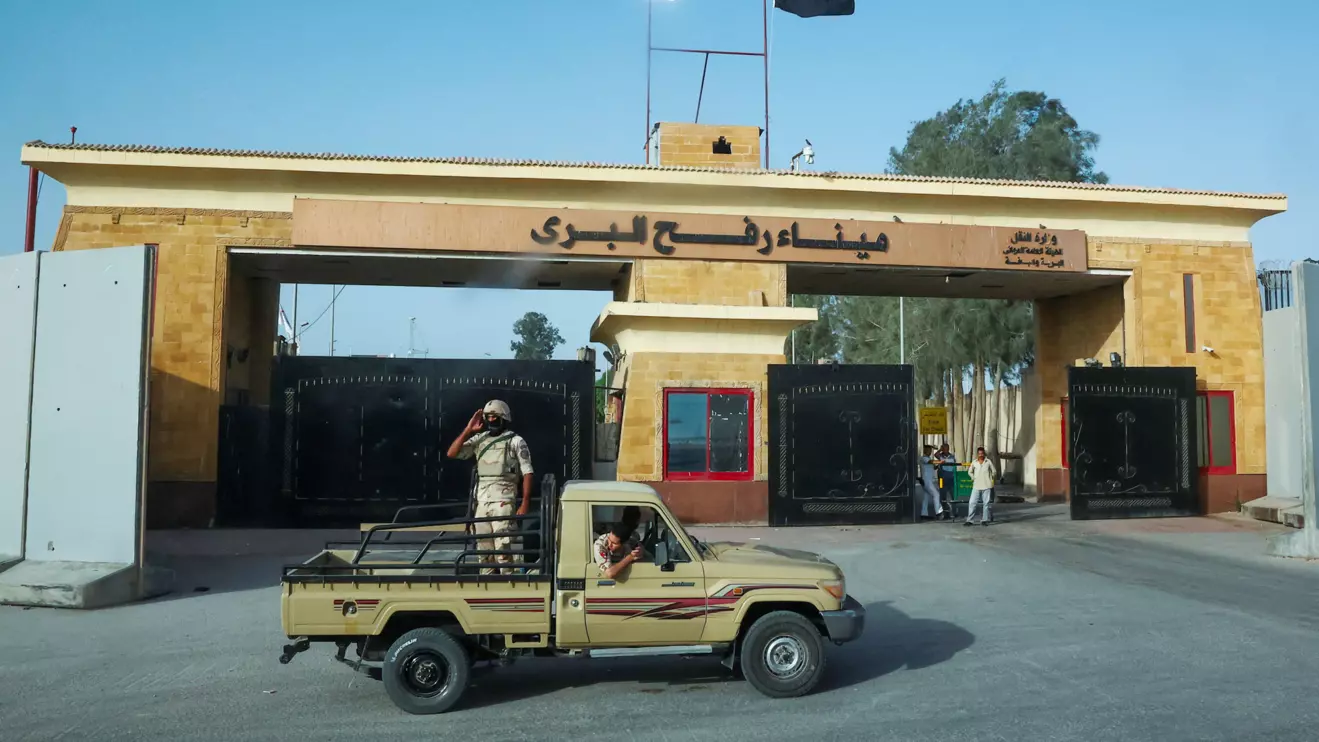
Israel will reopen Gaza's Rafah crossing with Egypt for the passage of people only after an operation to locate the body of the last remaining Israeli hostage in the enclave is completed, Prime Minister Benjamin Netanyahu's office said late on Sunday.
The border was supposed to have opened during the initial phase of U.S. President Donald Trump's plan to end the war, under a ceasefire reached in October between Israel and Hamas.
However, Israel conditioned the reopening on the return of all living hostages held by Palestinian militant factions in Gaza, as well as a "100% effort" by Hamas to locate and return the bodies of all deceased hostages.
All have been returned except for the body of police officer Ran Gvili. The Israeli military said on Sunday it had launched a "targeted operation" in northern Gaza to retrieve his remains, while an Israeli military official said there were "several intelligence leads" regarding his possible location.
The Israeli military "is currently conducting a focused operation to exhaust all of the intelligence that has been gathered in the effort to locate and return the fallen hostage, Master Sgt. Ran Gvili, of blessed memory," Netanyahu's office said in a statement.
It added that when the operation is complete, "Israel will open the Rafah Crossing."
On Thursday, Ali Shaath, head of a transitional Palestinian committee backed by the U.S. to temporarily administer Gaza, said the Rafah Crossing would open this week. It is effectively the sole route in or out of Gaza for nearly all of the more than 2 million people who live there.
The Gaza side of the crossing has been under Israeli military control since 2024.
"As part of President Trump's 20-point plan, Israel has agreed to a limited reopening of the Rafah Crossing for pedestrian passage only, subject to a full Israeli inspection mechanism," Netanyahu's office said.
This month, Washington announced the plan had moved into the second phase, under which Israel is expected to withdraw troops further from Gaza and Hamas is due to yield control of the territory's administration.
Last week, three sources told Reuters Israel wants to restrict the number of Palestinians entering Gaza through the border crossing with Egypt to ensure that more are allowed out than in.
Reporting by Ahmed Tolba and Hatem Maher