Israel is heading into what might be its most consequential election since statehood, and somehow, nobody running seems to want to talk about the price of hummus.
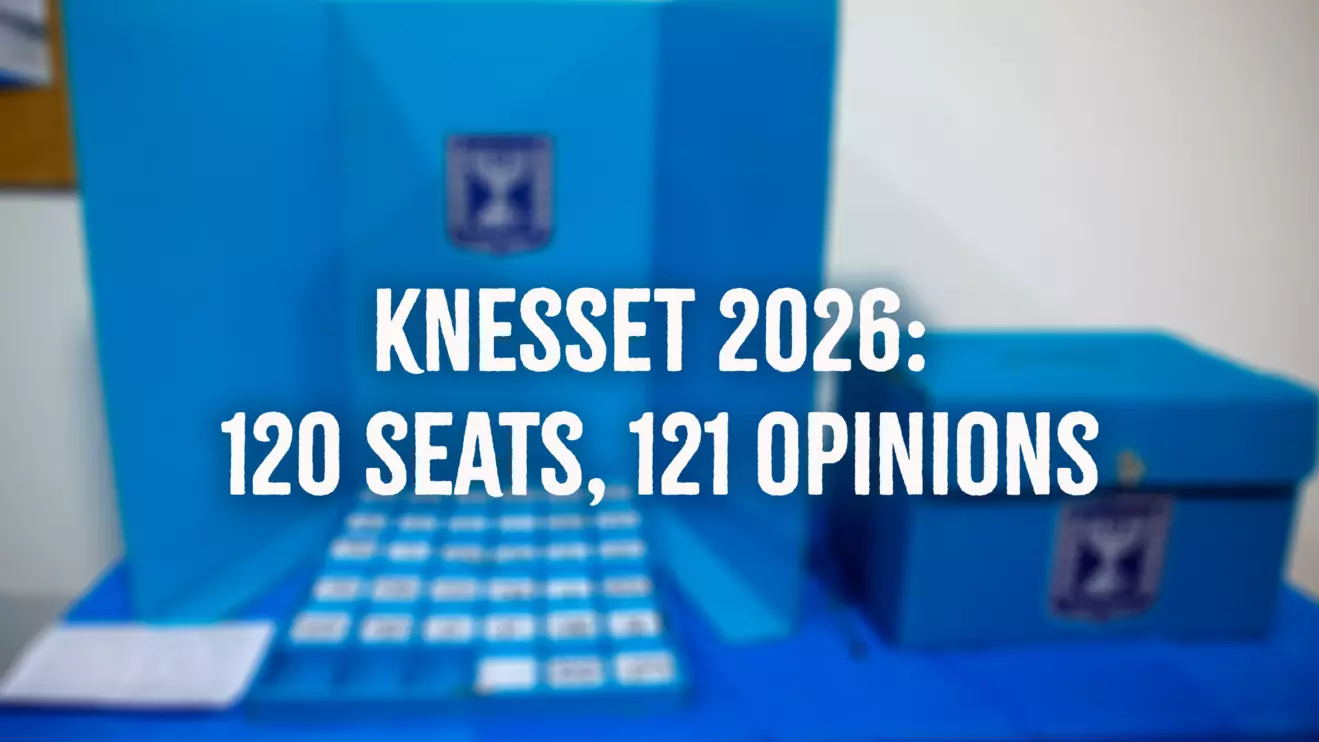
On October 27, roughly 6.5 million eligible voters will pick all 120 members of the 26th Knesset, in the country's first on-time election since 1988.
No snap dissolution, no coalition collapse, just democracy doing its scheduled thing, for once. The backdrop, though, is anything but routine: this is the first vote since October 7, since the wars in Gaza and Lebanon, and since the six-month conflagration with Iran.
Thirty-eight parties filed lists. Most won't clear the 3.25% threshold. A handful will decide everything.
The Contenders: A Field Built From Familiar Rubble
Benjamin Netanyahu (Likud) - Israel's longest-serving prime minister is fighting not to win outright but simply not to lose. He doesn't have the cards, as one analyst put it, but he might still have the deck. Polling puts Likud around 18-22 seats, running roughly neck-and-neck with a rival nobody had heard of eighteen months ago.
Gadi Eisenkot (Yashar) - That rival. A former IDF chief of staff who lost a son and two nephews in the Gaza war, Eisenkot has quietly become the anti-Netanyahu bloc's biggest asset by doing something radical in Israeli politics: staying calm.
Polls now put Yashar level with or ahead of Likud, at roughly 22 seats. He is, improbably, the closest thing this election has to a frontrunne, a centrist war hero running on restraint in a country exhausted by noise.
Naftali Bennett & Yair Lapid (Together/B'Yachad) - Two former prime ministers, one ticket, one shrinking number. Once polling near 17-18 seats, Together has slid toward 12-14 as Eisenkot eats their lunch. Bennett leads, Lapid takes the silver medal on his own list, a humbling arrangement for a man who was once PM himself.
Bezalel Smotrich and Itamar Ben-Gvir - The far right, still refusing to merge, still splitting their own vote out of what can only be described as world-class spite. Ben-Gvir won't join Smotrich's list. Analysts call this a gift to the center. Ben-Gvir apparently calls it Tuesday.
Avigdor Lieberman (Yisrael Beiteinu), Benny Gantz (Blue and White), Gantz, once a titan of Israeli politics, has spent September polling below the electoral threshold. In Israeli politics, political capital doesn't erode. It evaporates.
The Arab parties (Joint List, Ra'am) - Collectively polling 11-14 seats, and collectively locked out of coalition math by design. Everyone needs their seats to add up to 61. Nobody wants to sit with them at the table. Democracy!
Who Actually Wins?
Here's the punchline: probably nobody, cleanly. Recent polling shows the pro- and anti-Netanyahu blocs deadlocked at around 53 seats each, eight short of the 61 needed to govern, with Arab parties holding the balance nobody will touch.
Israel's electoral math means the party that "wins" the most seats and the party that actually forms the government are frequently different animals entirely.
Eisenkot might place first and still watch someone else become prime minister. Netanyahu might place second and still cling to power through sheer coalition wizardry, which, to be fair, is basically his signature move at this point.
The Elephant Nobody's Feeding: The Economy
Here's what should be the headline story, and isn't: not one major party has produced a serious economic platform. Not on the cost-of-living crisis squeezing ordinary Israelis. Not on housing prices that make Tel Aviv rival Manhattan.
And certainly not on the small handful of conglomerates that dominate banking, food, telecom and energy, concentration that state comptroller reports have flagged for years as a structural driver of Israel's notoriously high prices.
This is the part where Israel starts drawing uncomfortable comparisons to a banana republic: a country with elite institutions and a world-class tech sector, run by a political class that treats monopoly power as background noise rather than a campaign issue.
Meanwhile, the same political class isn't shy about voting itself comfortable compensation, Knesset members earn roughly $14,000 a month, ministers closer to $15,500, plus a car, a driver, and various allowances, while offering voters approximately nothing on the affordability crisis eating their paychecks.
War, security, October 7 accountability, Iran, Gaza's aftermath, these dominate every debate, every speech, every campaign poster. Fair enough; they're existential. But a nation cannot live on existential threats alone, and right now, the only agreed-upon economic plan seems to be: deal with it after the election. Whoever wins.
Israel will get a new Knesset on October 27. It may or may not get a new prime minister. It will almost certainly not get a serious conversation about why groceries cost what they cost.
In a country that just fought a war with Iran and calls its own political dysfunction a "referendum on Netanyahu," perhaps the real referendum nobody's holding is on the cartel running the supermarket aisle.