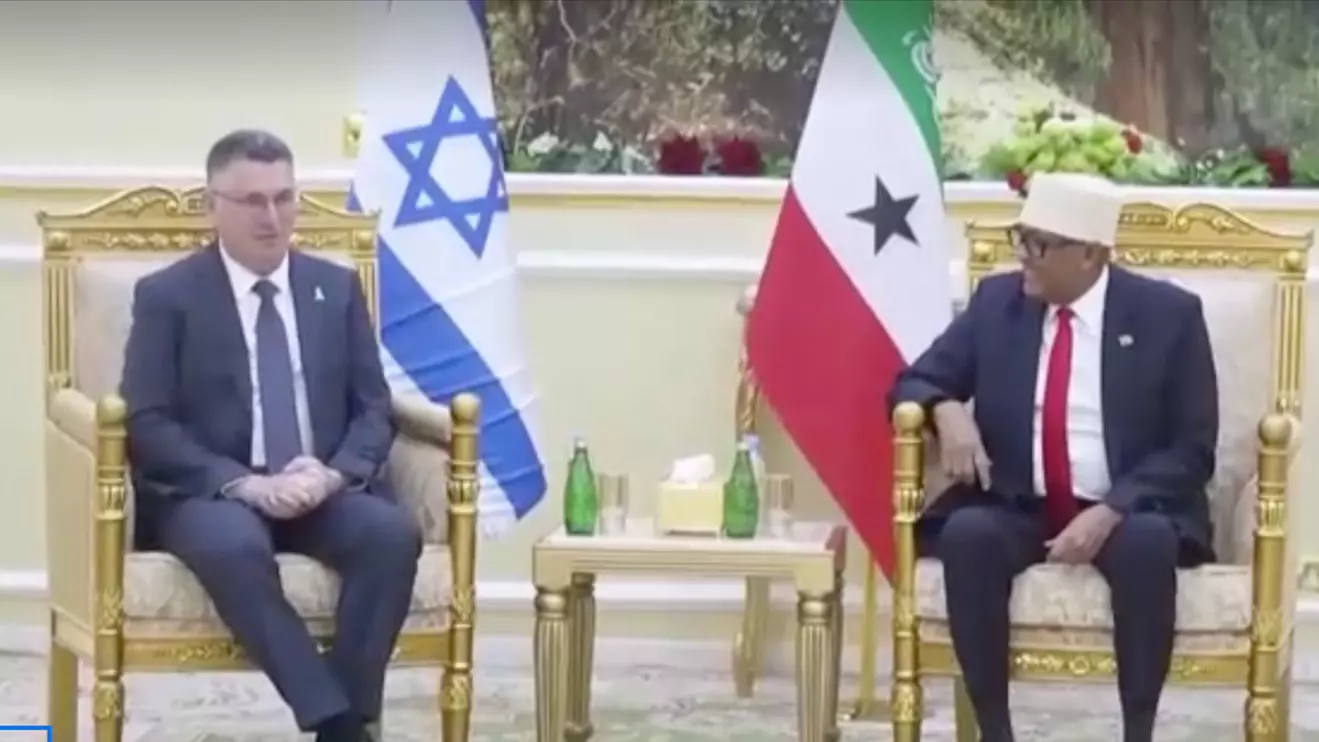
Israeli Foreign Minister Gideon Saar visited Somaliland on Tuesday on a trip that was denounced by Somalia, 10 days after Israel formally recognised the self-declared republic as an independent and sovereign state.
Israel is the only country that has formally recognised Somaliland's move to break away from Somalia, which described Israel's decision on recognition as an "unlawful step" and said Saar's visit was a "serious violation" of its sovereignty.
In a statement on X, Saar said that he had held talks "on the full range of relations" with Somaliland's president, Abdirahman Mohammed Abdullah, in the capital Hargeisa.
"We are determined to vigorously advance relations between Israel and Somaliland," Saar wrote on X, alongside images of him meeting the Somaliland leader at the presidential palace.
Somaliland's information ministry earlier said on X that Saar was leading a high-level delegation. It gave no further details but a senior Somaliland official told Reuters before the meeting with the president that the Israeli foreign minister was expected to discuss ways to enhance bilateral ties.
Saar said Abdullah had accepted an invitation from Prime Minister Benjamin Netanyahu to make an official visit to Israel.
Somalia's foreign ministry said in a statement that Saar's visit amounted to "unacceptable interference" in its internal affairs.
Abdullahi said last month that Somaliland would join the Abraham Accords, a deal brokered by Washington in 2020 that saw Gulf states the United Arab Emirates — a close partner of Somaliland — and Bahrain establish ties with Israel.
In a statement on Facebook, Somaliland's foreign ministry said: "Somaliland's president thanked Israel and its citizens for their decision to recognize Somaliland, this will have a big influence on the economy and development of Somaliland."
STRATEGIC LOCATION
Somaliland, once a British protectorate, has long sought formal recognition as an independent state although it has signed bilateral agreements with various governments on investments and security coordination.
Israel's decision to recognise Somaliland follows two years of strained ties with many of its closest partners over the war in Gaza and policies in the West Bank.
Netanyahu has said Israel will pursue cooperation in agriculture, health, technology and the economy. Following his visit, Saar said "local professionals" from Somaliland's water sector would visit Israel in the coming months for training.
Somaliland lies in northwestern Somalia, shares land borders with Ethiopia and Djibouti and sits across the Gulf of Aden from Yemen, from where Iran-backed Houthis have launched missile and drones at Israel since October 2023, when the Gaza war began.
Omar Mahmood, a Somalia analyst at the International Crisis Group think tank, said Israeli engagement was probably driven by Somaliland’s strategic location but that security coordination was possible without Israeli military installations there.
Saar said on Tuesday that mutual recognition and the establishment of diplomatic ties was not directed at anyone.
Somaliland has denied recognition allows for Israel to establish military bases there or for the resettlement of Palestinians from Gaza. Israel has advocated for what Israeli officials describe as voluntary Palestinian migration from Gaza.
By Giulia Paravicini and Alexander Cornwell