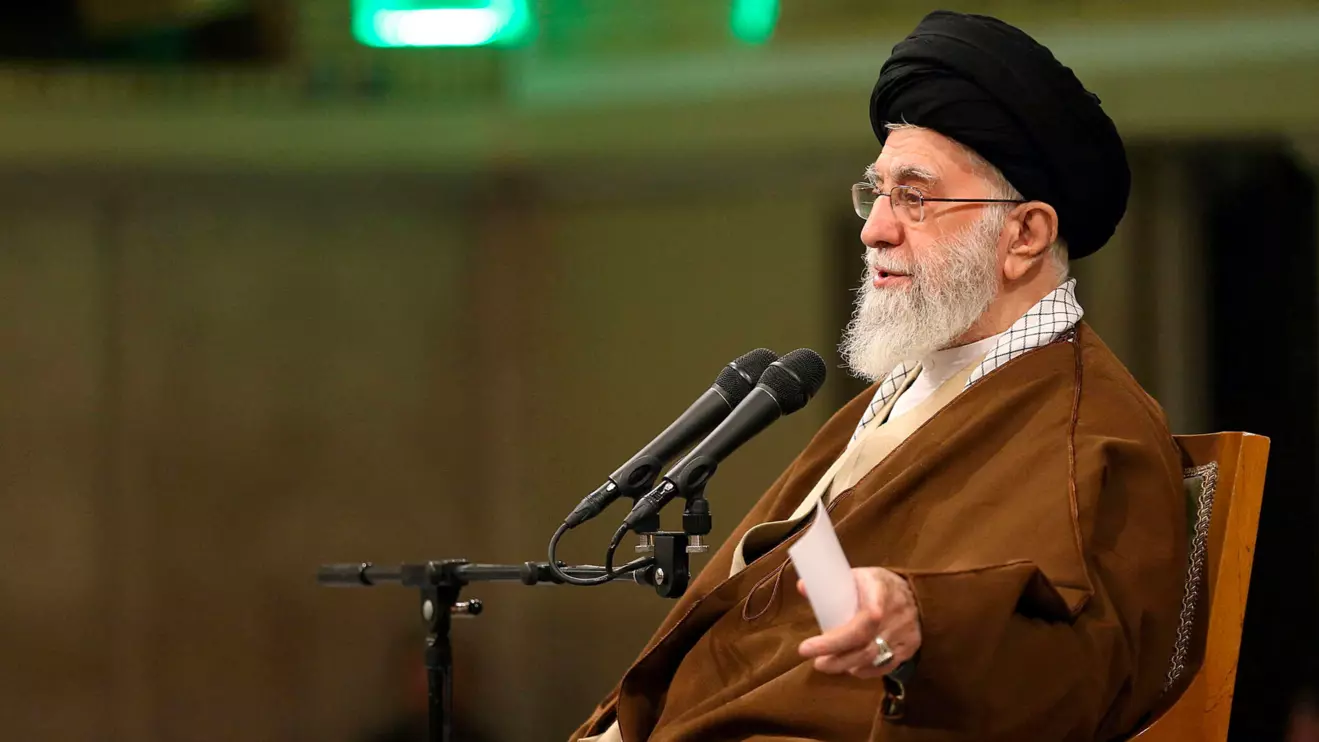
Iran’s Supreme Leader, Ayatollah Ali Khamenei, asserted on Saturday that Tehran will not succumb to pressure to engage in negotiations, a day after U.S. President Donald Trump revealed he had sent a letter proposing talks to reach a new nuclear agreement.
In an interview with Fox Business, Trump outlined two potential approaches for handling Iran: military action or a diplomatic deal aimed at preventing Tehran from developing nuclear weapons.
However, Khamenei dismissed Washington’s offer, arguing that the true intent behind U.S. negotiation efforts is to impose its own demands.
"The insistence of some bully governments on negotiations is not to resolve issues, but to dominate and impose their own expectations," Khamenei was quoted as saying by Iranian state media.
"For them, talks are merely a means to make new demands. It is not only about Iran's nuclear issue. Iran will definitely not accept their expectations."
While Trump has expressed openness to striking a new deal, his administration has simultaneously reinstated its “maximum pressure” campaign against Iran. This approach, which characterized his 2017-2021 presidency, seeks to economically isolate Iran and reduce its oil exports to zero.
During his first term, Trump unilaterally withdrew the U.S. from the 2015 Joint Comprehensive Plan of Action (JCPOA)—a historic agreement between Iran and world powers that imposed strict curbs on Tehran’s nuclear activities in exchange for sanctions relief.
Following the U.S. withdrawal in 2018 and the reimposition of crippling sanctions, Iran responded by breaching the deal’s restrictions and significantly advancing its nuclear program.
Growing Concerns Over Iran’s Nuclear Ambitions
As tensions persist, Rafael Grossi, the head of the U.N.'s nuclear watchdog (IAEA), has warned that time is running out to revive diplomatic efforts aimed at curbing Iran’s nuclear activities. The IAEA has reported that Tehran is accelerating its uranium enrichment, bringing it dangerously close to weapons-grade levels.
Despite mounting international concerns, Iran maintains that its nuclear program is strictly for peaceful purposes.
With both sides deeply entrenched in their positions, the prospect of renewed negotiations remains uncertain. As Washington intensifies economic pressure and Tehran escalates its nuclear activities, the standoff over Iran’s nuclear ambitions continues to fuel geopolitical tensions.