Kremlin receives Egyptian FM

1 min Edward Finkelstein

Russian President Vladimir Putin will meet Egyptian Foreign Minister Badr Abdelatty on Thursday in Moscow, with discussions expected to centre on the ongoing war involving Iran and the broader situation across the Middle East, Kremlin spokesman Dmitry Peskov confirmed.

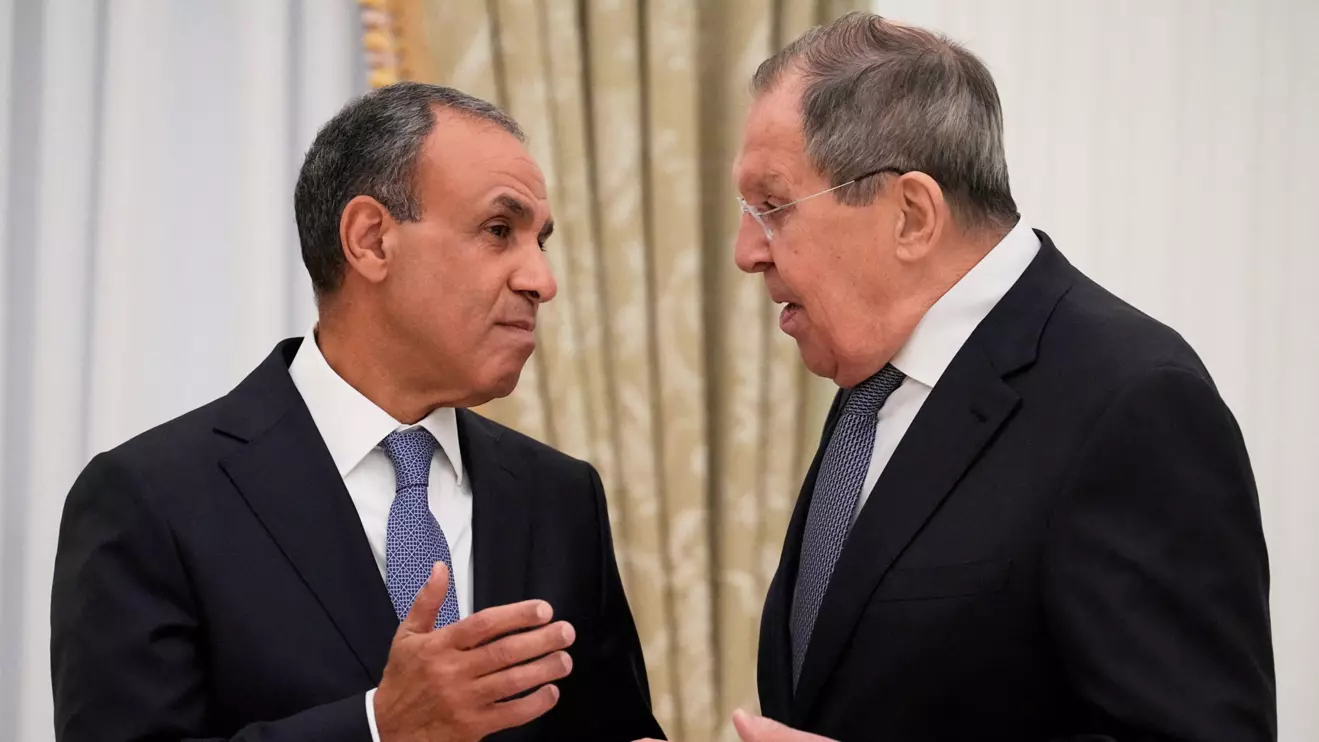
Egyptian Foreign Minister Badr Abdelatty listens to Russian Foreign Minister Sergei Lavrov ahead of a meeting with Russian President Vladimir Putin at the Senate Palace of the Kremlin in Moscow, Russia April 2, 2026. Alexander Zemlianichenko/Reuters

Egyptian Foreign Minister Badr Abdelatty listens to Russian Foreign Minister Sergei Lavrov ahead of a meeting with Russian President Vladimir Putin at the Senate Palace of the Kremlin in Moscow, Russia April 2, 2026. Alexander Zemlianichenko/Reuters

Russian President Vladimir Putin will meet Egyptian Foreign Minister Badr Abdelatty on Thursday in Moscow, with discussions expected to centre on the ongoing war involving Iran and the broader situation across the Middle East, Kremlin spokesman Dmitry Peskov confirmed.

The meeting underscores the growing diplomatic activity surrounding the Iran conflict, as regional and global powers seek to shape the outcome of a war that has already sent shockwaves through energy markets, destabilised Gulf states, and drawn in actors from Lebanon to Yemen to Jordan.

Russia and Egypt maintain strong bilateral ties across trade, energy, military cooperation and tourism, the two countries have developed a close relationship over recent years that Moscow has carefully cultivated as part of its broader engagement with the Arab world. Thursday's meeting will also address these bilateral dimensions alongside the regional crisis.

Egypt, for its part, occupies a uniquely important position in Middle Eastern diplomacy. 

As the Arab world's most populous nation, a key interlocutor with multiple regional actors, and a country with direct stakes in regional stability, including the vital Suez Canal, whose traffic has already been disrupted by the broader conflict, Cairo’s voice carries considerable weight in any diplomatic process.

Moscow's Positioning

The meeting reflects Russia's continued effort to remain relevant in Middle Eastern affairs despite its own isolation from much of the Western world. Moscow has maintained lines of communication with Tehran, with Arab capitals, and with all sides of the conflict, positioning itself as a potential mediator or at minimum an indispensable player in any eventual peace process.

Tags

Edward Finkelstein

Edward Finkelstein

From Athens, Edward Finkelstein covers current events in Greece, Cyprus, Turkey, Egypt, Libya, and Sudan. He has over 15 years of experience reporting on these countries. He is a specialist in terrorism issues

Related

Diplomacy

Pakistan takes center stage on Hormuz crisis

Pakistan hosted talks with Turkey, Egypt and Saudi Arabia on Sunday as part of its efforts to broker an end to the Iran war, with initial discussions focused on proposals to reopen the Strait of Hormuz to shipping, sources familiar with the matter said.

Diplomacy

The Iran peace talks move to Islamabad

Pakistan will host Saudi Arabia, Turkey and Egypt for talks from Sunday on the Iran war as Islamabad positions itself as a potential venue for U.S.-Iran negotiations on the month-old conflict.

Subscribe to our newsletter

Mena banner 4

To make this website run properly and to improve your experience, we use cookies. For more detailed information, please check our Cookie Policy.

  • Necessary cookies enable core functionality. The website cannot function properly without these cookies, and can only be disabled by changing your browser preferences.