Lebanese Prime Minister's misguided approach

1 min Mena Today

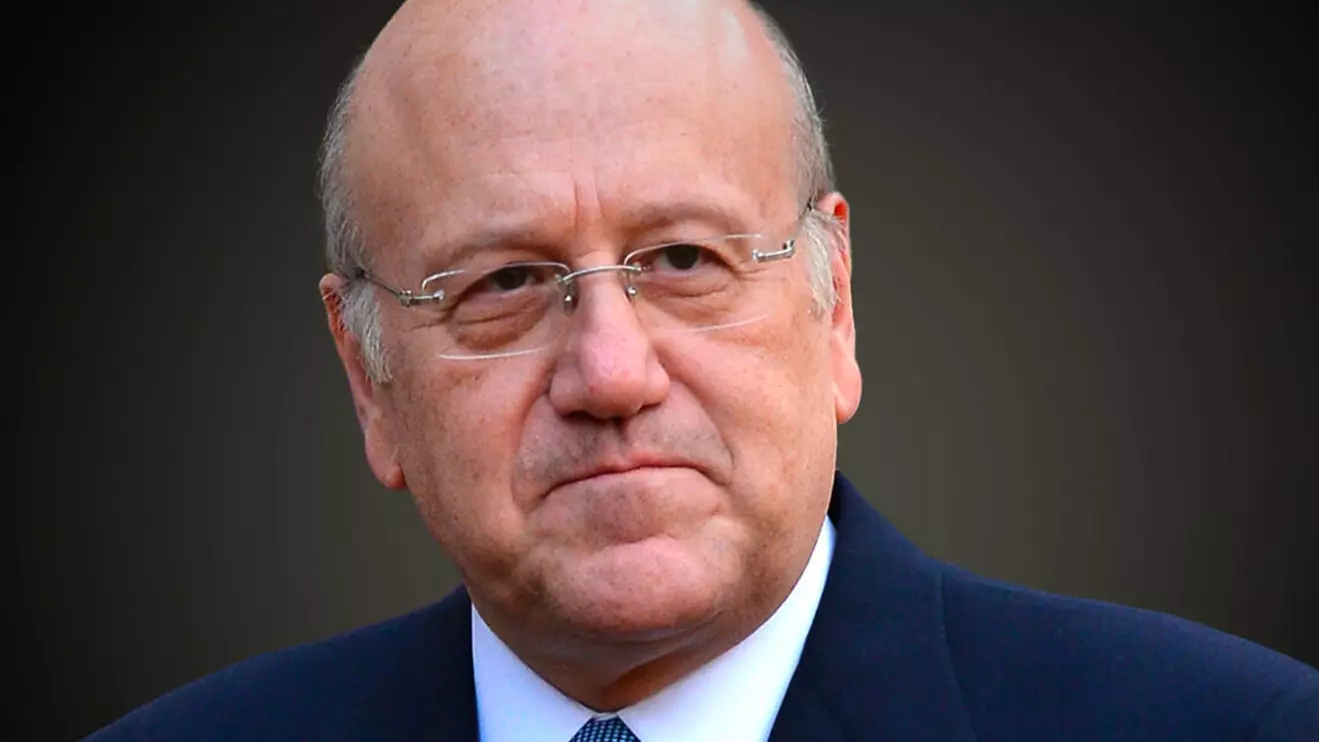
Lebanese Prime Minister Nagib Mikati claimed on Tuesday that he had successfully persuaded "Lebanon's friends of the need to pressure Israel to prevent the situation from escalating into unforeseen consequences and repercussions," according to the Lebanese National News Agency.

 Nagib Mikati © LNS

 Nagib Mikati © LNS

Lebanese Prime Minister Nagib Mikati claimed on Tuesday that he had successfully persuaded "Lebanon's friends of the need to pressure Israel to prevent the situation from escalating into unforeseen consequences and repercussions," according to the Lebanese National News Agency.

Tensions between Hezbollah and Israel have intensified following the Israeli military's killing of Hezbollah's military commander Fouad Chokor and several civilians in the southern suburbs of Beirut last Tuesday.

"The recent Israeli aggression in the southern suburbs has further complicated the situation and heightened fears of clashes that could plunge the situation into a full-scale war," Mikati said after meetings with "officials from friendly countries." He emphasized the importance of confidentiality in these discussions, suggesting that "quiet diplomacy is the most effective in the delicate circumstances" that Lebanon is currently facing.

"What I can disclose is that the series of meetings I held yesterday have helped convince Lebanon's friends of the need to pressure Israel to avoid a slide into unintended consequences and repercussions. This pressure is ongoing, and we hope it will yield satisfactory results in the shortest time possible."

However, Nagib Mikati appears to overlook a crucial fact: it was Hezbollah that initiated hostilities against Israel on October 8, provoking legitimate retaliatory actions by the Israeli army. The Lebanese Prime Minister might find it more prudent to urge the Shiite organization and its patron, Iran, to cease their attacks on Israeli territory.

By Antoine Khoury 

Related

Strait of Hormuz

Six vessels turn around under U.S. Hormuz blockade

No ships have made it past a U.S. naval blockade of Iran's ports and coastal areas, and six merchant ships have followed orders to turn back, the U.S. military said on Tuesday, providing the first details on a day-old effort ordered by President Donald Trump after peace talks between the U.S. and Iran broke down.

Lebanon

Rare Israel-Lebanon talks open in U.S.

U.S. Secretary of State Marco Rubio hosted the first direct talks between Israel and Lebanon in decades on Tuesday and both sides said they held positive discussions although it was not immediately clear if they agreed to a framework for peace.

Israel

Saar calls for normalization with Lebanon

Israeli Foreign Minister Gideon Saar has signaled his country's desire for full normalization with Lebanon, just ahead of a key round of peace talks scheduled in Washington.

Subscribe to our newsletter

Mena banner 4

To make this website run properly and to improve your experience, we use cookies. For more detailed information, please check our Cookie Policy.

  • Necessary cookies enable core functionality. The website cannot function properly without these cookies, and can only be disabled by changing your browser preferences.