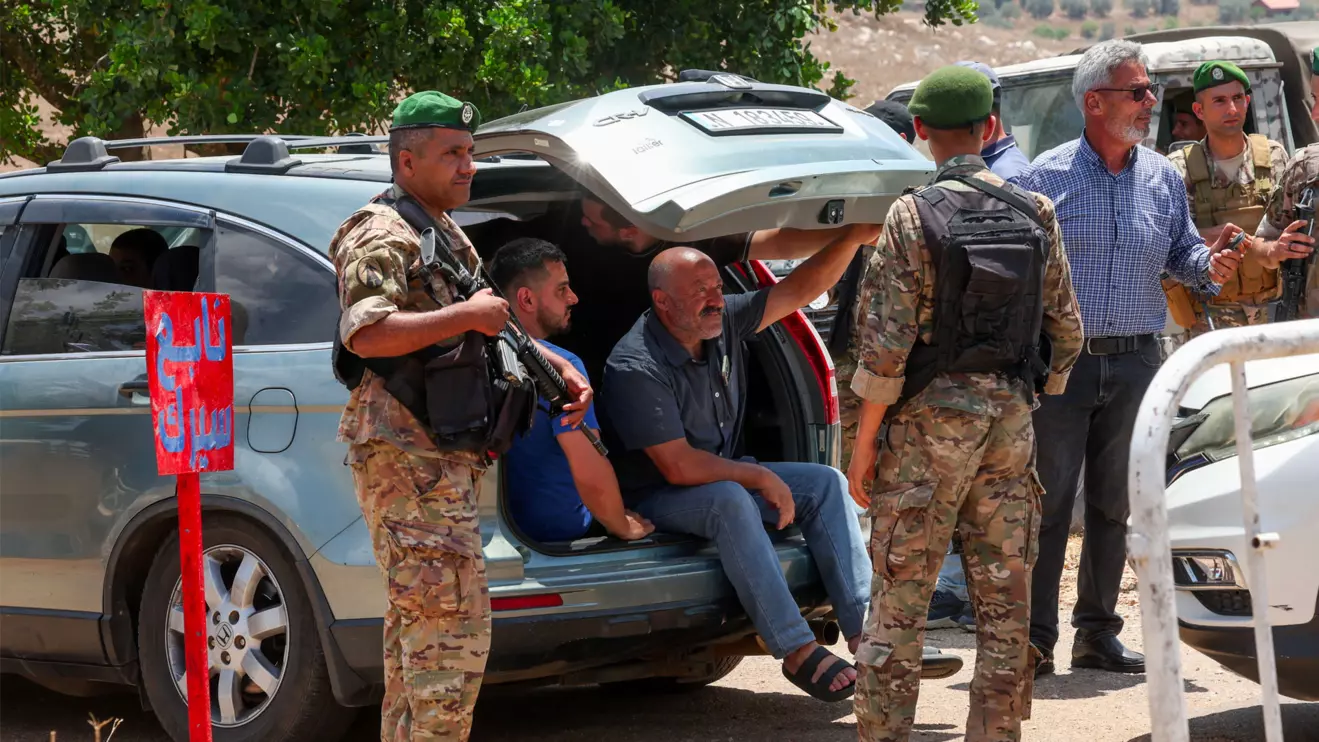
Residents began entering the southern Lebanese town of Zawtar al-Gharbiyeh on Friday, some inspecting damaged homes and searching for belongings after Israeli troops withdrew and the Lebanese army deployed under a U.S.-brokered agreement.
The return remains tentative. More than half the town has been destroyed and many of the homes still standing are badly damaged, according to Mayor Abed Ezzeddin.
Residents walked through streets covered in rubble, stopping outside damaged homes.
"We've been waiting for this moment for almost five months," said one, Mohammed Darwish
"We want to go in and check," he said. "We're happy that we're going in today."
Darwish said he hoped to remain in the town but that residents had not been told whether they would be allowed to stay overnight.
For some, the scale of the destruction has not diminished their determination to remain.
"My house is destroyed, and my children's house is destroyed. Everything is destroyed," said another resident, Abu Ali Ezzeddin.
"I'm planning to stay in (Zawtar al-Gharbiyeh) because my livelihood is here," he said.
The Lebanese army began deploying in Zawtar al-Gharbiyeh on Tuesday after Israeli forces withdrew from the area, marking the first test of a U.S.-brokered plan agreed by Lebanon and Israel in direct talks.
The plan foresees the Lebanese army confiscating weapons from the Iran-aligned Hezbollah group in designated areas and Israeli troops withdrawing in phases so that Lebanese troops can deploy. The Israeli military has described Zawtar al-Gharbiyeh as one of three towns or villages covered by the initial pilot programme.
Israeli troops still occupy a swathe of territory about 10 kilometres (six miles) into southern Lebanon, where they have razed villages to the ground.
As a result, tens of thousands of Lebanese displaced from their hometowns when the latest war between Hezbollah and Israel erupted on March 2 remain unable to return home.
Israeli troops continued to carry out controlled explosions in towns they occupy near Zawtar al-Gharbiyeh this week.
Army units have been sweeping Zawtar al-Gharbiyeh for mines and unexploded ordnance, and ambulances entered the town on Thursday to remove the bodies of Hezbollah fighters killed in fighting in the town.
A senior Lebanese military official told Reuters this week that considerable work remained before the town could be declared safe.
On Thursday, Hezbollah's parliamentary bloc dismissed the Lebanese army's deployment as a symbolic exercise.
By Mahmoud Hasano and Aziz Taher