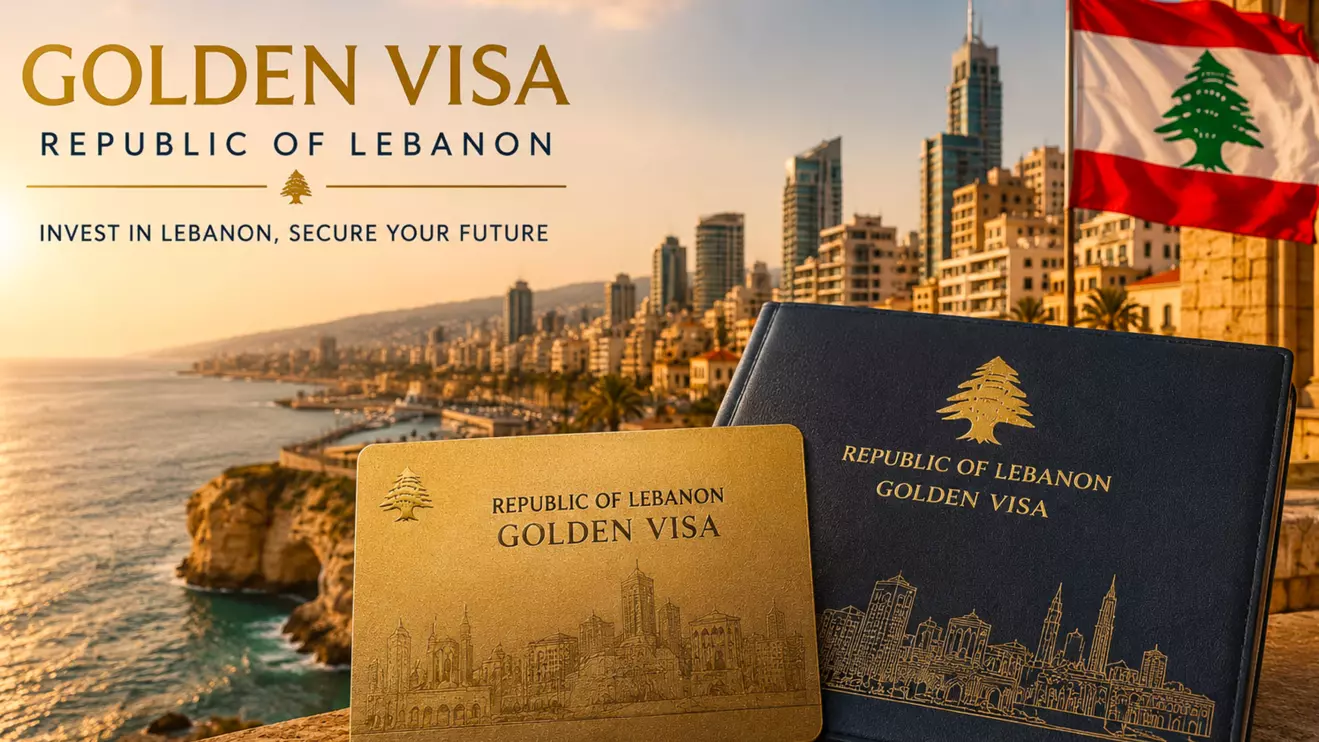
Lebanon's Finance and Budget Committee approved Monday a government bill establishing a "golden visa" scheme, offering wealthy foreigners and expatriates the opportunity to obtain Lebanese residency and a preferential tax regime in exchange for a minimum investment of $500,000.
The bill, which still requires full parliamentary approval, is modelled on the highly successful Dubai residency-by-investment framework, a programme that has transformed the UAE emirate into one of the world's premier destinations for high-net-worth individuals, entrepreneurs and digital nomads seeking a business-friendly tax environment.
An Attractive Proposition - On Paper
The appeal is clear. Lebanon boasts a highly educated, multilingual population, a vibrant entrepreneurial culture, a sophisticated banking tradition and a Mediterranean lifestyle that few countries can match. A well-structured golden visa scheme, combined with a competitive tax regime, could in theory attract significant capital flows from the Lebanese diaspora - one of the wealthiest and most globally dispersed in the world - as well as from regional and international investors.
The Hezbollah Problem
But there is a fundamental obstacle that no legislative committee can vote away: security.
For Lebanon's golden visa to genuinely attract the wealthy investors it targets, the country must first achieve something it has been denied for decades, sustainable peace, free from the shadow of Hezbollah.
The Iranian-created militia, which functions as a state within a state, has dragged Lebanon into repeated wars, paralysed its institutions, hollowed out its economy and made it a byword for instability across the international investment community.
No amount of tax incentives will convince a high-net-worth individual to base themselves in a country where an armed militia answerable to Tehran - not to Beirut - retains the power to launch wars at will and plunge the country back into conflict overnight.
The golden visa initiative is a sign that Lebanon's new government is thinking seriously about economic reconstruction and international reintegration. That ambition deserves encouragement.
But the sequencing matters. First, Hezbollah must be disarmed. Then, Lebanon can credibly pitch itself as the next Dubai. In that orde, and no other.