
Lebanon
Israeli army radio announces "Significant" reduction of troops in South Lebanon
Israel's army radio (GLZ) announced Thursday a "significant" reduction in the number of brigades deployed in the occupied "buffer zone" in southern Lebanon.

Lebanon is set to welcome its first domestically registered airline since 1969, as start-up Mada Airways prepares to launch scheduled commercial services from the country's north, ending more than half a century of aviation monopoly, according to L’Orient-Le Jour.
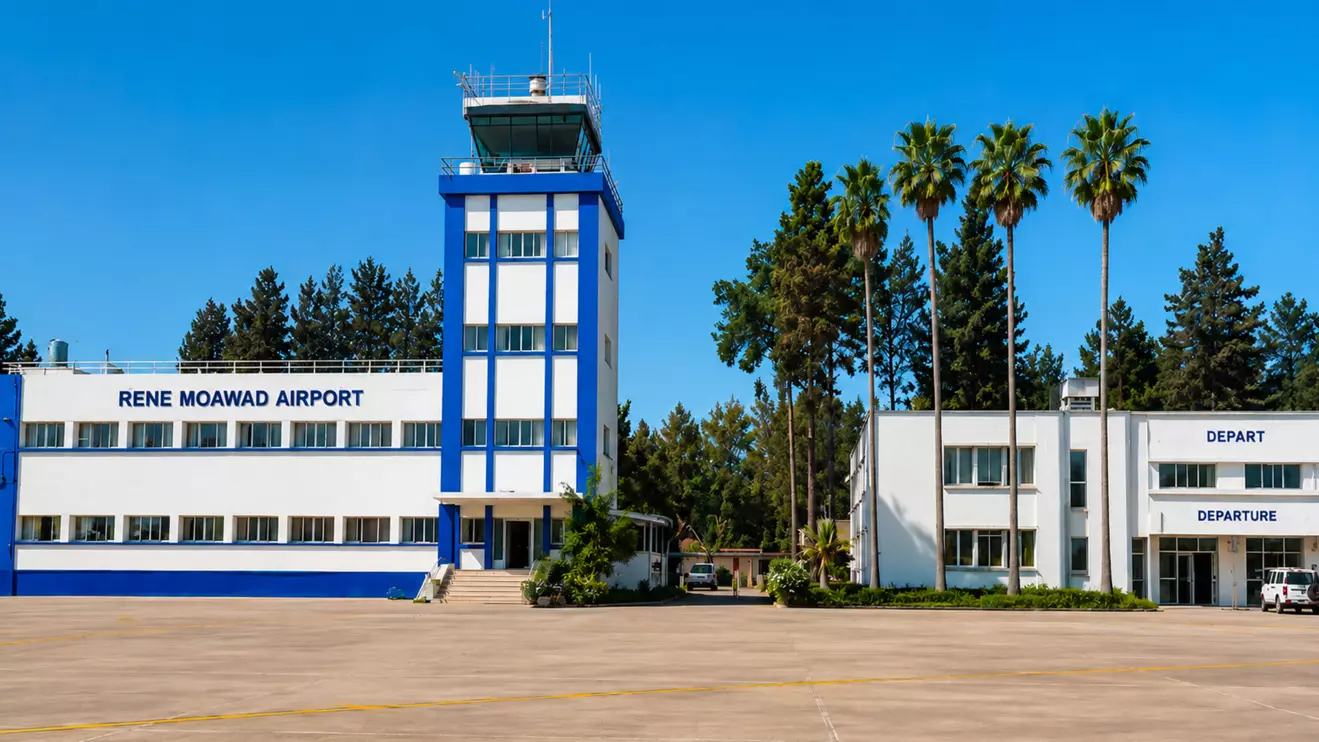
Rene Moawad Airport in Qlayaat © Mena Today
Lebanon is set to welcome its first domestically registered airline since 1969, as start-up Mada Airways prepares to launch scheduled commercial services from the country's north, ending more than half a century of aviation monopoly, according to L’Orient-Le Jour.
The carrier's emergence follows the expiry earlier this year of an exclusivity arrangement that had granted flag carrier Middle East Airlines (MEA) a stranglehold over Lebanon-based commercial aviation since 1969, a deal that had barred other airlines from registering as Lebanese commercial carriers, though foreign airlines were always free to serve the country.
Mada Airways is the sister company of IBEX Air Charter, a private jet and charter operator with bases in Beirut and Congo. The airline is currently awaiting its operating licence and has no announced route network, its planned destinations remain unknown. What is known is that it intends to operate exclusively from Rene Moawad Airport in Qleiaat, in the northern Akkar region.
Rene Moawad Airport is a joint civil-military facility located approximately six kilometres from the Syrian border in northern Lebanon. Named after the Lebanese president assassinated in 1989, just seventeen days after taking office, the airport has long operated well below its potential, handling only a few thousand passengers annually.
Its rehabilitation - currently underway as part of a broader government push to reduce Lebanon's dependence on a single international gateway - could transform it into a genuine alternative hub for the country's north, a region that has historically been underserved by air transport.
The airport has a single runway of 3,000 metres long, with an extra 250 metres from each end, and 45 metres wide with an extra 2 metres from each side. The runway, originally built for military use, has undergone test landings and meets technical requirements for commercial operations, though additional systems such as navigation aids, runway lighting, and air traffic coordination mechanisms are being installed.
The Beirut Airport Problem
The push to develop Rene Moawad Airport takes on added significance given the controversial location of Beirut's Rafic Hariri International Airport. The airport sits in the southern suburbs of the capital, a zone that falls within Hezbollah's sphere of influence and control. This reality has long raised security concerns among international carriers and governments, and has added urgency to Lebanon's efforts to develop alternative aviation infrastructure.
Facing competition for the first time in over five decades, MEA is moving to defend its market position. The flag carrier plans to launch a low-cost subsidiary, Fly Beirut, with services expected to begin in 2027 using an initial fleet of Airbus A320s.
Lebanese expatriates, who have long complained about MEA's relatively high fares, will be hoping that genuine competition finally delivers what decades of monopoly never could: affordable air travel to and from their country.
Israel's army radio (GLZ) announced Thursday a "significant" reduction in the number of brigades deployed in the occupied "buffer zone" in southern Lebanon.
Turkish President Tayyip Erdogan said it was unrealistic to expect all countries to make the same progress on climate policy while inequalities in access to financing and technology persisted, adding he expected support from all nations for Turkey's COP31 Climate Summit action agenda.
Turkey and Iraq agreed on Wednesday for Turkish forces to hand over a military camp in northern Iraq to the Iraqi government gradually, they said after talks in New York, adding they also agreed to end the presence of "outlawed armed elements" in northern Iraq.
To make this website run properly and to improve your experience, we use cookies. For more detailed information, please check our Cookie Policy.
Necessary cookies enable core functionality. The website cannot function properly without these cookies, and can only be disabled by changing your browser preferences.