The framework agreement between Lebanon and Israel, reached under the stewardship of President Joseph Aoun in close coordination with Prime Minister Nawaf Salam, is not merely another diplomatic development to be debated, parsed and ultimately shelved.
It is, without exaggeration, the most consequential political achievement of the Lebanese state in half a century, and perhaps its last realistic chance to break free from the tragic cycle that has consumed it.
What This Agreement Actually Means
Let us be clear about what is at stake. This framework is not simply about removing Israeli forces from Lebanese soil, as vital as that objective is. When fully implemented, it will accomplish something far more profound: it will permanently close the bleeding wound in the south that has devastated every Lebanese household, regardless of sect, region or political affiliation.
It will end the era of military organisations operating outside state authority, making decisions of war and peace according to external interests, foremost among them Hezbollah, whose loyalty to Tehran has never been seriously in doubt.
And it will expel Iranian influence from Lebanese decision-making — not through hostility toward the Iranian people, whom history has always distinguished from their theocratic rulers, but by restoring relations between Beirut and Tehran to what they were before 1982: normal diplomatic relations between two sovereign states, for the mutual benefit of their peoples.
The Myth of "Resistance"
Those who built careers on the narrative of resistance owe Lebanon an honest reckoning. For fifty years, successive "resistances" on Lebanese soil have destroyed the country repeatedly, economically, politically and socially, without contributing, as the author of this text rightly notes, "a single hair's breadth to the Palestinian cause." The Palestinians themselves have paid an enormous price for Lebanon being used as a battleground for causes that were never truly about their liberation.
The south has been devastated. Entire communities have been displaced, repeatedly, by wars they did not choose. The Lebanese economy has collapsed under the weight of a state within a state that answered to Tehran rather than Beirut. And still, the defenders of this arrangement have the audacity to call this agreement "sedition."
One wishes they had stirred when the real sedition began, when the Taif Agreement was selectively implemented, disarming some factions while others were allowed to keep their weapons under the convenient fiction of "resistance." One wishes they had wept when the bleeding began, rather than now, when the wound is finally being treated.
On Legitimacy
To those who argue that this agreement lacks legitimacy because it did not account for the opinion of a segment of the Lebanese people: a word on democratic arithmetic. President Joseph Aoun was elected by 99 out of 128 members of parliament. The government of Prime Minister Nawaf Salam won the confidence of nearly two-thirds of the legislature — a parliament chosen by the Lebanese people in free elections. In any functioning democracy, that is what legitimacy looks like.
The alternative, allowing a militia answerable to a foreign theocracy to veto Lebanon's sovereign choices, is not legitimacy. It is submission dressed up as principle.
A Final Warning
History does not offer countries like Lebanon unlimited second chances. The opportunities to escape catastrophic circumstances are rare, fleeting and easily squandered by those who prefer ideological posturing to the hard work of national reconstruction.
This is Lebanon's moment. The agreement, when implemented, offers the country something it has not known in fifty years: the prospect of a state that controls its own territory, monopolises the use of force within its borders, and makes its own decisions about war and peace.
All Lebanese — regardless of sect, region or political history — must stand behind their legitimate authorities and seize this opportunity. The alternative is to continue drinking from the poisoned cup of "resistance" until, as the Arab saying goes, all are left utterly intoxicated.
Lebanon has been intoxicated long enough. It is time to sober up.
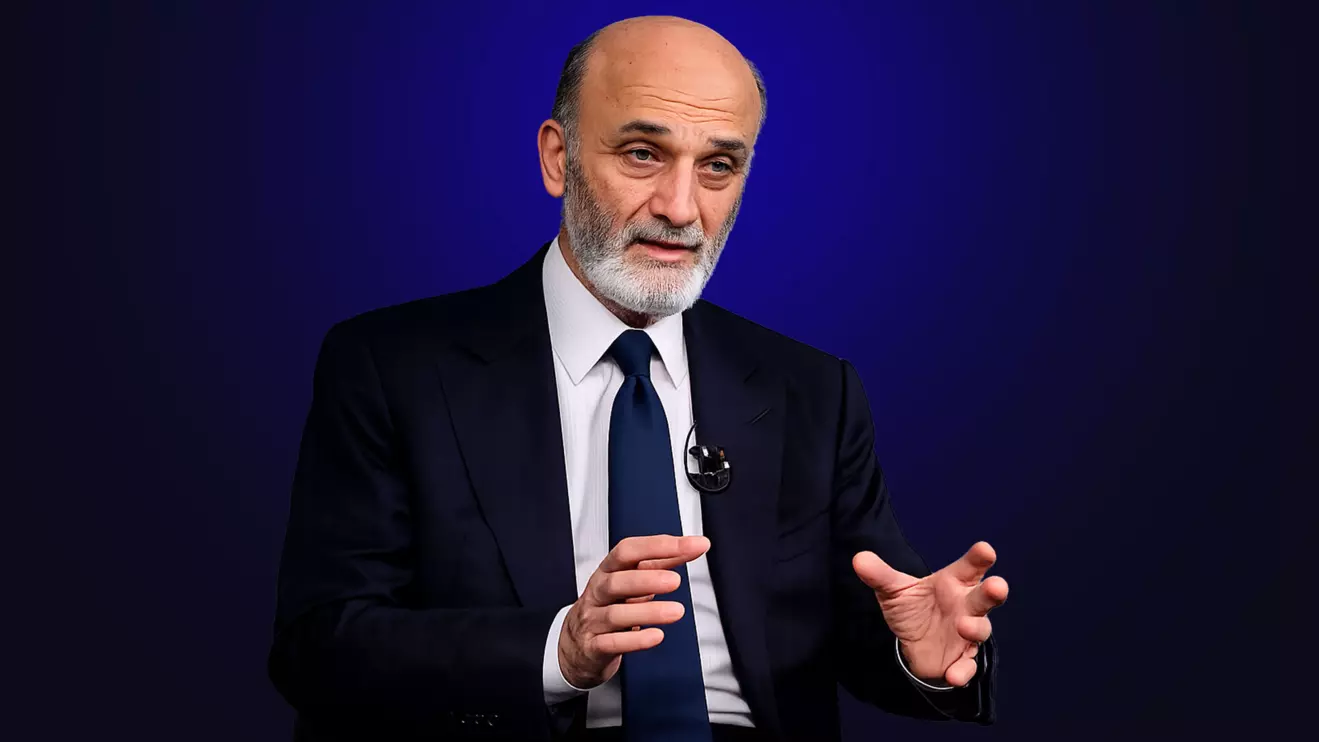
By Samir Geagea
Samir Geagea is the leader of the Lebanese Forces