Iran
Trump downplays duration of renewed Iran strikes
President Donald Trump said on Wednesday that the renewed U.S. campaign against Iran would not continue for "too long" after the biggest exchange of fire between Tehran and Washington since July.

Iran's Tasnim news agency said on Monday that Tehran's negotiating team is stopping exchanges of messages with the United States through mediators due to attacks on Lebanon, as diplomatic efforts to end the three-month-old Iran war continue.
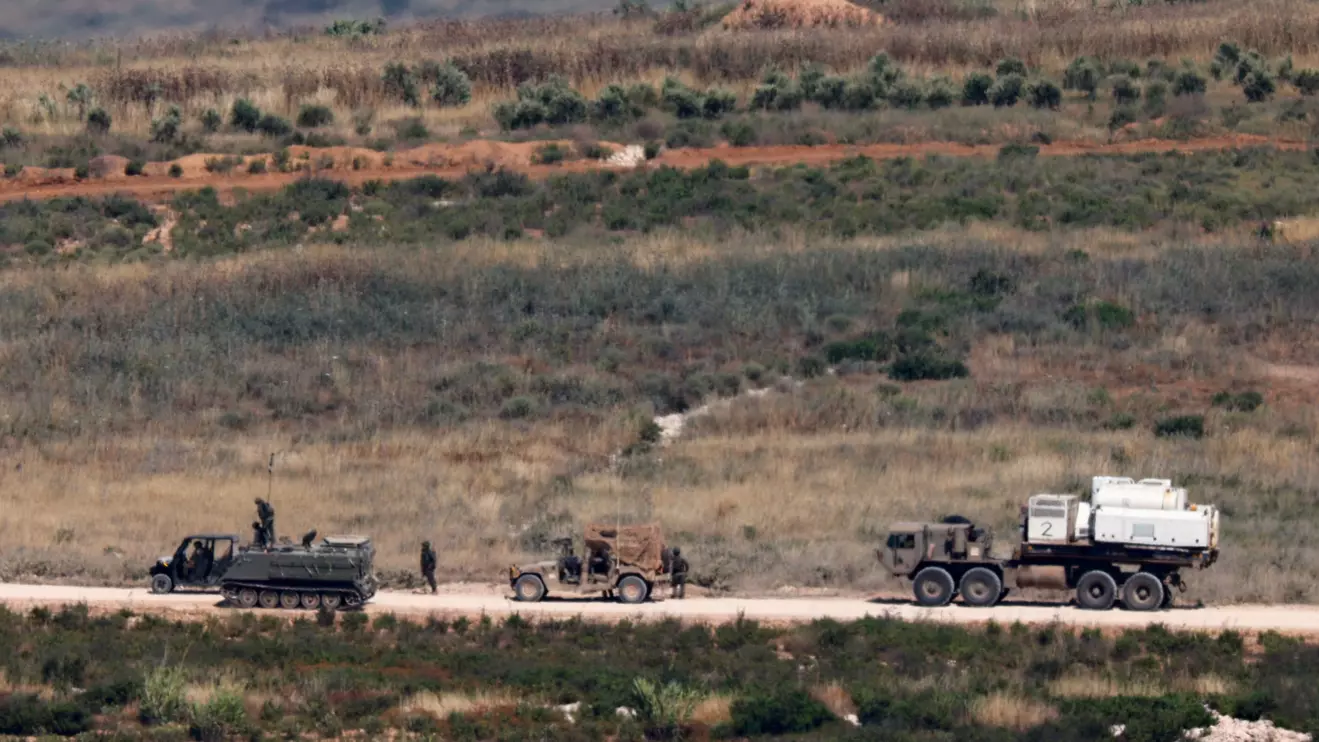
Israeli soldiers near military vehicles in Lebanon, as seen from the Israeli side of the Israeli-Lebanese border, June 1, 2026. Reuters/Amir Cohen
Iran's Tasnim news agency said on Monday that Tehran's negotiating team is stopping exchanges of messages with the United States through mediators due to attacks on Lebanon, as diplomatic efforts to end the three-month-old Iran war continue.
The agency said Iran and the Resistance Front, which includes its Shiite allies in Yemen, Lebanon and Iraq, have set an agenda to completely block the Strait of Hormuz and activate other fronts, including the Bab El Mandeb Strait, in order to "punish" Israel and its supporters.
If the Houthis, Iran's allies in Yemen, open a new front in the conflict, one obvious target would be the Bab El Mandeb Strait off the coast of Yemen, a key shipping chokepoint and narrow passageway that controls sea traffic towards the Suez Canal.
"Violation on one front is a violation of the ceasefire on all fronts. The U.S. and Israel are responsible for the consequences of any violation," Iranian Foreign Minister Abbas Araqchi said on X on Monday, referring to Israeli operations in Lebanon.
The war launched by the U.S. and Israel on February 28 has killed thousands of people, mainly in Iran and Lebanon. It has also caused global economic pain by pushing up energy prices since Iran effectively closed the Strait of Hormuz, a vital global supply route for oil and liquefied natural gas.
"The immediate cessation of the Zionist regime's aggressive and brutal army operations in Gaza and Lebanon and the necessity of the regime’s complete withdrawal from the occupied areas in Lebanon have been emphasized by Iranian officials and negotiators, and there will be no talks until Iran and the resistance's views on this matter are met," Tasnim added.
Reporting by Elwely Elwelly
President Donald Trump said on Wednesday that the renewed U.S. campaign against Iran would not continue for "too long" after the biggest exchange of fire between Tehran and Washington since July.
Top aides to President Donald Trump are pushing to keep the Iran war from escalating before November's midterm elections to staunch Republican electoral losses, four people familiar with the discussions said, a strategy already under strain as the U.S. and Iran exchanged back-and-forth attacks overnight.
Russia has secretly helped Iran develop advanced supersonic cruise missiles, in what the Financial Times describes as one of the most significant known transfers of strategic military technology from Moscow to Tehran, according to an investigation published Wednesday.

To make this website run properly and to improve your experience, we use cookies. For more detailed information, please check our Cookie Policy.
Necessary cookies enable core functionality. The website cannot function properly without these cookies, and can only be disabled by changing your browser preferences.