Libya
Two killed in Tripoli as torrential rain lashes Libyan capital
Torrential downpours flooded the Libyan capital of Tripoli on Tuesday, killing two people, according to a statement by authorities and a local TV channel.

The closure of the main border crossing between Libya and Tunisia, decided on Tuesday, will be extended until the "trafficking" that passes through with the complicity of armed groups is brought to an end, announced a Libyan minister.
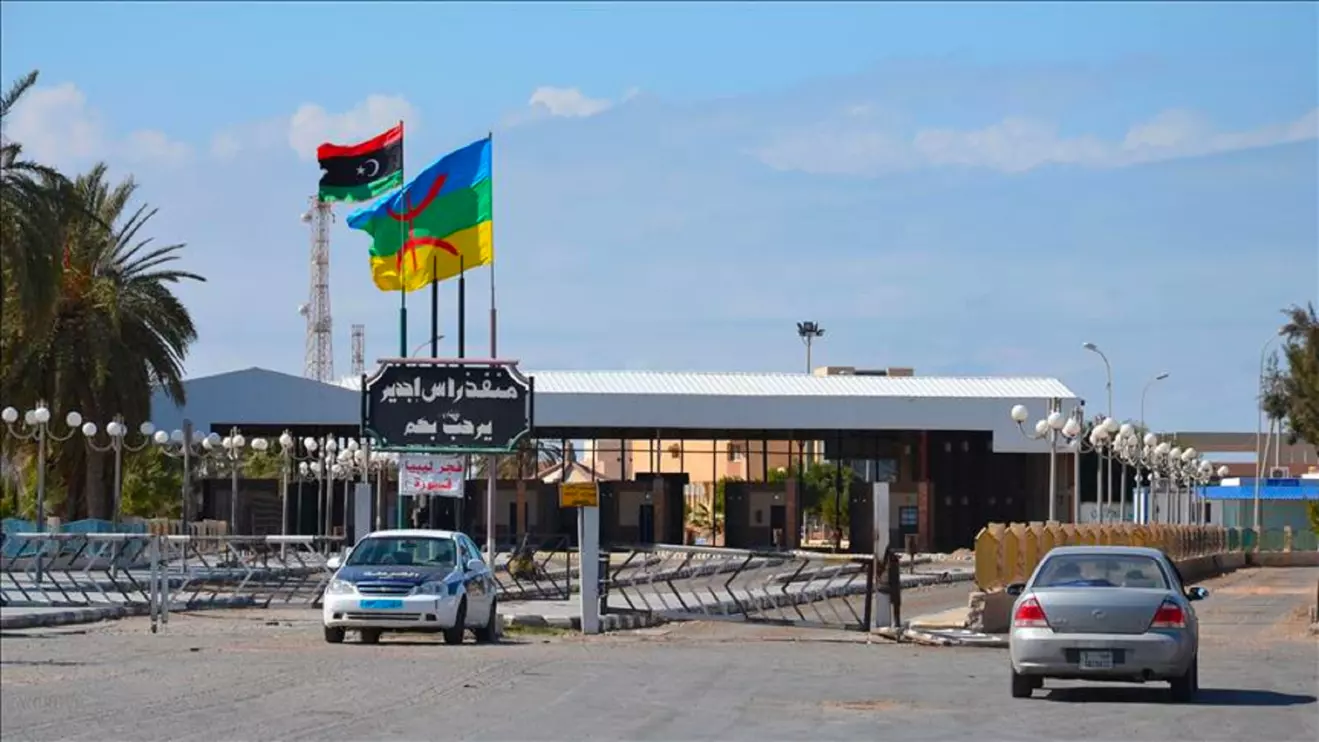
The Ras Jedir border crossing © LUN
The closure of the main border crossing between Libya and Tunisia, decided on Tuesday, will be extended until the "trafficking" that passes through with the complicity of armed groups is brought to an end, announced a Libyan minister.
"We need to secure the borders and combat crime and trafficking," emphasized the Interior Minister of the Tripoli government, Imad Trabelsi, during a press conference late Thursday night. Authorities will not back down "against drug traffickers and smugglers," he added.
The Ras Jedir border crossing, in northwest Libya, about 170 kilometers west of Tripoli, considered by Mr. Trabelsi as "one of the largest points of smuggling and crime in the world," has been closed since Tuesday.
Mr. Trabelsi stated that the border crossing had become in recent years a hub for smuggling, especially of gasoline, to Tunisia, and drugs in the form of amphetamines in the opposite direction.
The "Law Enforcement Force," attached to his ministry, dispatched on Monday to Ras Jedir to stop smugglers and ensure the safety of travelers, was targeted by "outlawed armed groups." It had to withdraw to "preserve lives and property," he explained.
Traffickers, mainly from the Libyan city of Zuwara, have controlled the border crossing for years, considering it their domain and enabling them to engage in highly profitable informal trade.
Torrential downpours flooded the Libyan capital of Tripoli on Tuesday, killing two people, according to a statement by authorities and a local TV channel.
The Museum of Moroccan Jewish Culture was inaugurated on Monday in Fez. The project was launched at the initiative of King Mohammed VI.
In a Cairo cemetery shaded by palms and tangled shrubs, pale graves are packed so tightly that in some places only narrow strips of sand and broken pavement separate one family’s plot from the next.

To make this website run properly and to improve your experience, we use cookies. For more detailed information, please check our Cookie Policy.
Necessary cookies enable core functionality. The website cannot function properly without these cookies, and can only be disabled by changing your browser preferences.