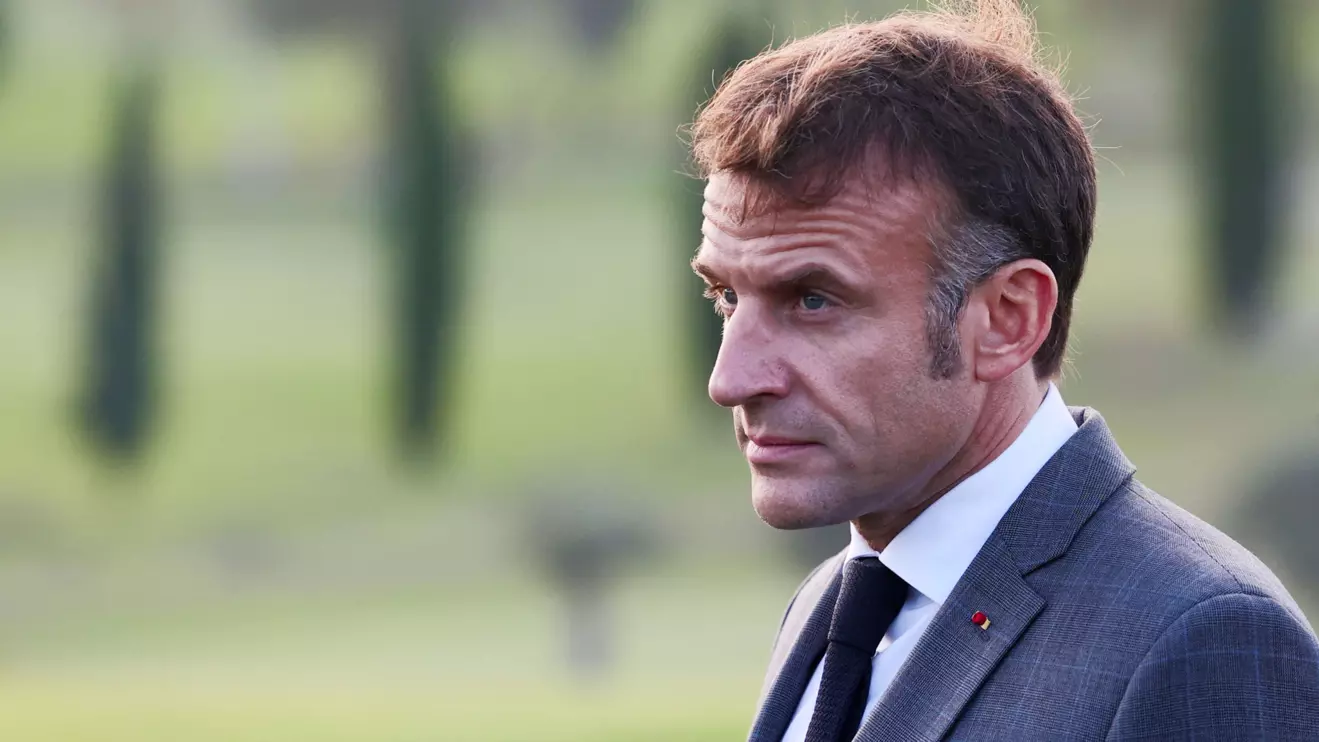
French President Emmanuel Macron has once again called for an immediate halt to arms exports to the Gaza Strip and Lebanon, arguing that it is the only way to de-escalate the ongoing conflicts involving Israel, Hamas, and Hezbollah.
Speaking at a press conference in Cyprus after a meeting of the Med9 countries—EU's Mediterranean nations—Macron emphasized that his call does not imply disarming Israel but rather aims to prevent further destabilization in the region.
Macron's comments come amid a year-long conflict between Israel and Hezbollah, which began after the Iran-backed group launched rockets into northern Israel in support of Hamas during the Gaza war.
That conflict started when Hamas attacked Israeli communities, killing 1,200 civilians in southern Israel.
Since then, the violence has escalated, with Israel conducting bombing campaigns in southern Lebanon, Beirut’s southern suburbs, and the Bekaa Valley, targeting Hezbollah leaders. In return, Hezbollah has fired deeper into Israeli territory.
Macron reiterated France’s stance on the need for a ceasefire in both Gaza and Lebanon, stressing that it is vital for the safety of civilians and hostages caught in the conflict.
He urged the international community to stop arms exports that fuel the violence, calling it "the only way" to end the crisis.
Last Saturday, Macron had made similar remarks, which were met with criticism from Israeli Prime Minister Benjamin Netanyahu, who argued that restricting Israel's defense capabilities would only benefit Iran and its allies.
Although France is not a major supplier of military equipment to Israel—its defense ministry reported only 30 million euros ($33 million) in exports last year—Macron's stance has raised eyebrows.
Critics argue that the French president's position on the conflict reflects a flawed understanding of the geopolitical and military complexities in the region. While Macron advocates for peace, critics highlight that Iran continues to supply Hezbollah with significant quantities of arms, complicating the French leader’s calls for disarmament.
Macron’s diplomatic efforts are facing increasing scrutiny, with many questioning whether he will push Iran to cease supplying arms to Hezbollah, especially given the clear influence the organization wields in Lebanon.
Some argue that Macron should focus more on domestic issues, as his popularity and influence within France continue to decline.
As the violence continues, Macron's strategy of diplomacy, while well-intentioned, has yet to yield concrete results, leaving many to wonder if the French president has truly grasped the challenges at hand or if his calls for peace are simply disconnected from the reality on the ground.