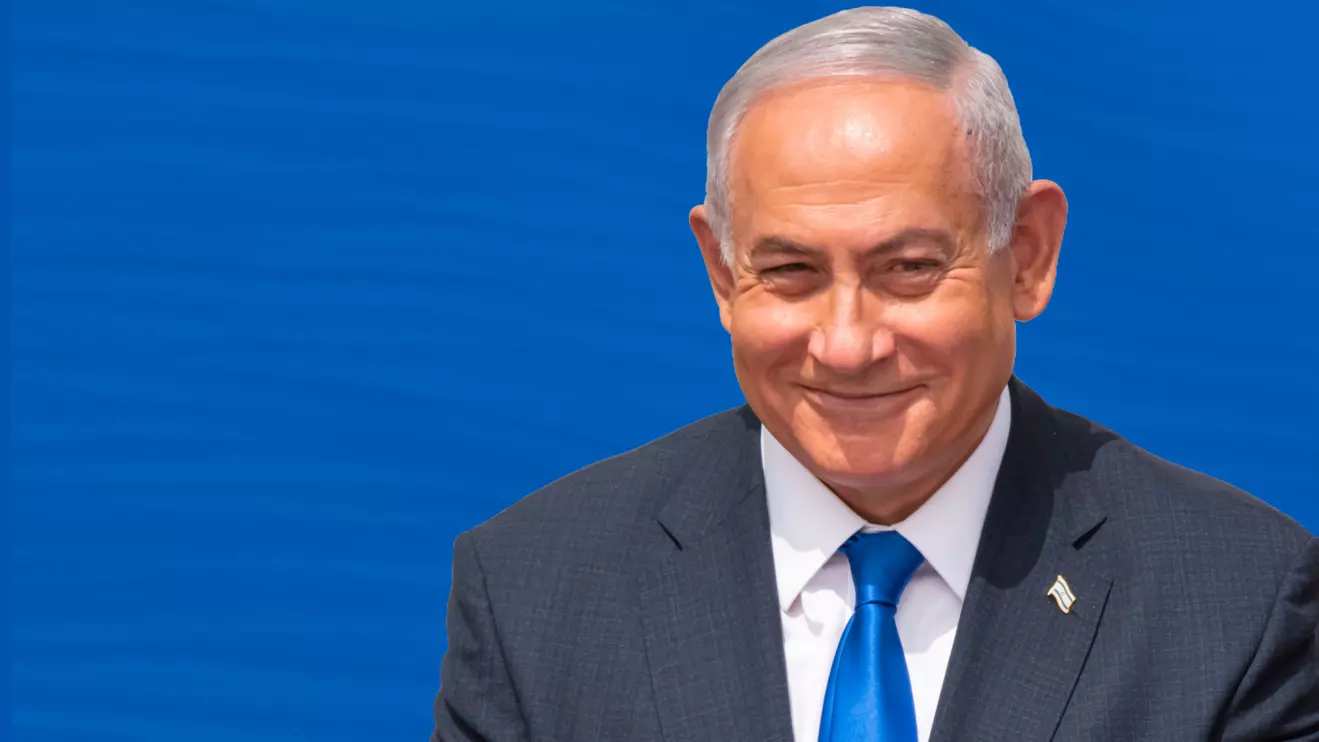
Israeli Prime Minister Benjamin Netanyahu said Sunday that Israel is working to build a new network of regional alliances to counter what he described as both the “weakened Iranian Shiite axis” and an “emerging radical Sunni axis,” according to Israeli media reports.
Speaking about his broader strategic vision, Netanyahu said Israel aims to create “a kind of hexagon of alliances” in and around the Middle East. He cited India, Greece and Cyprus among potential partners, along with unnamed Arab, African and Asian countries.
“The goal is to form an axis of countries that see reality, challenges and objectives in the same way,” Netanyahu said, contrasting this proposed bloc with what he called radical forces in the region. He argued that Israel has “struck very hard” at the Iranian-led Shiite axis, while warning of the rise of a new Sunni radical alignment.
Over the past two years, Iran’s regional influence has been significantly shaken. The collapse of Syrian President Bashar al-Assad’s regime in December 2024 — replaced by a Sunni Islamist coalition led by Ahmad al-Sharaa — marked a turning point in the regional balance of power. Although the new Syrian leadership has received backing from Washington, it is viewed with caution in Israel.
As part of its evolving regional strategy, Israel has intensified outreach to minority communities. The Israeli military has established a liaison post under its Northern Command to coordinate relations with Druze communities in Lebanon and Syria, signaling a more active Israeli role in northern regional dynamics.
Netanyahu’s remarks reflect an effort to reposition Israel within a shifting geopolitical landscape, seeking new strategic alignments amid the weakening of Iran’s traditional network and the uncertain trajectory of post-Assad Syria.