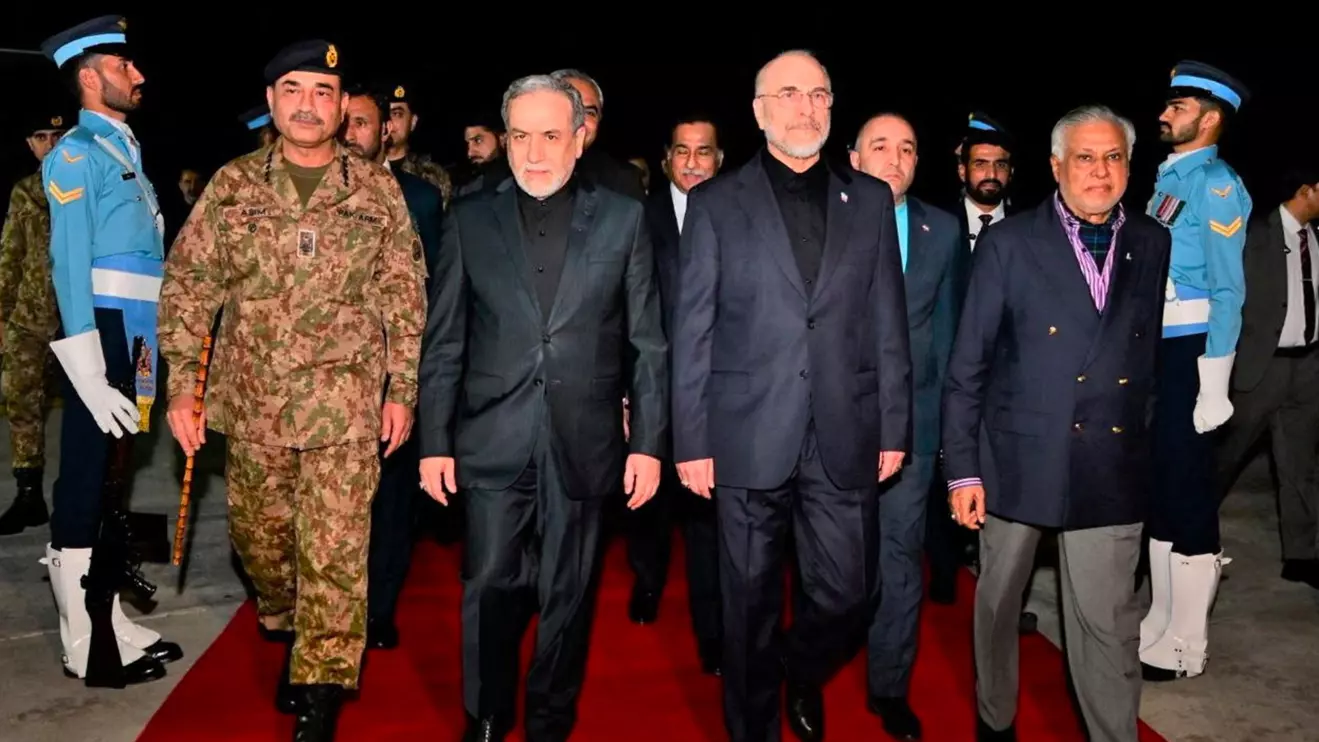
The talks in Islamabad are over. The verdict is in. And it could not be clearer.
Iran gave nothing. On nuclear weapons, nothing.
On ballistic missiles, nothing. On its network of regional proxies, Hezbollah, Hamas, the Houthis, nothing. On the Strait of Hormuz, nothing. The American delegation listened, engaged, and walked away empty-handed. Not because of a failure of diplomacy. But because you cannot negotiate with a regime that has no intention of changing anything.
Tehran did not come to Islamabad to make a deal. It came to buy time, to perform the theatre of dialogue while changing nothing of substance. It is a tactic the Islamic Republic has deployed for decades - talk, stall, deceive, repeat - and it has worked, until now, because the world has always blinked first.
A Regime That Cannot Reform Itself
This is not a government capable of compromise. It is a theocratic regime built on confrontation, sustained by repression, and exported through violence. Its proxies have devastated Lebanon, prolonged the agony of the Palestinian people, destabilised Yemen, and threatened global shipping lanes. Its nuclear programme has advanced under cover of every diplomatic process ever attempted. Its ballistic missile arsenal exists for one purpose: the projection of terror.
Every concession ever offered to Tehran has been pocketed and followed by escalation. Every outstretched hand has been met with a clenched fist. Islamabad was simply the latest chapter in a long and predictable story.
The World Tried. Iran Refused.
Let the record show that the United States came to the table in good faith. It engaged. It listened. It offered a path out. Iran's answer was silence dressed up as negotiation — maximalist demands, zero flexibility, and the barely concealed contempt of a regime that mistakes patience for weakness.
Tehran has now made its position unambiguous. It will not dismantle its nuclear programme. It will not rein in its proxies. It will not relinquish its grip on the Strait of Hormuz. It wants the world to accept Iran as it is, a revolutionary, destabilising, nuclear-threshold state, or face the consequences.
The world should return the message.
Tehran Made Its Choice
There is nothing left to negotiate. No formula left to try. No mediator left to call. Pakistan tried. Europe has spent two decades trying. The result is always the same. A regime that defines itself by resistance to the international order cannot be talked out of that identity. It can only be confronted.
Tehran took its responsibilities in Islamabad. It chose defiance over diplomacy, ideology over pragmatism, and confrontation over compromise. That was a sovereign choice, and sovereign choices carry sovereign consequences.
The clock is no longer ticking toward another round of talks. It is ticking toward a reckoning that Iran's leadership has spent forty years making inevitable. They gambled that the world would never truly call their bluff.
They were wrong.