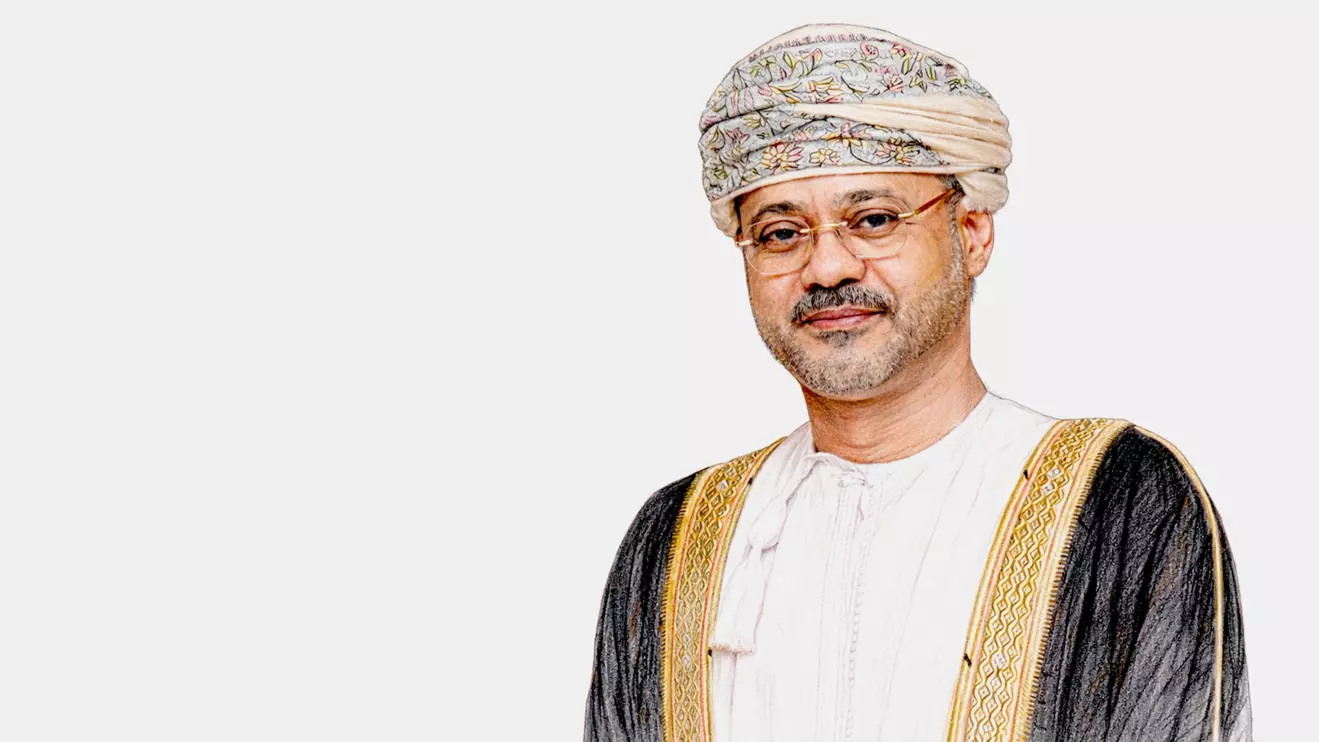
Oman's Foreign Minister Badr al-Busaidi has broken with diplomatic convention to accuse the United States of being "dragged into war" by Israel, at a moment when a nuclear deal was, in his words, "genuinely within reach."
Writing in The Economist, al-Busaidi describes the conflict as a "catastrophe" and claims Washington and Tehran were "on the verge of a real agreement" on Iran's nuclear programme, twice.
Once before the June 2025 Twelve-Day War. And again in February 2026, just hours before the US-Israeli strikes that killed Supreme Leader Ali Khamenei.
It is a compelling narrative. It is also, in large part, false.
What Al-Busaidi Conveniently Omits
The former mediator's account contains a glaring omission: Iran never agreed to anything meaningful at the negotiating table.
During the final rounds of talks, Tehran categorically refused to meet the three core demands that any credible agreement required: the suspension of uranium enrichment, the halt of ballistic missile production and the end of funding for its regional proxies — Hezbollah, Hamas, the Houthis and the various Iraqi militias that have spent years targeting US forces and Gulf infrastructure.
There was no deal within reach. There was the illusion of a deal, carefully maintained by Tehran to buy time, delay pressure and continue its nuclear programme under diplomatic cover.
Al-Busaidi knows this. He sat in those rooms.
Oman's Uncomfortable Position
The subtext of this op-ed is not difficult to read. Oman has long positioned itself as the indispensable back-channel between Tehran and Washington, the neutral sultanate through whose quiet corridors impossible conversations became possible.
That role, and the prestige and strategic leverage it conferred, has been obliterated by the war. Muscat's carefully cultivated neutrality, its privileged relationship with Tehran, its reputation as the Gulf's most reliable mediator: all of it has been swept away in the space of three weeks.
Al-Busaidi's Economist tribune is not a diplomatic intervention. It is damage control, an attempt by a foreign minister whose greatest achievement has been rendered irrelevant to assign blame elsewhere and rehabilitate Oman's image as the voice of reason in a region that has stopped listening to reason.
Al-Busaidi writes that "America's friends have a duty to tell the truth », and calls on them to tell Washington "how much it has lost control of its own foreign policy."
The irony is exquisite. A foreign minister who spent months mediating with a regime that was simultaneously enriching uranium, arming Hezbollah, funding the Houthis and building ballistic missiles, is now lecturing America about losing control.
Perhaps Oman's friends have a duty to tell Muscat how much it was used, and how little Tehran's promises at the negotiating table were ever worth.
Iran did not fail to reach a deal because America was "dragged in" by Israel. Iran failed to reach a deal because it never intended to reach one on terms that would actually dismantle its nuclear and proxy infrastructure.
Badr al-Busaidi was in the room. He knows the offers that were made, and the demands Tehran refused to meet.
His op-ed is not truth-telling. It is self-exoneration dressed as diplomacy.
And Oman, for all its elegant neutrality, emerges from this conflict not as a peacemaker, but as a country that spent years providing Tehran with a respectable face while the Islamic Republic built the arsenal it is now using against the entire Gulf region.
Including, it should be noted, against Oman itself.