Israel
Israel coalition talks: Liberman’s U-turn opens path
The Yisrael Beytenu leader says he is ready to compromise, even on military service for yeshiva students, but still rules out any deal with Arab parties.

For decades, the “two-state solution” has been presented as the only path to peace. History suggests otherwise: two states already stand on the land of the British Mandate, Israel and Jordan. The question is what a third one would be for.
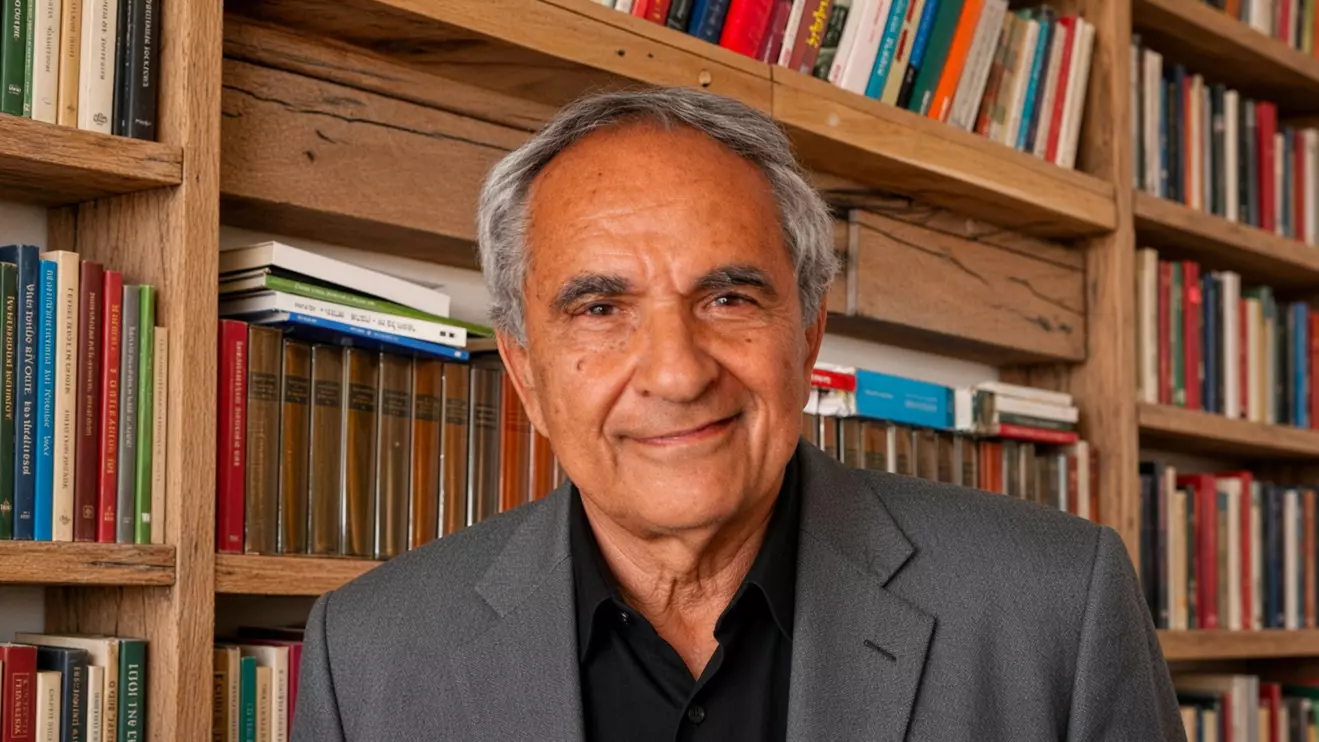
Daniel Horowitz © Mena Today
For decades, the “two-state solution” has been presented as the only path to peace. History suggests otherwise: two states already stand on the land of the British Mandate, Israel and Jordan. The question is what a third one would be for.
In 1920, Britain received a League of Nations mandate over Palestine, a territory on both banks of the Jordan River. It covered today’s Israel, the West Bank, Gaza and all of modern Jordan. The Balfour Declaration and the Mandate itself promised a “Jewish national home” within those borders.
In 1922, Britain changed course. It cut off everything east of the Jordan, created Transjordan for the Hashemite emir Abdullah, and closed it to Jewish immigration. With the stroke of a pen, more than three quarters of Mandatory Palestine went to an Arab entity, which became the Hashemite Kingdom of Jordan in 1946.
The Zionist movement swallowed the loss. When the United Nations proposed in 1947 to split what remained into a Jewish state and an Arab state, it was, in effect, calling for a third state. The Jews accepted. The Arab world rejected the very idea of Jewish sovereignty.
A Palestinian state? Nobody asked, until 1967
After 1948, Jordan annexed the West Bank. At the Jericho Conference, Palestinian notables proclaimed Abdullah their king. Until 1988, West Bank residents were Jordanian citizens with seats in Amman’s parliament. To this day, the same families live on both banks of the river.
For 19 years, Jordan held the West Bank and Egypt held Gaza. No one created a Palestinian state. The PLO’s founding charter of 1964 explicitly disclaimed sovereignty over the West Bank. Its goal was not a state beside Israel but the end of Israel.
Then came the Six-Day War. Jordan attacked, and lost the West Bank. In 1968, the clause disclaiming the West Bank quietly disappeared from the PLO charter. The territory only became a national cause once it was under Israeli control.
In 1974, the Arab League stripped Jordan of its claim and handed it to the PLO. In 1988, King Hussein cut ties with the West Bank. Months later, the PLO proclaimed a Palestinian state in Algiers.
Oslo failed. Gaza showed why.
The 1993 Oslo Accords created the Palestinian Authority and postponed everything that mattered: borders, Jerusalem, refugees, settlements. Camp David collapsed in 2000, and the Second Intifada followed.
In 2005, Israel left Gaza completely. Hamas turned it into a launchpad, and October 7 showed the cost. A Palestinian state in the West Bank, overlooking Tel Aviv and Ben Gurion Airport, would be Gaza on a larger scale.
The 1994 peace treaty set the Israel-Jordan border along the river, but “without prejudice” to the status of the territories taken in 1967. In other words, the West Bank question was left open between the two states that already exist.
That is where it should be settled. Redraw the border according to where people live: Arab-populated areas to Jordan, Jewish-populated areas to Israel. The idea is not new. The 1967 Allon Plan and the 1987 London Agreement between Shimon Peres and King Hussein rested on the same logic. And the 1994 treaty already recognizes Jordan’s special role at Jerusalem’s Muslim holy sites.
Most people would stay in their homes. Palestinians would regain the Jordanian citizenship many lost in 1988. Israelis in Judea and Samaria would remain in Israel.
Black September is not an argument against it
Critics point to Black September in 1970, when King Hussein crushed the Palestinian militias that were trying to take over his kingdom. But that was a state against armed groups, not one people against another. Most Palestinians in Jordan stayed loyal citizens.
If anything, Black September proves the point. The fedayeen believed the road to Jerusalem ran through Amman. Give them a state between Jordan and Israel, and both would live with the consequences, as Lebanon did after 1975 and Gaza does today.
A double standard
Jordan’s 1950 annexation of the West Bank was recognized by almost no one, yet the UN never declared it illegal. In 2024, the International Court of Justice ruled Israel’s presence on the very same land “unlawful.” Same territory, different verdict.
Jordan says it wants no part of the West Bank today. Every peace plan faces objections. The question is which ones can be overcome. A third state would not bring peace. It would add one more front.
The world is rushing to create a third state in Palestine. It has simply forgotten to ask what it would be for.
By Daniel Horowitz, a Belgian author, writes on Middle East geopolitics. The views expressed are his own
The Yisrael Beytenu leader says he is ready to compromise, even on military service for yeshiva students, but still rules out any deal with Arab parties.
Israel’s flag carrier grew third-quarter revenue 18% to a record $1.27 billion. But fuel costs, a stronger shekel and the return of foreign competitors are starting to weigh on its margins.
A Jordanian police officer died of his wounds on Thursday after being stabbed in the capital Amman, in what the Public Security Directorate described as a “cowardly terrorist act.”

To make this website run properly and to improve your experience, we use cookies. For more detailed information, please check our Cookie Policy.
Necessary cookies enable core functionality. The website cannot function properly without these cookies, and can only be disabled by changing your browser preferences.