Morocco
Rabat triumphs, Algiers isolated as UN mission ends
The end of the UN peacekeeping mission in Western Sahara after 35 years marks a turning point in one of Africa’s oldest conflicts. For Rabat, it is a major diplomatic victory.

At 51, Binina Mohamed is as old as the conflict that drove her from the Western Sahara region into a refugee camp in southern Algeria, where she has spent her life among tens of thousands of others facing a similar fate.
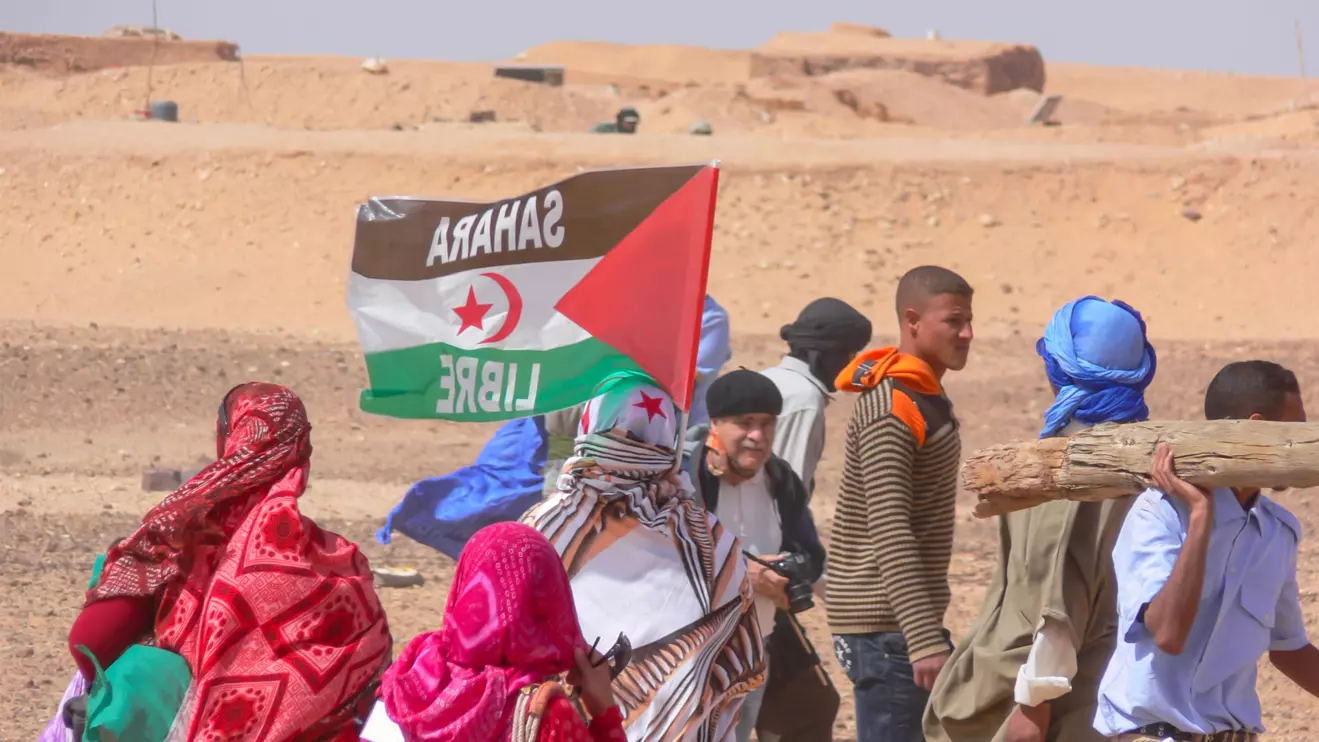
The Western Sahara conflict pits Morocco, which considers the territory its own, against the Algeria-backed Polisario Front, a political and military organisation that has been seeking a separate state there since the departure of former colonial power Spain in 1976 © Mena Today
At 51, Binina Mohamed is as old as the conflict that drove her from the Western Sahara region into a refugee camp in southern Algeria, where she has spent her life among tens of thousands of others facing a similar fate.
The confrontation over her native land, often described as Africa's longest-running territorial dispute, was brought back into focus this weekend by a UN Security Council spat that led to the end of a decades-old peacekeeping mission there.
The Western Sahara conflict pits Morocco, which considers the territory its own, against the Algeria-backed Polisario Front, a political and military organisation that has been seeking a separate state there since the departure of former colonial power Spain in 1976. Peacekeepers have watched over the territory since 1991, when the UN brokered a ceasefire ending years of guerrilla warfare between the two sides.
Thousands of Sahrawis fled hostilities to the Tindouf area in southwestern Algeria, where the Polisario administers five refugee camps.
During a rare visit to the region for foreign media outlets, organised by the Polisario, Mohamed described how her daughters, now in their twenties and thirties, had never visited the region where she was from.
"I do not want them to reach the age of 50 without seeing their homeland," she told Reuters.
One of her daughters, Safia Al-Saleh, 33, said she hoped her own two children would have a different future.
"I want my children and my grandchildren to study and grow up in their own country, not to grow up like us here, as refugees, with nothing," she said.
DIPLOMACY IN DEADLOCK
The uncertainty facing refugees such as Mohamed has become a central point of contention in the latest diplomatic battle over Western Sahara.
The dispute heated up last year when the UN Security Council backed Rabat's plan to give the region autonomy under Moroccan sovereignty as the "most feasible" way to resolve the conflict.
After abstaining last year, Russia this year vetoed a US-drafted resolution that would have reaffirmed that position. When a competing Russian resolution was defeated, it left the UN mission without a renewal of its mandate.
In a speech at the council, Algeria's UN envoy defended the Polisario's stance and highlighted a decline in aid and the suffering of refugees in the camps.
Morocco's envoy in turn said the harsh conditions in the camps were the responsibility of Algeria, a longtime Russian ally, which he accused of denying the refugees their right to return home. He urged Algiers to allow the UN to register the refugees, saying other nationalities were present there.
Algeria and the Polisario say over 160,000 live in the Tindouf refugee camps. UNHCR says it provides assistance to an estimated 90,000 of the "most vulnerable" refugees there.
Morocco disputes both numbers, citing a lack of a UN census, and accuses the Polisario and Algeria of using Sahrawis as political pawns, which Algiers denies.
As the dispute grinds on, Mohamed's family described daily problems in the camp, including access to water and the harsh climate.
More than 80% of the camps' residents rely on humanitarian assistance to meet basic food needs, the World Food Programme said in a statement earlier this year.
Another of Mohamed's daughters, Aisha Salem, a 24-year-old fighter with the Polisario Front, said she wanted a different future for the next generation: "We don’t want to live the way our grandparents did, through displacement and deprivation," she said.
Mohamed echoed the sentiment. "We want stability. We are tired of being refugees," she said. "The one who has no land has no life."
Reporting by Abdelaziz Boumzar
The end of the UN peacekeeping mission in Western Sahara after 35 years marks a turning point in one of Africa’s oldest conflicts. For Rabat, it is a major diplomatic victory.
The 35-year-old UN peacekeeping mission in the Western Sahara region will come to an end after the Security Council failed to renew its mandate, the UN chief said on Sunday.
Russia vetoed a US-drafted resolution on Western Sahara at the Security Council on Friday, leaving the UN peacekeeping mission there without a renewed mandate just a day before it expires.
To make this website run properly and to improve your experience, we use cookies. For more detailed information, please check our Cookie Policy.
Necessary cookies enable core functionality. The website cannot function properly without these cookies, and can only be disabled by changing your browser preferences.