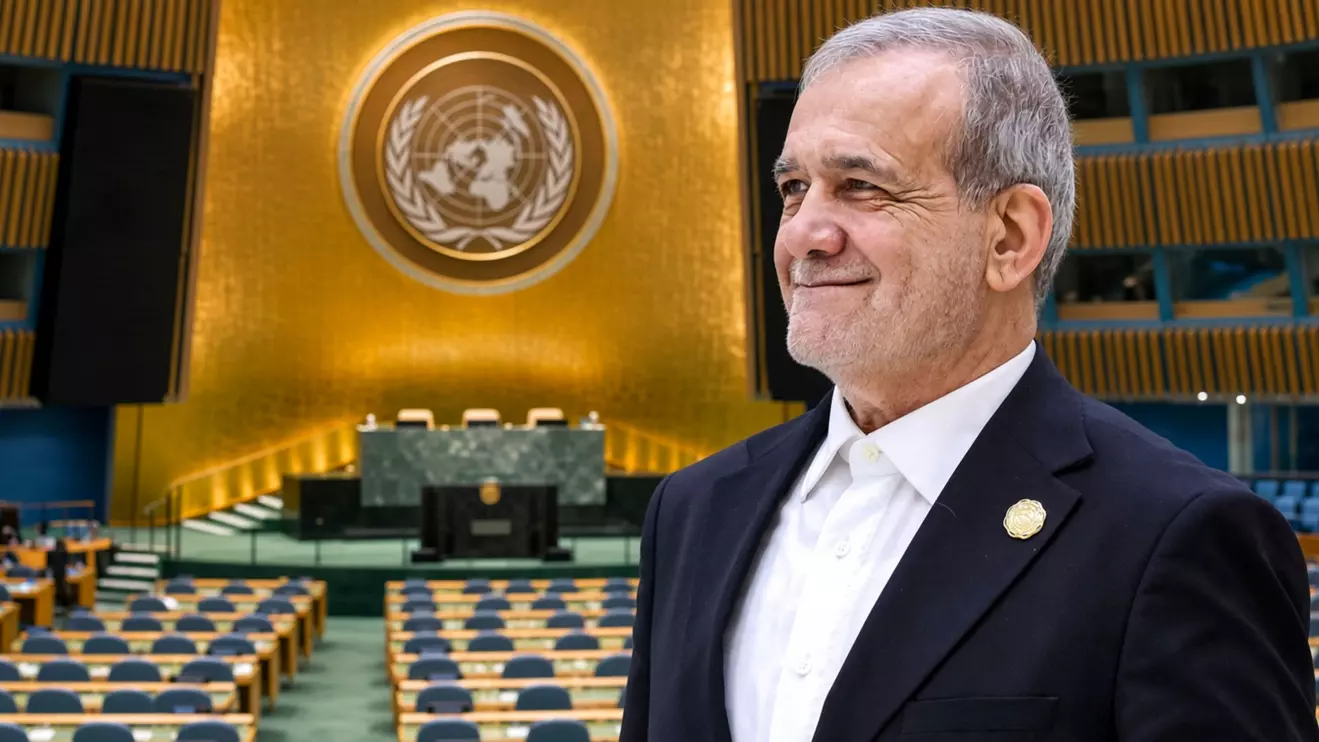
Iranian media reported Monday that the United States has denied visas to part of President Masoud Pezeshkian's delegation, which is set to leave Iran Tuesday to attend the UN General Assembly in New York.
"In an unprecedented hostile measure by the American government, Trump has refused to issue visas to certain members of the president's high-ranking delegation, including members of his communications team," the state-run news agency IRNA reported, a claim echoed by the Mehr agency, which cited a presidential spokesperson.
While Pezeshkian and Foreign Minister Abbas Araghchi were ultimately cleared to travel, the State Department confirmed the Iranian delegation would be smaller than last year's and subject to strict conditions: movement confined to a narrow radius around their hotel, the UN headquarters and the airport, along with a ban on purchasing luxury goods. No members of the president's press corps were granted entry.
A visit unfolding against the backdrop of active war
The visa dispute is, in many respects, a footnote to a far larger reality: Iran remains a country the United States has been at war with since late February, when Israeli and American strikes targeted its nuclear infrastructure.
Tehran's response, an effective blockade of the Strait of Hormuz, a chokepoint for roughly a fifth of the world's oil trade, has since sent global energy prices soaring and drawn in Gulf allies, Yemen's Houthi rebels, and Iran-backed militias across Iraq and Lebanon, none of whom have shown signs of standing down.
Iran's military reportedly warned over the weekend that Washington was preparing a fresh wave of strikes, a threat that continues to hang over the diplomatic choreography in New York even as Pezeshkian prepares to address world leaders on Wednesday.
Washington has consistently pointed to Iran's continued enrichment activity, its support for armed proxy groups destabilizing the region, and its documented human rights record, including the arrests of civil society figures and executions of political prisoners, as justification for treating the Iranian government as a distinct and ongoing security threat, separate from the routine diplomatic courtesies typically extended to visiting heads of state under the UN's host-country obligations.
The visa restrictions, in that light, reflect less a bureaucratic snub than a broader American position: that engagement with Tehran at the UN podium does not amount to normalization, at a moment when the two countries remain locked in the most serious military confrontation between them in decades.