While Donald Trump's teams are reportedly engaged in discussions over a potential ceasefire with Iran, covering the critical issues of nuclear capabilities, ballistic missiles, and proxy forces including Hezbollah, Hamas, and the Houthis, Tehran is publicly denying any such talks are underway.
Iranian officials and state-aligned media have flatly rejected the notion of any engagement with the American administration.
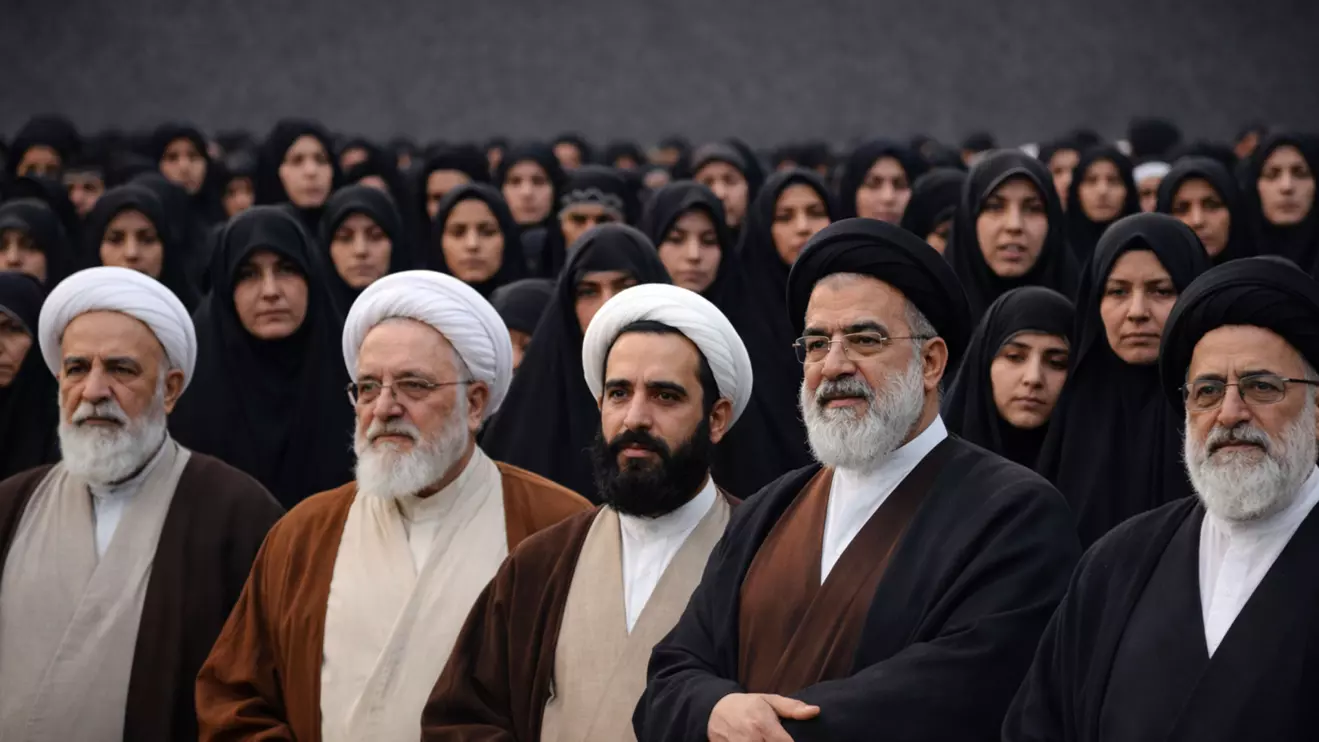
This contradiction is not mere diplomatic posturing. It reveals something far more significant: a regime deeply fractured from within.
The past month of war has taken a devastating toll on Iran's ruling elite. The deaths of key figures have left a dangerous power vacuum at the top, one that even Ali Khamenei's designated successor - his son Mojtaba - appears unable to fill.
The reasons are alarming: at best, the new leader is so severely wounded that he cannot speak or appear publicly; at worst, he is no longer alive. Either scenario spells crisis for a theocracy built on the illusion of divine authority and iron-fisted control.
Clans, Cash, and Survival
What fills the vacuum is a ruthless competition between rival factions, each maneuvering to protect its grip on power, and its vast financial interests.
The Islamic Revolutionary Guard Corps, hardline clerics, and pragmatic officials are no longer reading from the same script. Some are digging in, refusing any concession to Washington. Others, more quietly, are signaling a willingness to negotiate, and not just on symbolic terms.
Perhaps the most consequential development is this: certain factions within the Iranian leadership are reportedly prepared to make sweeping concessions, on the nuclear file, on ballistic missiles, on proxy networks, in exchange for one thing above all else: American guarantees for their own political survival.
This is the real negotiation. Not between Washington and Tehran as unified actors, but between Trump's team and whichever Iranian faction can credibly claim to hold the keys, and deliver on any agreement reached.
The stakes could hardly be higher. A fractured Iran is simultaneously more dangerous and more vulnerable. More dangerous because no single authority can reliably control the trigger.
More vulnerable because internal divisions create openings that a skilled negotiator, or a ruthless adversary, can exploit.
Trump's team appears to understand this. The question is whether any Iranian interlocutor has both the will and the power to close a deal, before the internal power struggle renders the question moot.