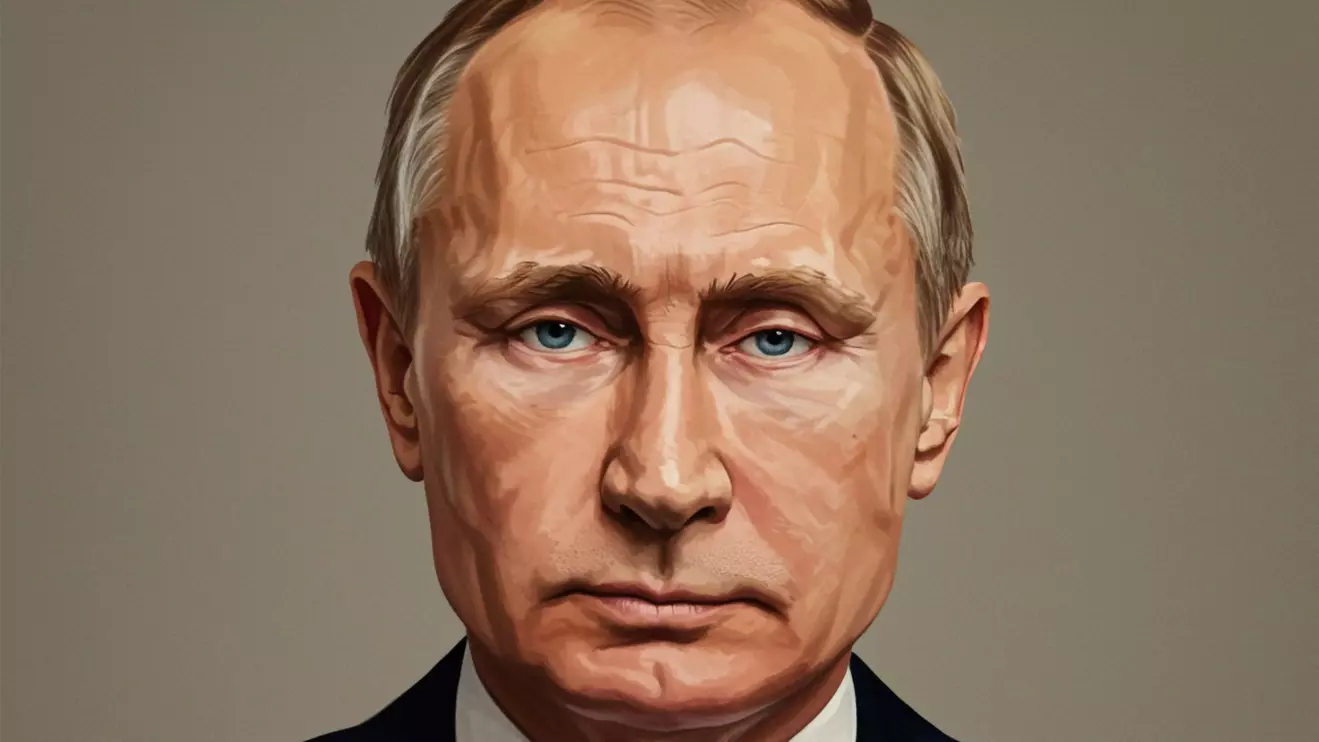
President Vladimir Putin is mediating in the Iran situation to try to quickly de-escalate tensions, the Kremlin said on Friday, after the Russian leader spoke to Israeli Prime Minister Benjamin Netanyahu and Iranian President Masoud Pezeshkian.
Moscow, an ally of Tehran, has condemned U.S. President Donald Trump's threats of new military strikes after Iran cracked down on protests that broke out late last month.
Israel and the U.S. last year both bombed Iranian nuclear sites, and Iran fought a 12-day war with Israel.
Russia has pursued closer ties with Iran since the start of its war in Ukraine, and Putin last year signed a 20-year strategic partnership pact with Pezeshkian. Moscow also has a long-established working relationship with Israel.
Putin in his call with Netanyahu expressed Russia's willingness to "continue its mediation efforts and to promote constructive dialogue with the participation of all interested states," the Kremlin said, adding he had set out his ideas for boosting stability in the Middle East.
No further details were given on Putin's mediation attempt.
Putin had then been briefed by Pezeshkian in a separate call on what the Kremlin called Tehran's "sustained efforts" to normalise the situation inside Iran.
"It was noted that Russia and Iran unanimously and consistently support de-escalating the tensions — both surrounding Iran and in the region as a whole — as soon as possible and resolving any emerging issues through exclusively political and diplomatic means," the Kremlin said.
Putin and Pezeshkian had confirmed their commitment to their countries' strategic partnership and to implementing joint economic projects, the Kremlin added.
WESTERN SANCTIONS
Separately, the Shanghai Cooperation Organization, which includes Russia, China, India and Iran among others, said it opposed external interference in Iran and blamed Western sanctions for creating conditions for unrest.
"Unilateral sanctions have had a significant negative impact on the economic stability of the state, led to a deterioration in people's living conditions and objectively limited the ability of the Government of the Islamic Republic of Iran to implement measures to ensure the country's socio-economic development," the SCO said in a statement.
Protests erupted on December 28 over soaring inflation in Iran, whose economy has been crippled by sanctions, before spiralling into one of the biggest challenges yet to the clerical establishment ruling Iran since the 1979 Islamic Revolution.
Any threat to the survival of the Iranian leadership would pose a serious concern for Moscow, 13 months after it lost another key Middle East ally with the toppling of Syrian President Bashar al-Assad. Earlier this month another Russian ally, Venezuelan President Nicolas Maduro, was captured by the United States and brought to New York to face drug trafficking charges.
Asked what support Russia could provide to Iran, Kremlin spokesman Dmitry Peskov said: "Russia is already providing assistance not only to Iran but also to the entire region, and to the cause of regional stability and peace. This is partly thanks to the president's efforts to help de-escalate tensions."
Western powers accuse Iran of having a clandestine agenda to develop nuclear weapons, something Tehran denies. Russia says it supports Iran's right to peaceful nuclear energy.
By Andrew Osborn and Mark Trevelyan