Iran
Trump downplays duration of renewed Iran strikes
President Donald Trump said on Wednesday that the renewed U.S. campaign against Iran would not continue for "too long" after the biggest exchange of fire between Tehran and Washington since July.

Iran has struck a Qatar Energy tanker with a ballistic missile inside Qatari territorial waters, a brazen attack on a country that, until recently, maintained cordial relations with Tehran.
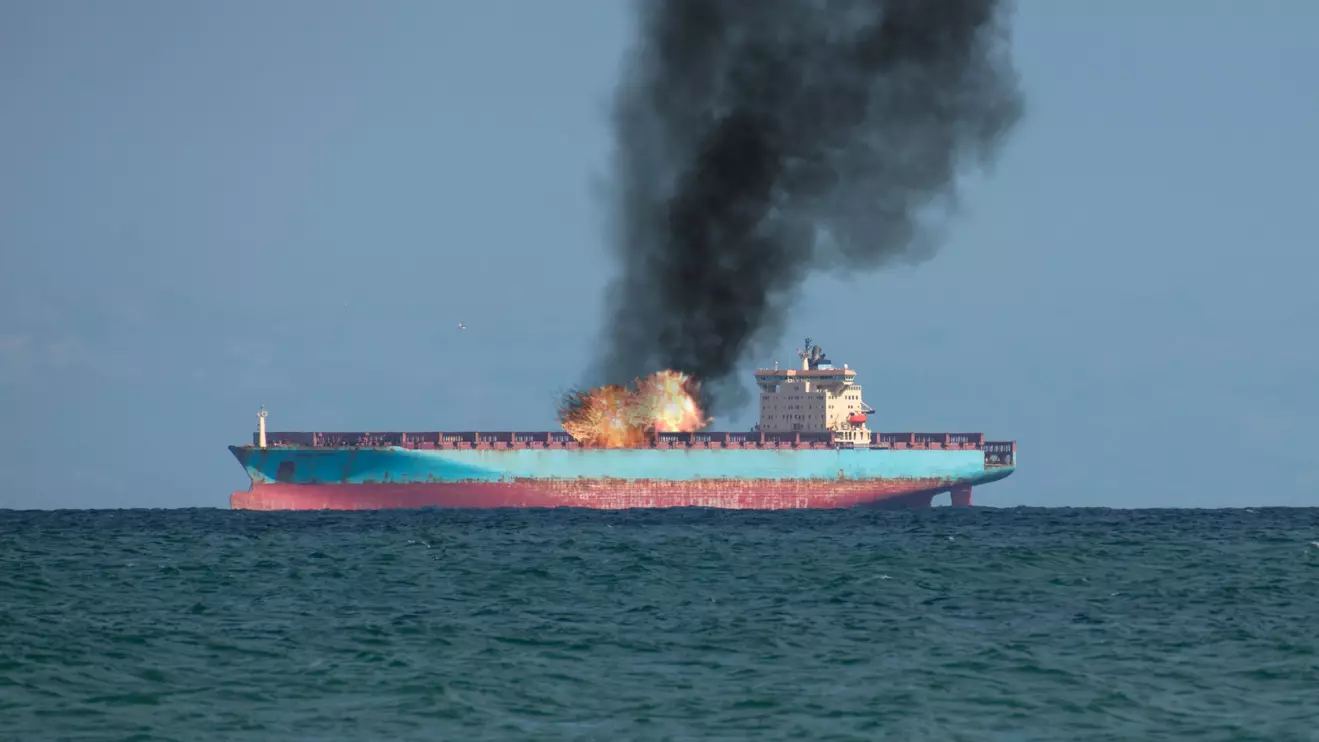
Iran has fired missiles into the territorial waters of a country it once considered a manageable neighbour c Mena Today
Iran has struck a Qatar Energy tanker with a ballistic missile inside Qatari territorial waters, a brazen attack on a country that, until recently, maintained cordial relations with Tehran.
Qatar's Defence Ministry confirmed Wednesday that three missiles were "launched from Iran" toward its waters. Two were intercepted. The third struck a tanker chartered by Qatar Energy approximately 30 kilometres north of Doha.
All 21 crew members on board were safely evacuated, and Qatar Energy confirmed there was no environmental impact from the strike.
The attack was first revealed by the British maritime agency UKMTO before Doha's official confirmation.
The strike is extraordinary on multiple levels. Qatar is not Israel. It is not a Western military power. It is a Gulf state that had carefully maintained working relations with Tehran for years, a diplomatic balancing act that Doha had pursued with notable success.
Qatar hosted Taliban negotiations, maintained ties with Hamas, and kept channels open with Iran even as its Gulf neighbours grew increasingly hostile toward Tehran.
That calculation is now shattered. Iran has fired missiles into the territorial waters of a country it once considered a manageable neighbour, striking a civilian energy vessel in the process. The message is as reckless as it is clear: no Gulf state is safe, no relationship is guaranteed, and Iran's missiles recognise no diplomatic nuance.
The attack on the Qatari tanker follows a pattern of Iranian strikes that have already hit targets near Dubai, struck a Kuwaiti military camp, and threatened shipping across the entire Gulf region. With Hezbollah cells being dismantled in Bahrain, Kuwait and the UAE, and Iran now firing directly at Qatar, the Islamic Republic appears to be lashing out across the board, at allies, neutrals and adversaries alike.
For the Gulf states, the message is unambiguous: there are no more safe positions. The time for careful neutrality may be over.
By Nabil Al Blooshi
President Donald Trump said on Wednesday that the renewed U.S. campaign against Iran would not continue for "too long" after the biggest exchange of fire between Tehran and Washington since July.
Top aides to President Donald Trump are pushing to keep the Iran war from escalating before November's midterm elections to staunch Republican electoral losses, four people familiar with the discussions said, a strategy already under strain as the U.S. and Iran exchanged back-and-forth attacks overnight.
Russia has secretly helped Iran develop advanced supersonic cruise missiles, in what the Financial Times describes as one of the most significant known transfers of strategic military technology from Moscow to Tehran, according to an investigation published Wednesday.

To make this website run properly and to improve your experience, we use cookies. For more detailed information, please check our Cookie Policy.
Necessary cookies enable core functionality. The website cannot function properly without these cookies, and can only be disabled by changing your browser preferences.