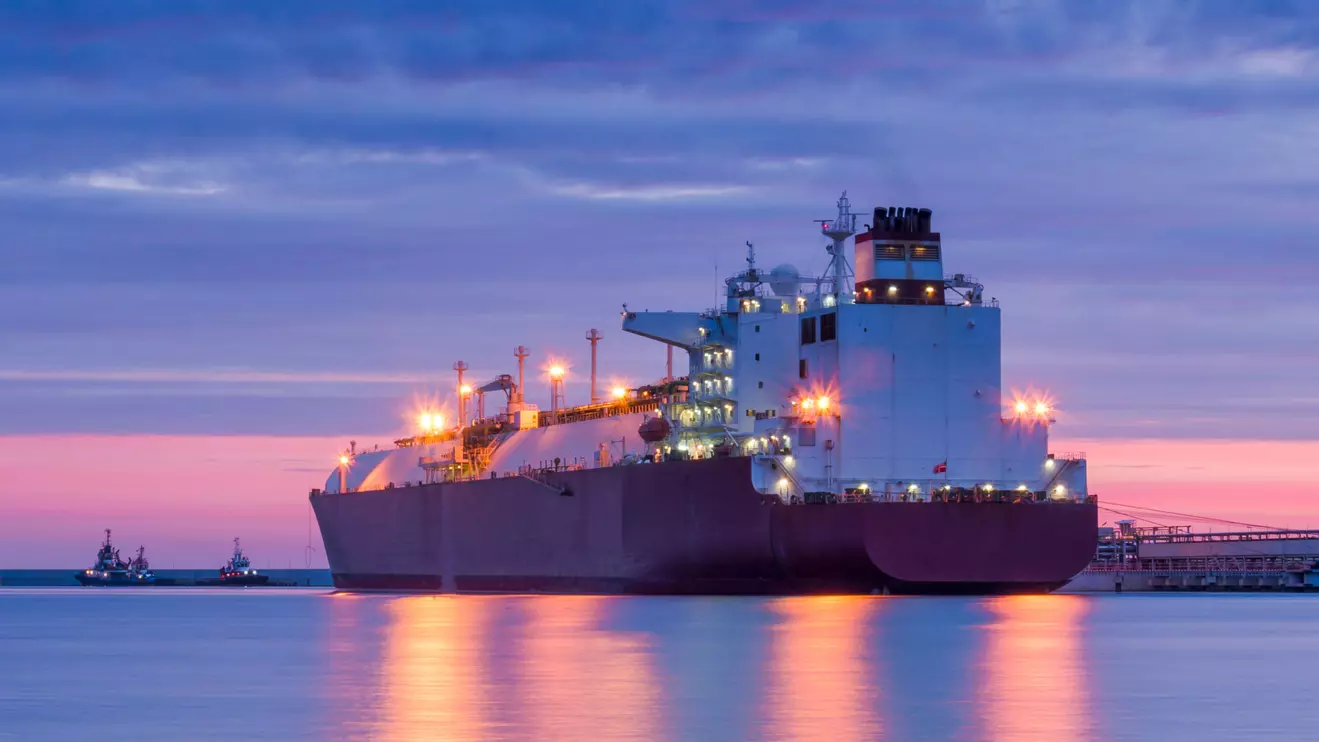
QatarEnergy, one of the world's largest exporters of liquefied natural gas, has stopped sending tankers via the Red Sea although production continues, a source with knowledge of the matter told Reuters on Monday.
At least four tankers used to carry Qatari LNG were held up over the weekend after U.S. and British forces carried out air and sea strikes on Yemen in response to Houthi attacks on ships in the Red Sea, part of a route that accounts for about 15% of the world's shipping traffic.
The Al Ghariya, Al Huwaila and Al Nuaman had loaded LNG at Ras Laffan in Qatar and were supposed to head to the Suez Canal but stopped off the coast of Oman on Jan. 14, according to LSEG shiptracking data. The Al Rekayyat, which was heading back to Qatar, stopped along its route on Jan. 13 in the Red Sea.
"It is a pause to get security advice, if passing (through the) Red Sea remains unsafe we will go via the Cape," said a source with direct knowledge of the matter, referring to the considerably longer route round the Cape of Good Hope at Africa's southern tip.
"It is not a halt of production," the source added.
The Qatari government's International Media Office and QatarEnergy did not immediately respond to requests for comment.
Shipowners and managers of the four vessels including Teekay Shipping Glasgow, Pronav Ship Management, Nakilat Shipping Qatar Ltd and Shell's shipping and chartering arm STASCO also did not immediately respond to requests for comment.
Qatar, the world's second largest exporter of LNG, shipped more than 75 million metric tons of the fuel in 2023, according to LSEG data. Of that, 14 million tons went to buyers in Europe, and 56.4 million tons to Asia.
While several LNG vessels have changed course since last month, others have continued to sail past Yemen through the Red Sea and Suez Canal.
Asia spot LNG prices fell to a seven-month low of $10.10 per million British thermal units (mmBtu) on Friday, supported by healthy storage levels in both Europe and northeast Asia. [LNG/]
Oil prices were steady on Monday after rising 1% on Friday on concerns the war in the Middle East could disrupt supplies. [O/R]
By Maha El Dahan, Emily Chow and Andrew Mills