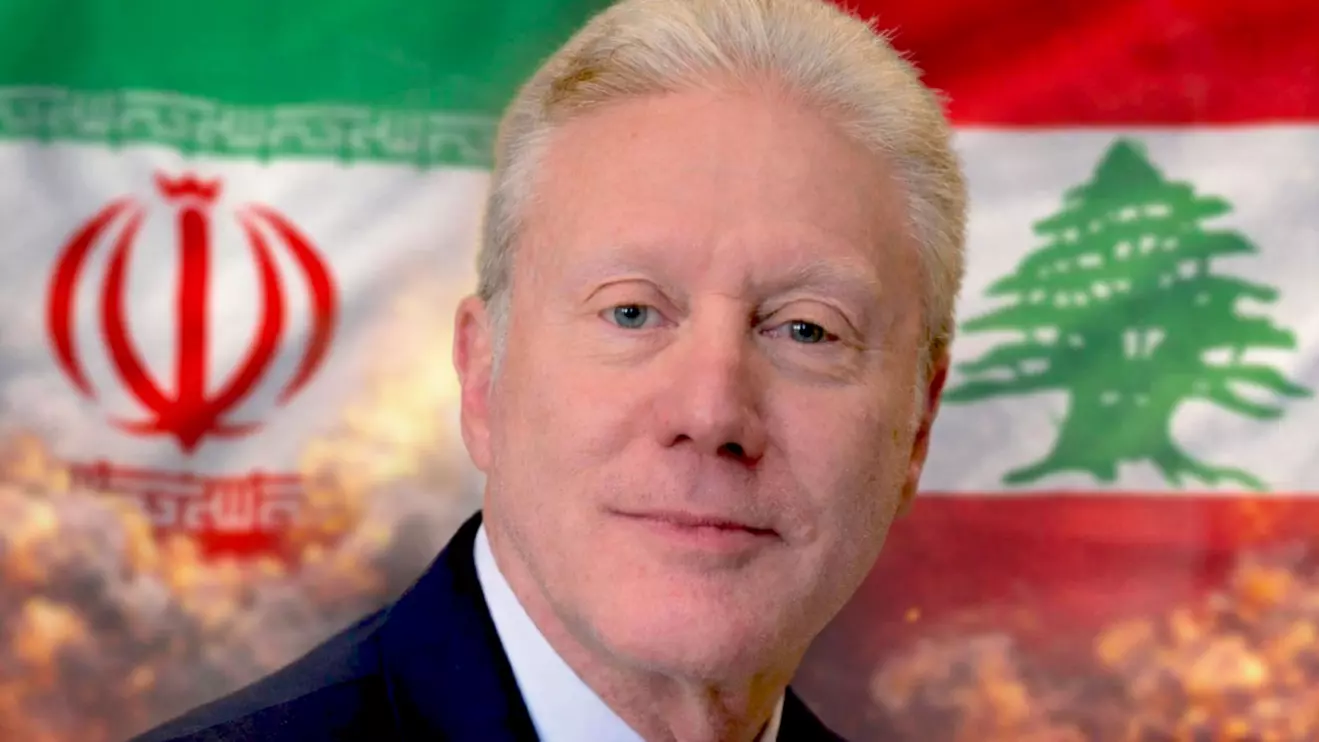
In a display of rare diplomatic courage, Lebanese Foreign Minister Joe Raggi delivered a blunt message to his Iranian counterpart Abbas Araghchi on Friday in Beirut: if Tehran genuinely wants to help Lebanon, it should support the Lebanese state directly, not its militia proxy, Hezbollah.
It takes considerable fortitude to tell a visiting "friend" that their four-decade policy has been catastrophic for your country. But that's precisely what Raggi did, marking a potential turning point in Lebanon's fraught relationship with its Iranian patron.
Raggi welcomed Araghchi as "a friend, because differences of opinion don't alter friendship », a diplomatic courtesy that barely masked months of acrimony between the two men, who have previously exchanged sharp barbs through press releases and social media over Iran's backing of Hezbollah.
But pleasantries aside, the Lebanese minister didn't mince words. He expressed hope for "better relations with Iran" while specifying that "Iranian support should be directed directly to the Lebanese state and its institutions, and not to any other party." The subtext was crystal clear: stop funding the militia that has hijacked Lebanon's sovereignty for decades.
Raggi pressed further, insisting that Lebanon's defense must be the sole responsibility of the state, which "when it holds the decision of war and peace and the monopoly of weapons, can request help from other states, including Iran."
He emphasized that "building a strong state capable of defending its territory and people cannot happen in the presence of an armed organization », an unmistakable reference to Hezbollah's parallel military structure.
Uncomfortable Truths Meet Iranian Ears
The Lebanese minister then delivered what must have been a deeply uncomfortable reality check for his Iranian visitor: "Experience has shown that weapons have failed to defend the Shiite community, nor Lebanon as a whole."
This was not mere rhetoric. Lebanon has paid an enormous price for serving as Iran's forward military base. The country has endured economic collapse, political paralysis, international isolation, and devastating conflicts, all while Hezbollah's arsenal grew and Iran's influence deepened.
Since 1982, Tehran has been directly responsible for transforming Lebanon into a failed state held hostage by a foreign-backed militia.
Raggi called on Tehran to work with Lebanon on dismantling the party's arsenal and demanded an end to "statements and positions by certain Iranian officials that constitute blatant interference in Lebanese affairs." It was diplomacy, yes—but diplomacy with teeth.
Iranian Hypocrisy Reaches New Heights
Araghchi's response showcased the shameless duplicity that has characterized Iranian policy in Lebanon for decades. He assured that "Iran is committed to Lebanon's independence, unity and sovereignty, and that its defense is the responsibility of the Lebanese government."
Noble words, immediately contradicted by his next sentence: "Iran supports Hezbollah as a resistance movement." He then added the laughable claim that Tehran "does not intervene at all in its affairs, and any decision concerning Lebanon is up to the party itself."
A blatant falsehood from the Iranian official. Everyone in the region knows the truth: Iran created Hezbollah, funds its operations, supplies its weapons, trains its fighters, and directs its strategic decisions.
The Islamic Revolutionary Guard Corps maintains permanent advisors with the organization. To claim Iran doesn't intervene in Hezbollah's affairs is like claiming a puppeteer doesn't control his puppet's strings.
This cynical denial insults the intelligence of everyone listening, particularly the Lebanese people, who have watched their country systematically destroyed by a militia answering to Tehran rather than Beirut.
Araghchi arrived Thursday morning in Beirut to continue meetings with Lebanese officials, including President Joseph Aoun. Yet the Iranian diplomat's future influence may be limited. With massive popular uprisings currently shaking Iran and openly calling for regime change, Abbas Araghchi's political career, along with the entire theocratic system he represents, faces an uncertain future.
Meanwhile, Joe Raggi's willingness to articulate uncomfortable truths to a powerful and often vengeful patron represents a watershed moment in Lebanese diplomacy. For too long, Lebanese officials have either embraced Iranian hegemony or remained silent out of fear. Raggi chose neither path.
Whether Tehran will heed this message, or simply continue its destructive course, remains to be seen.
Four decades of Iranian policy in Lebanon suggest the latter is far more likely. But by speaking clearly and courageously, Raggi has at least ensured that when the final reckoning comes for Iran's Lebanese adventure, no one can claim ignorance of the damage inflicted or the warnings issued.
The question now is whether other Lebanese leaders will find similar courage, or whether Raggi's voice will remain a lone cry for sovereignty in a country that has forgotten what independence truly means.