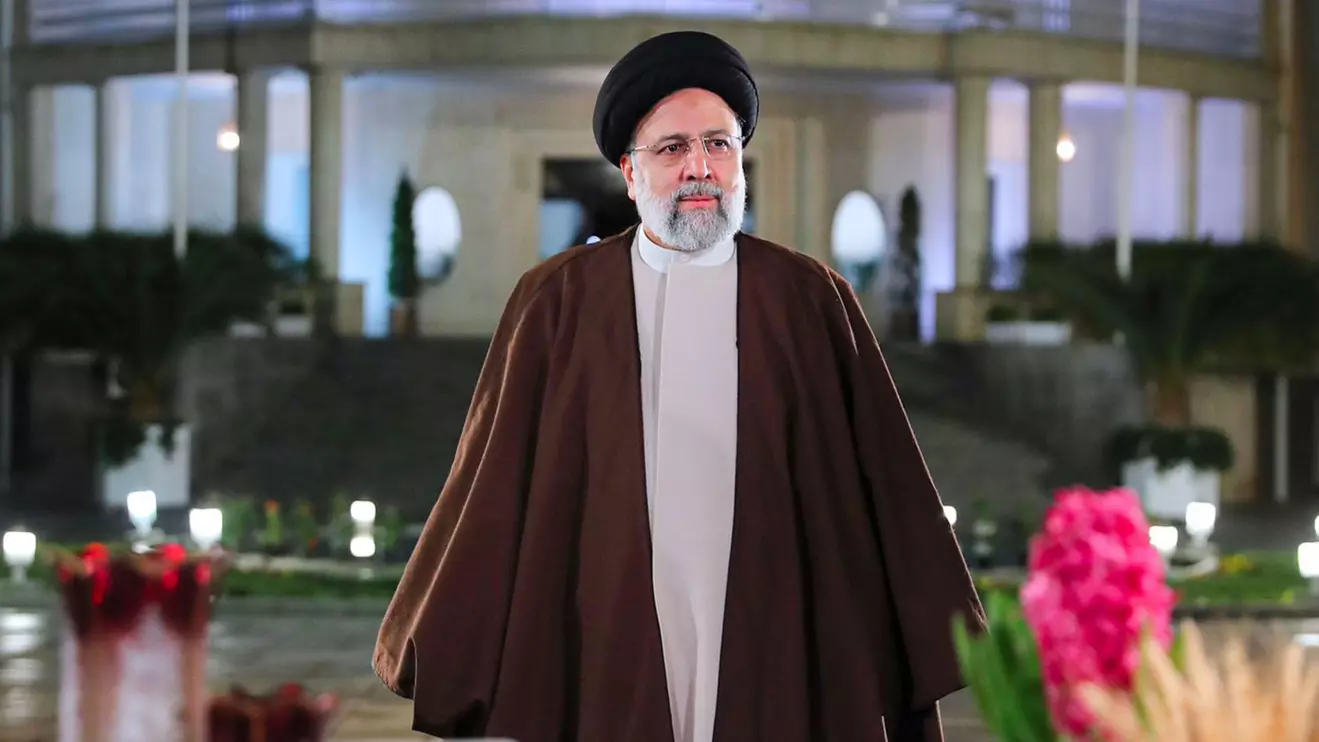
Iranian President Ebrahim Raissi asserted on Wednesday that there was no "justification" for the continued presence of American troops in the Middle East, labeling them as a "security threat."
Addressing ambassadors stationed in Tehran ahead of the 45th anniversary of the Islamic Revolution, celebrated on February 12, Mr. Raissi reiterated his call for regional leaders to resolve Middle Eastern issues. He emphasized Iran's purported role as the "best friend" to neighboring countries and the region at large.
According to Raissi, the presence of American forces in the region lacks justification and poses a security threat rather than providing security. He cited American interventions in Iraq, Syria, and Afghanistan as instances where American presence has been detrimental, asserting that they have historically been a source of harm.
Raissi further expressed the belief that Western powers, including the United States, should refrain from intervening in the future of Palestine, advocating for Palestinian self-determination instead.
However, it is important to note that both Iran and several Palestinian organizations openly endorse the destruction of Israel.
The Iranian leadership's history of destabilizing actions in the Middle East undermines their credibility on regional security matters.
Raissi's remarks underscore the disconnect between Iran's rhetoric and reality, highlighting the absurdity of his claims regarding regional security and stability.