Lebanon
The war Hezbollah is now fighting is against its own country
The most forceful response to Hezbollah chief Naim Qassem's threats against the Lebanese government came not from Beirut, but from Washington.
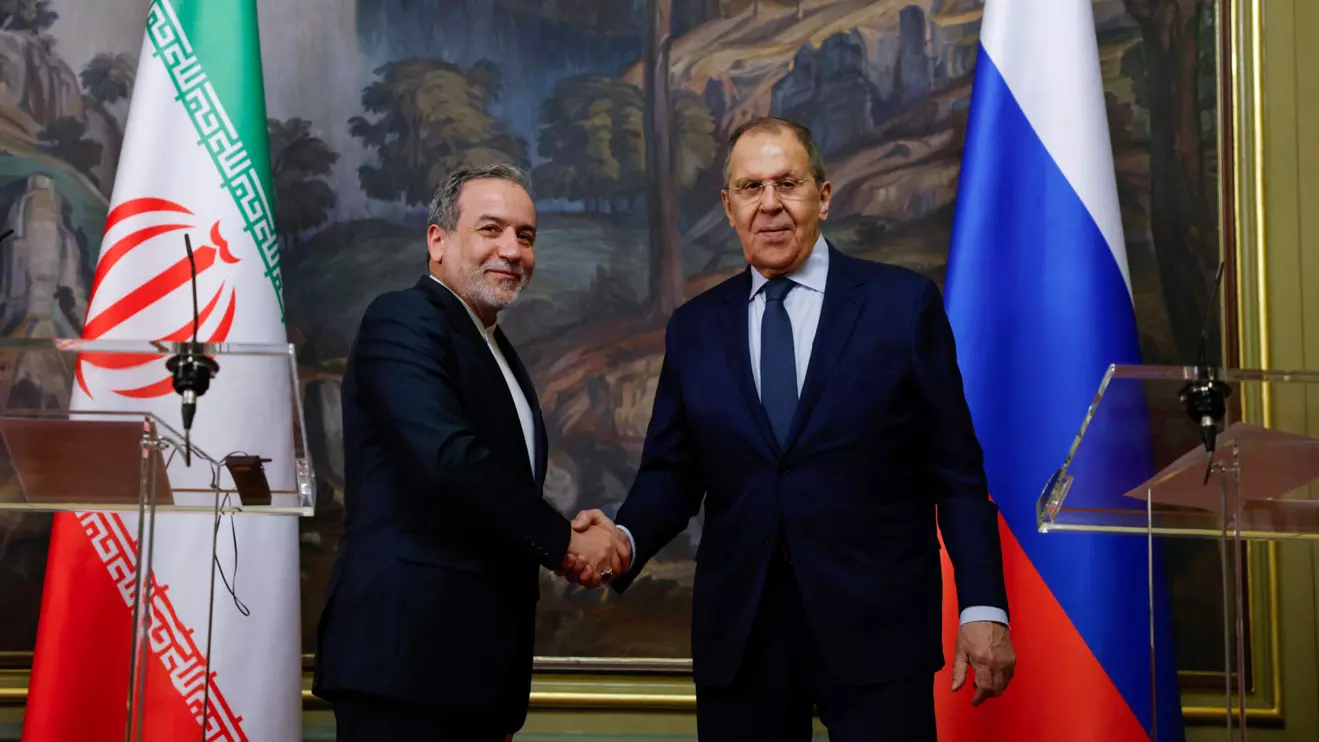
Russian Foreign Minister Sergei Lavrov met on Sunday with his Iranian counterpart at the BRICS summit, and restated Moscow's offer to help resolve disputes around Tehran's nuclear programme, the Russian Foreign Ministry said.
Russia's Foreign Minister Sergei Lavrov and Iran's Foreign Minister Abbas Araqchi, Tatyana Makeyeva/Reuters/File Photo
Russian Foreign Minister Sergei Lavrov met on Sunday with his Iranian counterpart at the BRICS summit, and restated Moscow's offer to help resolve disputes around Tehran's nuclear programme, the Russian Foreign Ministry said.
A ministry statement said Lavrov, in his talks in Rio de Janeiro with Abbas Araqchi, issued a new denunciation of Israeli and U.S. strikes on Iran last month, "including the bombing of nuclear energy infrastructure under safeguards of the International Atomic Energy Agency."
Lavrov, the statement said, stressed that all issues surrounding Iran's nuclear programme had to be resolved through diplomacy.
"Moscow expressed its readiness to offer its assistance in finding mutually acceptable solutions, including the corresponding initiatives put forward earlier by the Russian president," it said.
Araqchi held talks in Moscow in the middle of the 12 days of conflict last month.
Iran denies it has any intention of developing nuclear weapons. Russia, which has a strategic partnership with Iran, though without a mutual defence provision, says Tehran has the right to a peaceful nuclear energy programme.
Russia has said it is ready to act as a mediator in the crisis pitting Iran against Israel and the United States and has offered to store Iranian uranium.
Editing by Diane Craft
The most forceful response to Hezbollah chief Naim Qassem's threats against the Lebanese government came not from Beirut, but from Washington.
The United States will either have a good agreement with Iran or deal with the country "another way," Secretary of State Marco Rubio said on Monday, as Washington played down hopes for an imminent breakthrough in the three-month-old war.
There are bad deals. There are weak deals. And then there are deals that dress surrender as diplomacy, and ask Israel to applaud while the knife is being sharpened.
To make this website run properly and to improve your experience, we use cookies. For more detailed information, please check our Cookie Policy.
Necessary cookies enable core functionality. The website cannot function properly without these cookies, and can only be disabled by changing your browser preferences.