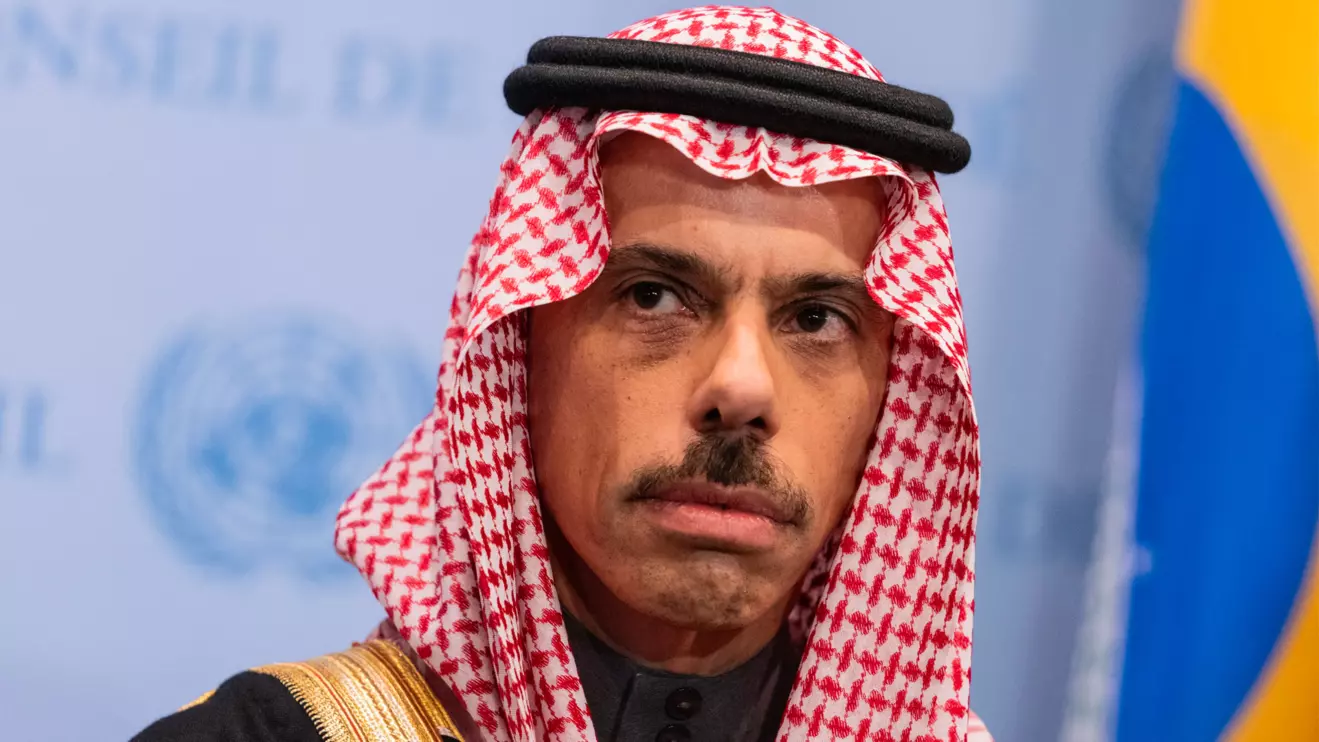
The most important issue in imminent nuclear talks between Iran and the United States is how Iran's nuclear programme will be policed, Saudi Arabia's Foreign Minister Prince Faisal bin Farhan said on Wednesday.
Washington and Tehran say they have reached an agreement to end their war and open wider talks on issues including Iran's nuclear programme. A senior U.S. official read out the text of a memorandum of understanding with Tehran but said the parties could still walk away until a binding deal is reached.
"The detail will matter," Prince Faisal said of the talks, speaking at a conference in Vienna hosted by Brussels-based think-tank the European Council on Foreign Relations. He declined to comment on the detail of the MOU because he had not yet seen the final version.
U.S. ally and Iranian rival Saudi Arabia has long kept a close eye on Iran's nuclear programme, which Tehran says is entirely peaceful.
"It will be most important to see the verification mechanisms that are (put) in place beyond the actual commitments on (uranium) enrichment, the actual commitment on the removal or downblending of nuclear materials," he said of the talks.
U.S. President Donald Trump has said he wants to remove Iran's most highly enriched uranium, which is a short step from weapons-grade. A senior Iranian official told Reuters on Sunday Iran had agreed in principle to dilute, or downblend, it.
A landmark 2015 deal between Iran and major powers imposed strict limits on Iran's nuclear activities that it adhered to until Trump pulled the U.S. out of it in 2018. The deal then fell apart as Iran retaliated by expanding its nuclear programme far beyond the deal's limits.
That deal also granted the U.N. nuclear watchdog extra verification powers, including the right to carry out snap inspections at undeclared locations, which Iran revoked as the deal disintegrated.
"How we will have a long-term, sustainable verification regime is what will matter the most, and that is what will give the international community but also the regional countries the most confidence and the ability to look towards a better future," the prince said.