Diplomacy
Trump's Middle East vision is bigger than Peace. It is about building the future
President Trump understands something most diplomats refuse to acknowledge: the Middle East cannot remain a museum of old hatred.
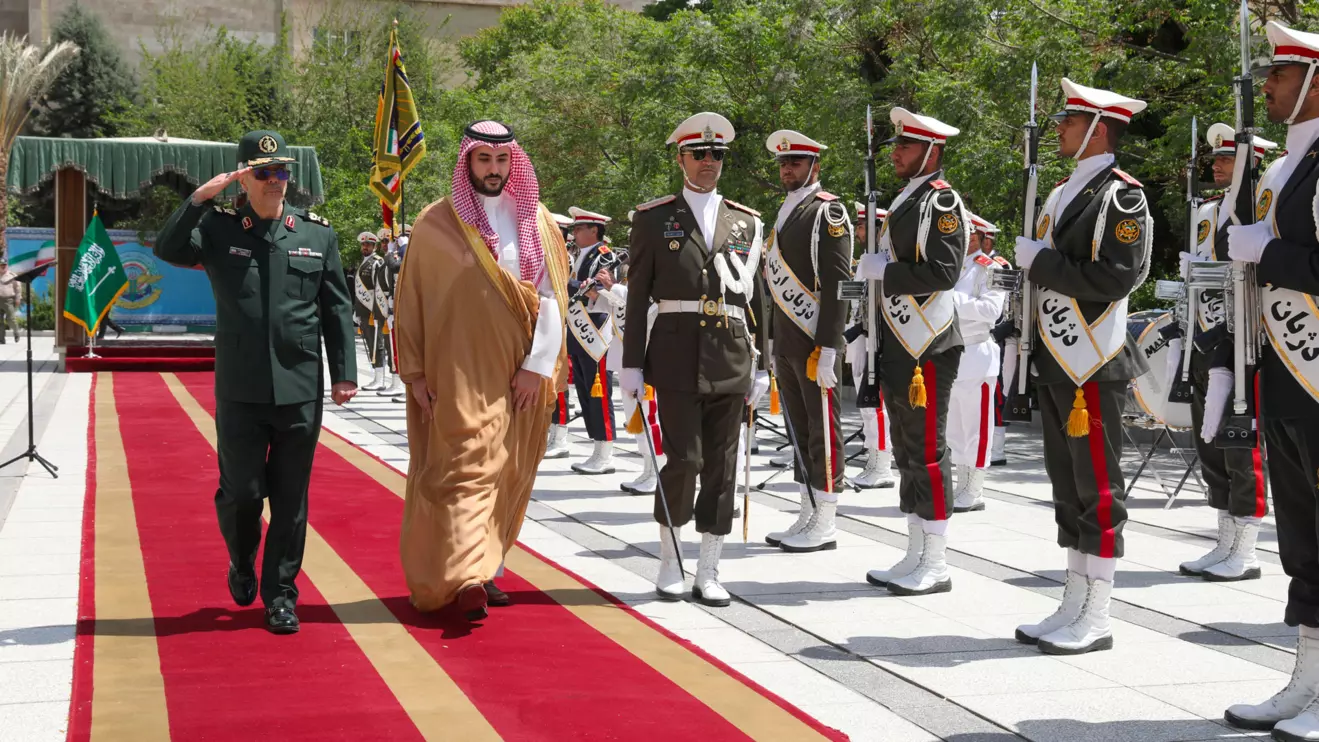
Saudi Arabia's Defence Minister, Prince Khalid bin Salman, arrived in Tehran on Thursday for high-level meetings with Iranian officials, according to the Saudi Press Agency (SPA).
Chief of Iranian Armed Forces, Mohammad Bagheri, welcomes Saudi Defence Minister, Prince Khalid bin Salman, in Tehran, Iran, April 17, 2025. Iranian Armed Forces Office/WANA (West Asia News Agency)/Handout via Reuters
Saudi Arabia's Defence Minister, Prince Khalid bin Salman, arrived in Tehran on Thursday for high-level meetings with Iranian officials, according to the Saudi Press Agency (SPA).
The visit comes just days before scheduled discussions between Iran and the United States aimed at reviving negotiations over Iran’s controversial nuclear program.
The surprise trip by Prince Khalid underscores the ongoing thaw in relations between the regional rivals, following the Chinese-brokered agreement in 2023 that led to the resumption of diplomatic ties after years of hostility.
Although specific details about the minister’s agenda in Tehran remain undisclosed, analysts say the timing suggests Saudi Arabia is positioning itself as a key regional player ahead of any potential agreement between Tehran and Washington.
Talks between the U.S. and Iran, expected over the weekend in a neutral location, are seen as a last-ditch effort to prevent further escalation over Iran’s expanding nuclear enrichment activities, which Western powers argue could lead to weaponization—an accusation Iran denies.
Riyadh, long critical of Iran’s nuclear ambitions, has recently adopted a more pragmatic approach, seeking regional de-escalation and focusing on economic transformation under its Vision 2030 strategy.
Prince Khalid’s visit marks a new chapter in the recalibration of Gulf diplomacy, as both Saudi Arabia and Iran explore avenues for coexistence amid shifting geopolitical dynamics in the Middle East.
President Trump understands something most diplomats refuse to acknowledge: the Middle East cannot remain a museum of old hatred.
U.S. President Donald Trump said on Friday he would soon decide on a proposed deal to extend the ceasefire with Iran, though the two countries still appeared to differ on significant issues that have been central to the conflict.
Iran said on Friday it was looking for actions, not words from the United States after sources said President Donald Trump was weighing an initial U.S.-Iranian agreement to extend a ceasefire and open the Strait of Hormuz.
To make this website run properly and to improve your experience, we use cookies. For more detailed information, please check our Cookie Policy.
Necessary cookies enable core functionality. The website cannot function properly without these cookies, and can only be disabled by changing your browser preferences.